Home / Technology / Tech News / Microsoft tests Copilot Portraits with 40 human-like avatars in voice chats
Microsoft tests Copilot Portraits with 40 human-like avatars in voice chats
Microsoft is testing Copilot Portraits in the US, UK, and Canada, offering 40 stylised avatars to make chatbot conversations more engaging and face-to-face like
2 min read Last Updated : Oct 01 2025 | 4:01 PM IST
Don't want to miss the best from Business Standard?
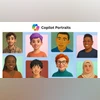
Microsoft is testing Copilot Portraits, a new feature that gives its chatbot a human-like face during real-time voice conversations. Available through Copilot Labs in the US, UK, and Canada, the feature introduces 40 stylised avatars designed to display natural facial expressions while speaking.
Copilot Portraits: How it works
According to The Verge, Portraits is powered by VASA-1, an AI technology developed by Microsoft Research. It generates facial expressions, head movements, and accurate lip-sync from a single image without complex 3D modelling. The avatars are not photorealistic; instead, they are intentionally stylised to avoid looking too real while maintaining engaging visuals.
The goal is to make voice chats with AI feel less mechanical and more natural. Microsoft AI chief Mustafa Suleyman explained on X: “We’ve heard from some users that they would feel more comfortable talking to a face when using voice.” By pairing a chosen portrait with a voice, users can simulate a face-to-face interaction with Copilot.
This feature builds on Microsoft’s earlier Copilot Appearances, announced in July, which offered more cartoon-like designs. Portraits, by contrast, are closer to human-inspired visuals aimed at making conversations smoother and less robotic.
The move comes as rivals explore similar ideas. X (formerly Twitter) recently introduced 3D avatars for its Grok chatbot, including anime-inspired characters, some with NSFW modes.
Microsoft’s rollout of Portraits is limited: only users over 18 can access it, with daily and session caps in place. The company is also adding clear signals to remind users that they are interacting with AI.
You’ve reached your limit of {{free_limit}} free articles this month. Subscribe now for unlimited access.