Textile industry knits business with AI as companies adopt technology

AI-enabled machines have features like precision stitching and predictive maintenance for improving production
AI in textile industry, Tiruppur textile AI adoption, Industry 4.0 in India, MSMEs digital transformation, AI sewing machines India, AI-powered textile manufacturing, CAD CAM in textiles, smart textile factories India, sustainable textile supply chai
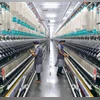
Workers at the spinning mill unit of KM Knitwear in Tiruppur, the textile hub that accounts for 55% of India’s knitwear exportss
Shine Jacob
5 min read Last Updated : Jun 23 2025 | 12:51 AM IST
India's skills in textiles date back to the Indus Valley civilization, which engaged in advanced textile production, notably through its early cultivation and use of cotton. Today, this ancient industry, dominated by small enterprises, is undergoing a transformation by adopting artificial intelligence (AI).
 
Micro, small, and medium enterprises (MSMEs) are assumed to be slow in adopting technology, but textile hubs like Tiruppur in Tamil Nadu are using AI to revolutionise every stage of manufacturing — from designing and sewing to sorting — as part of a concept called Industry 4.0. AI has helped Tiruppur improve production by at least 10 per cent, as orders return to a region that contributes 55 per cent of the country's total knitwear exports. The AI transition is happening across the entire value chain, from logistics to spinning mills. 
 
Small business leads
 
As computer-aided design and manufacturing (CAD and CAM) machines become the norm in MSMEs, they are helping minimise materials used for products. Industry players said that due to losses of over 10 years due to Covid-19 and dwindling demand, textile clusters like Tiruppur shied away from modernisation. However, FY25 became a game changer for the industry as knitwear exports from Tiruppur crossed ₹40,000 crore in value for the first time in history.
 
Favourable international events like a free trade agreement with the United Kingdom, increased orders from the United States as it follows the so-called China Plus One strategy, and Bangladesh’s political turmoil have helped the region where new factories are coming up and older ones are modernising, according to the Tiruppur Exporters’ Association (TEA).
 
"People here are putting up new machines and factories. All new machines that we are implementing are AI-based. Earlier, our production efficiency was around 65 per cent. With automation, it has improved to around 75 per cent," said K M Subramanian, president of TEA. AI-inbuilt digital industrial sewing machines of Japanese companies like Yamato, Brother, Juki, Pegasus, and Chinese players like Jack have become part of textile MSMEs in Tamil Nadu. These machines have features like precision stitching and predictive maintenance for improved production efficiency.
 
It’s not just Tiruppur, the textile industry is changing nationwide. "We keep hearing that MSMEs are not adopting technology in India. In this case, many people are using smart cutting machines for design and cutting. This helps in reducing wastage," said Chandrima Chatterjee, secretary general of the Confederation of Indian Textile Industry (CITI).
 
"AI-enabled monitors on top of a production line give signals of defects and help in their early detection. These are very good ways to optimise productivity. CAD-CAM machines are coming up at a faster pace too. Adoption is happening in areas like sorting," Chatterjee said. SaaS-based platforms like Reverse Resource play a “matchmaker” role in supply chains by digitising, connecting, and scaling up textile recycling. Companies’ need for sustainability is prompting them to use AI for processes and supply chains, according to CITI. 
 
AI transition
 
Hyderabad-based Allcargo Gati, which is a part of Allcargo Logistics, helped MSMEs in Tiruppur adopt a fully paperless logistics system in 2023. Through a service called eDocket, the company has streamlined supply chains by ensuring faster documentation and enhanced operational efficiency for customers.
 
Tiruppur’s technology transition is happening as international companies like Decathlon, Marks & Spencer, Tommy Hilfiger, GAP, Carter’s and Walmart increased their demand in the region in the past one year.
 
The transition is happening “across the value chain”. Subramanian's K M Knitwear (Spinning Division) started a spinning mill in 2007 with 36,000 spindles. Recently, the company started another mill that has AI-driven automated machines that produce 30 tonnes of yarn daily. “In the first mill, I use 900 labourers, and in the second mill, 270 labourers for the same three shifts,” Subramanian said. Using fewer hands is necessary as the sector faces a nationwide labour shortage.
 
“Across the value chain, such machines have voice control systems. Timing and production display are also maintained,” he said. Operators use their cell phones to track how machines are performing, getting information on efficiency and productivity. “Fully automated machines are coming up.” 
 
Even cottage-level textile units are using AI. “Such small companies, I understand, are resorting to Canva and ChatGPT too to adopt fresh designs so that the most modern global trends are captured locally,” said Aishwarya Jayan, of Tiruppur-based Back Bay India, which became famous for supplying ‘Made in India’ apparel to the retail channels of the International Olympic Committee during last year's Paris Summer Games.
 
Japan is among countries that have started using sewing robots (stitch bots) to stitch fabric quickly and precisely. Such machines reportedly use advanced sensors, computer vision, and robotic arms to guide needles and thread through textiles with a higher accuracy level. Through programmed movements and machine learning algorithms, they can quickly adapt stitch patterns, tension, and speed, improving productivity.
 
Indian textile companies are likely to start stitch bots, though not immediately.
 
“In terms of stitch bots, labour will get replaced. In India, stitch bots are not in high demand, as labour is not a concern for us. Our AI use should be such that labour can also be upgraded and we can optimally use existing trained labour," said Chatterjee.

One subscription. Two world-class reads.

Already subscribed? Log in

Subscribe to read the full story →
*Subscribe to Business Standard digital and get complimentary access to The New York Times

Smart Quarterly

₹900

3 Months

₹300/Month

SAVE 25%

Smart Essential

₹2,700

1 Year

₹225/Month

SAVE 46%
*Complimentary New York Times access for the 2nd year will be given after 12 months

Super Saver

₹3,900

2 Years

₹162/Month

Subscribe

Renews automatically, cancel anytime

Here’s what’s included in our digital subscription plans

Exclusive premium stories online

  • Over 30 premium stories daily, handpicked by our editors

Complimentary Access to The New York Times

  • News, Games, Cooking, Audio, Wirecutter & The Athletic

Business Standard Epaper

  • Digital replica of our daily newspaper — with options to read, save, and share

Curated Newsletters

  • Insights on markets, finance, politics, tech, and more delivered to your inbox

Market Analysis & Investment Insights

  • In-depth market analysis & insights with access to The Smart Investor

Archives

  • Repository of articles and publications dating back to 1997

Ad-free Reading

  • Uninterrupted reading experience with no advertisements

Seamless Access Across All Devices

  • Access Business Standard across devices — mobile, tablet, or PC, via web or app

Topics :Artificial intelligencetextile industryTextile exportsTechnology

Next Story



