Home / World News / 'Rare earth limits are concerning', says White House as China halts exports
'Rare earth limits are concerning', says White House as China halts exports
The US raises alarm as China halts rare earth exports; key tech, defence industries face risk amid deepening trade war and supply chain uncertainty
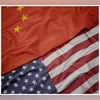
As the trade conflict between the US and China intensifies, Beijing has suspended exports of several critical rare earth elements, metals, and magnets. (Photo: Shutterstock)
Kevin Hassett, a senior economic advisor to President Donald Trump, expressed concern over China's move to halt exports of certain rare earth minerals, which are essential for technology and electronics production.
“The rare earth limits are being studied very carefully, and they're concerning, and we're thinking about all the options right now,” Hassett told reporters outside the White House.
Earlier in the day, Hassett spoke to Fox Business, emphasising that the administration was “100 per cent not” anticipating a recession, despite President Trump’s trade disruptions caused by his tariff policies.
Beijing suspends rare earth minerals
As the trade conflict between the US and China intensifies, Beijing has suspended exports of several critical rare earth elements, metals, and magnets, raising concerns about potential disruptions in the supply of components essential for a wide range of industries, including defence, electronics, automotive manufacturing, aerospace, semiconductor production, and consumer goods.
The Chinese government is working on a new regulatory framework for exports, and while these policies are being finalised, shipments of essential magnets used in products ranging from cars to missiles have already been halted at several Chinese ports, according to a report by The New York Times. Once the new system is implemented, it could potentially restrict the flow of supplies to certain companies, including US defence contractors.
This crackdown on exports is a retaliatory measure by China in response to the trade war initiated by President Trump. China produces around 90 per cent of the world’s rare earth elements, a group of 17 elements that are integral to the defence, electric vehicle, energy, and electronics sectors. Seven categories of these elements, such as samarium, gadolinium, terbium, dysprosium, lutetium, scandium, and yttrium, have been added to China’s export control list. The US has just one rare earth mine, with most of its supply sourced from China.
China tightens control on magnet exports
Beijing imposed export restrictions on April 2, as part of a broader strategy to counter Trump's decision to raise tariffs on most Chinese products to 54 per cent. These restrictions encompass not only raw minerals but also finished products such as permanent magnets, which would be difficult to replace.
Under the new measures, metals and magnets can only be exported from China with special licences. However, Beijing’s system for issuing these licences is still in its early stages, creating uncertainty among industry leaders who fear delays could lead to shortages of critical minerals and products outside of China.
Why are these important for the US?
These heavy rare earth elements are crucial for producing magnets used in electric motors, which are integral to electric cars, drones, robots, missiles, and spacecraft, as well as in gasoline-powered vehicles. They are also essential for manufacturing jet engines, lasers, car headlights, and electrical components used in computer chips that power AI servers and smartphones.

 "'Rare earth limits are concerning', says White House as China halts exports")

