Home / World News / China's EV profit distress fuels market anxiety over challenging 2026
China's EV profit distress fuels market anxiety over challenging 2026
The sector was riding high - with Xpeng Inc.'s year-to-date gain exceeding 130 per cent earlier this month. But signs of pressure at even established firms like BYD Co. have raised new questions
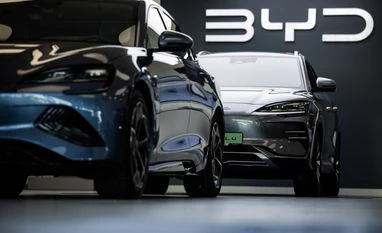
A BYD Seal electric vehicle, right, at a showroom in Budapest | Photo: Bloomberg
4 min read Last Updated : Nov 28 2025 | 9:11 AM IST
By Charlotte Yang
Investors in Chinese electric vehicle stocks had been hoping for a strong earnings season to provide a fresh tailwind. Instead, disappointing results have stoked anxiety about what lies ahead.
The sector was riding high — with Xpeng Inc.’s year-to-date gain exceeding 130 per cent earlier this month — buoyed by a surge in global risk appetite and an improved outlook for Chinese assets. But signs of pressure at even established firms like BYD Co. have raised new questions over the industry’s profitability after its rapid expansion.
Attention is now shifting to how Chinese EV makers will fare next year, with domestic demand expected to soften as government policy support wanes. Earnings may suffer further with costs seen rising and discounts for consumers likely to continue.
“We expect the demand environment in 1Q 2026 to be challenging, particularly after nearly two years of national trade-in and scrappage policies” that boosted EV purchases, said Bing Yuan, a fund manager at Edmond de Rothschild Asset Management. Competition may intensify, hurting margins into next year, she added.
Traders quickly turned against the best-performing stocks as results fell short. Xpeng shares dropped 10 per cent in Hong Kong the day after it reported continued losses and issued weak guidance. Zhejiang Leapmotor Technology Co. touched its lowest level since April after its profit came in at less than 65 per cent of the analyst estimate even as sales nearly doubled.
Li Auto Inc. and Nio Inc. were among others issuing fourth-quarter revenue and vehicle delivery forecasts that missed market expectations. The outlooks suggest sluggish consumer demand in what is a critical period for automakers striving to hit annual sales targets.
Analysts had projected a bump in deliveries toward the end of this year, given that taxes on EV purchases will be phasing back in from 2026 following years of exemptions. Things are likely to only worsen next year, with Bloomberg Intelligence estimating China’s new energy vehicle growth will slow to 13 per cent versus 27 per cent this year.
Geely Automobile Holdings Ltd. this month launched a rebate of up to 15,000 yuan ($2119) to make up for the scaling back of tax breaks. Other makers have done so as well, including Li Auto and Xiaomi Corp.
Such offers combined with rising battery costs will be “headwinds for margins,” said Daisy Li, a fund manager at EFG Asset Management. So earnings pressure will remain even as companies start to move away from fierce price wars on a push from Beijing’s “anti-involution” campaign, she added.
Manufacturers of lower-priced vehicles like BYD, Geely and Leapmotor are likely better-positioned for next year’s market downturn, said Xiao Feng, co-head of China industrial research at CLSA Hong Kong.
“We continue to see a clear downgrading trend, with buyers who once chose mid- to high-end models now shifting toward mass-market cars,” said Feng. Such models also sell well outside of China, he added.
Some makers are in fact expanding in overseas markets where they can sell products at higher prices as a way to bolster margins. BYD’s overseas sales volume more than doubled from a year earlier in the third quarter, fueled by demand in Europe and Latin America. Geely expects sales volume outside China to surge as much as 80 per cent next year.
Others are looking beyond EVs for future growth. Xpeng plans to mass-produce humanoids by the end of 2026, while Li Auto aims to transform vehicles into “embodied AI” robots, according to comments in their earnings briefings.
Such efforts may take time to bear fruit. For now, China’s EV segment faces a murky outlook.
“Investors would be reluctant to increase investments in this sector without policy clarity for 2026,” UBS Securities Asia Ltd. analysts including Paul Gong wrote in a note. “We stay cautious on the sector, especially the outperformers under the stimulus cycle.”


 "China's EV profit distress fuels market anxiety over challenging 2026")

