
China says it will work with US to resolve issues related to TikTok
China will work with the US to properly resolve issues related to TikTok, China's Commerce Ministry said after the meeting
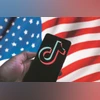 "China says it will work with US to resolve issues related to TikTok")
WebinarsNew
Deep DiveNew
Explore Business Standard
China will work with the US to properly resolve issues related to TikTok, China's Commerce Ministry said after the meeting
President Donald Trump's meeting on Thursday with China's top leader, Xi Jinping, produced a raft of decisions to help dial back trade tensions, but no agreement on TikTok's ownership.
China will work with the US to properly resolve issues related to TikTok, China's Commerce Ministry said after the meeting.
It gave no details on any progress toward ending uncertainty about the fate of the popular video-sharing platform in the US.
The Trump administration had been signalling that it may have finally reached a deal with Beijing to keep TikTok running in the US.
Treasury Secretary Scott Bessent had said on CBS's Face the Nation on Sunday that the two leaders will consummate that transaction on Thursday in Korea.
Wide bipartisan majorities in Congress passed and President Joe Biden signed a law that would ban TikTok in the US if it did not find a new owner to replace China's ByteDance. The platform went dark briefly on a January deadline, but on his first day in office, Trump signed an executive order to keep it running while his administration tries to reach an agreement for the sale of the company.
Three more executive orders followed, as Trump, without a clear legal basis, extended deadlines for a TikTok deal. The second was in April, when White House officials believed they were nearing a deal to spin off TikTok into a new company with US ownership. That fell apart when China backed out after Trump announced sharply higher tariffs on Chinese products. Deadlines in June and September passed, with Trump saying he would allow TikTok to continue operating in the United States in a way that meets national security concerns.
Trump's order was meant to enable an American-led group of investors to buy the app from China's ByteDance, though the deal also requires China's approval.
However, the TikTok deal is not really a big thing for Xi Jinping, said Bonnie Glaser, managing director of the German Marshall Fund's Indo-Pacific program, during a media briefing on Tuesday. (China is) happy to let (Trump) declare that they have finally kept a deal. Whether or not that deal will protect the data of Americans is a big question going forward.
A big question mark for the United States, of course, is whether this is consistent with US law since there was a law passed by Congress, Glaser said.
About 43 per cent of US adults under the age of 30 say they regularly get news from TikTok, higher than any other social media app, including YouTube, Facebook and Instagram, according to a Pew Research Centre report published in September.
A recent Pew Research Centre survey found that about one-third of Americans said they supported a TikTok ban, down from 50 per cent in March 2023. Roughly one-third said they would oppose a ban, and a similar percentage said they weren't sure.
Among those who said they supported banning the social media platform, about 8 in 10 cited concerns over users' data security being at risk as a major factor in their decision, according to the report.
The security debate centres on the TikTok recommendation algorithm, which has steered millions of users into an endless stream of video shorts. China has said the algorithm must remain under Chinese control by law. But a US regulation that Congress passed with bipartisan support said any divestment of TikTok would require the platform to cut ties with ByteDance.
American officials have warned that the algorithm a complex system of rules and calculations that platforms use to deliver personalised content is vulnerable to manipulation by Chinese authorities, but no evidence has been presented by US officials proving that China has attempted to do so.
(Only the headline and picture of this report may have been reworked by the Business Standard staff; the rest of the content is auto-generated from a syndicated feed.)
First Published: Oct 30 2025 | 4:06 PM IST


 Connect with us on WhatsApp