
Chinese rocket Tianlong-3 crashes after accidental launch during test
Incident occurred when the first stage of the Tianlong-3 rocket detached from its launch pad due to a structural failure
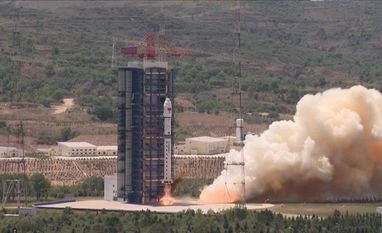 "Chinese rocket Tianlong-3 crashes after accidental launch during test")
WebinarsNew
Deep DiveNew
Explore Business Standard
Incident occurred when the first stage of the Tianlong-3 rocket detached from its launch pad due to a structural failure
A Chinese rocket, Tianlong-3 crashed on Sunday after an accidental launch during a ground test, its company Space Pioneer said in a statement, CNN reported.
Space Pioneer, a leading company in the commercial rocket sphere, specializes in liquid-propellant rockets.
According to CNN, the incident occurred when the first stage of the Tianlong-3 rocket detached from its launch pad due to a structural failure. The rocket landed in a hilly area of Gongyi city in central China.
In a statement, Space Pioneer explained that the connection between the rocket body and the test platform failed, causing the first-stage rocket to separate from the launch pad.
"Due to the structural failure of the connection between the rocket body and the test platform, the first-stage rocket was separated from the launch pad," Space Pioneer, also known as Beijing Tianbing Technology, said.
"After liftoff, the onboard computer was automatically shut down, and the rocket fell into the deep mountains 1.5 kilometers [0.9 miles] southwest of the test platform. The rocket body fell into the mountain and disintegrated."
As per the company's statement, there were no injuries after the crash as people in the area were evacuated in advance of the rocket test.
In April 2023, Space Pioneer successfully launched its Tianlong-2 rocket, becoming China's first commercial launch operator to send a liquid carrier rocket into orbit, according to state media, as per CNN.
Tianlong-3, the rocket that crashed on Sunday, is a large liquid carrier rocket. It was made to help construct China's satellite internet network.
Space Pioneer claims that the Tianlong-3's performance is comparable to SpaceX's Falcon 9 rocket, adding that it will be capable of launching the rocket over 30 times per year after the rocket's first successful flight.
The accident comes just days after China's Chang'e-6 lunar module returned to Earth from space, where it collected the first ever samples from the far side of the moon.
The mission was a key milestone in China's "eternal dream" - as articulated by Chinese leader Xi Jinping - to establish the country as a dominant space power and comes as a number of countries, including the United States, also ramp up their own lunar exploration programs.
(Only the headline and picture of this report may have been reworked by the Business Standard staff; the rest of the content is auto-generated from a syndicated feed.)
First Published: Jul 01 2024 | 6:52 AM IST


 Connect with us on WhatsApp