
Death toll in recent Beijing flooding rises to 33, with 18 still missing
Scores of roads were damaged, along with more than 100 bridges, Xia Linmao, a Beijing vice mayor, said at a news conference on Wednesday
 "Death toll in recent Beijing flooding rises to 33, with 18 still missing")
WebinarsNew
Deep DiveNew
Explore Business Standard
Scores of roads were damaged, along with more than 100 bridges, Xia Linmao, a Beijing vice mayor, said at a news conference on Wednesday
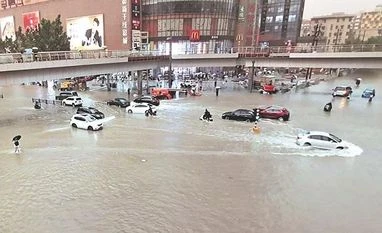
The death toll in recent flooding in China's capital rose to 33, including five rescuers, and another 18 people remain missing, officials said Wednesday, as much of the country's north remains threatened by unusually heavy rainfall.
Days of heavy rain hit areas in the city's mountainous western outskirts especially hard, causing the collapse of 59,000 homes, damage to almost 150,000 others and flooding of more than 15,000 hectares (37,000 acres) of cropland, according to the city government.
Scores of roads were damaged, along with more than 100 bridges, Xia Linmao, a Beijing vice mayor, said at a news conference on Wednesday.
The casualty and damage numbers were current as of Tuesday, Xia said, adding that rescue efforts remained underway.
Given the level of damage, it could take up to three years to restore full functions, Xia said.
Other parts of China have also seen heavy flooding, partly from the impact of Typhoon Doksuri over the weekend, leaving dozens dead and missing.
Hebei province just outside Beijing has seen some of the region's worst flooding. Floodwaters in Zhuozhou, southwest of Beijing, started to recede Saturday, allowing some of the 125,000 evacuated residents to return to their homes.
Meanwhile, other areas are suffering from scorching summer heat and drought, threatening residents' heath and the autumn harvest. Heavy rains have battered northern China since late July, disrupting the lives of millions.
Six people died and four went missing in the city of Shulan in the northeastern province of Jilin, which experienced five straight days of rainfall, turning streets into rivers and forcing the evacuation of tens of thousands.
Heilongjiang province to the north has also seen rivers overflow their banks.
China's deadliest and most destructive floods in recent history were in 1998, when 4,150 people died, most of them along the Yangtze River.
In 2021, more than 300 people died in the central province of Henan.
Record rainfall inundated the provincial capital of Zhengzhou on July 20 that year, turning streets into rushing rivers and flooding at least part of a subway line.
(Only the headline and picture of this report may have been reworked by the Business Standard staff; the rest of the content is auto-generated from a syndicated feed.)
First Published: Aug 09 2023 | 11:42 AM IST

