Earth to Mars in 30 days? Russia's plasma engine breakthrough sparks buzz
The development of the engine is expected to make interplanetary trips much faster and expand humanity's access to worlds beyond the Solar System
Yunus Dar New Delhi Russia's state-owned Rosatom has announced a breakthrough in the development of a plasma electric rocket engine that the company claims could reduce the travel time between earth and mars to just one to two months.
The plasma rocket eliminates the need for traditional fuel combustion. Instead, the propulsion system utilises a magnetic plasma accelerator, enabling unprecedented speeds in space and promising a significant reduction in travel time, Russia’s Izvestia newspaper reported.
“A plasma rocket motor is a type of electric motor. It is based on two electrodes. Charged particles are passed between them, and at the same time a high voltage is applied to the electrodes. As a result, the current creates a magnetic field that pushes the particles out of the engine. Thus, the plasma receives directional motion and creates thrust,” Izvestia quoted Egor Biriulin, a junior researcher at Rosatom’s scientific institute in Troitsk, as saying.
The propulsion system uses hydrogen as fuel, and the engine accelerates charged particles – electrons and protons – to a speed of 100 km/s (62 miles/s).
To cover the distance of about 140 million miles between Mars and Earth in 30 days, the rocket will need an average speed of about 195,000 miles per hour.
Advanced propulsion systems are being developed by various organisations, including the European Space Agency and the United States, with ongoing projects focused on reducing interplanetary travel times and making space travel more feasible.
The engine thrust of the plasma rocket being developed by Russia is expected to be about 6N, according to Russia's Izvestia newspaper, which will accelerate particles up to a speed of 100 km/s, making it possible for humanity to travel beyond the solar system.
According to Alexey Voronov, first deputy director general for science at the Rosatom Research Institute in Troitsk, “Currently, a flight to Mars using conventional engines can take almost a year one way, which is dangerous for astronauts due to cosmic radiation and exposure to radiation. Using plasma engines can shorten the mission to 30-60 days, meaning it will be possible to send an astronaut to Mars and back.”
Rosatom’s Troitsk Institute has already developed a laboratory prototype of the plasma engine which will undergo extensive ground testing to refine its operational modes and pave the way for the creation of a flight model, expected to be ready by 2030.

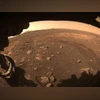 "Earth to Mars in 30 days? Russia's plasma engine breakthrough sparks buzz")

