Home / World News / Evergrande delisting over $45 billion debt deepens China property crisis
Evergrande delisting over $45 billion debt deepens China property crisis
The delisting comes as liquidators sifting through the books revealed that the developer's debt load now stands at about HK$350 billion ($45 billion), much bigger than previously disclosed
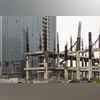
A property developed by Evergrande under construction in Hefei, China, in 2023 | Image: Bloomberg
4 min read Last Updated : Aug 13 2025 | 8:39 AM IST
By Venus Feng
China Evergrande Group’s delisting marks a bleak milestone for the nation’s property sector, now in a fourth year of paralysis that continues to weigh down the world’s second-largest economy.
The company, once China’s biggest developer by sales, will be removed from the Hong Kong stock exchange on Aug. 25, a year and a half after the shares were suspended and almost 16 years after the Guangzhou-based firm was listed.
The delisting comes as liquidators sifting through the books revealed that the developer’s debt load now stands at about HK$350 billion ($45 billion), much bigger than previously disclosed.
The liquidators provided a stern assessment after more than a year of going through the balance sheet and the firm’s web of entities, deeming its chances of pulling off a holistic restructuring as “out of reach.” Once emblematic of China’s housing boom, Evergrande’s fall underscores the fragility of the market, where declining consumer confidence, oversupply, and mounting debt have stalled real estate recovery efforts.
“It’s a symbolic moment for the mainland property sector,” said Kenny Ng, a strategist at China Everbright Securities International. The drastic collapse “will definitely leave a deep memory in all investors in the market.”
Evergrande’s downfall is by far the biggest in a crisis that dragged down China’s economic growth and spurred a record of distressed builders. The company, which first defaulted on a dollar bond in December 2021, was once the country’s largest developer by sales, and was worth more than $50 billion in 2017 at its peak.
Despite government stimulus, property sales remain sluggish this year, prompting analysts including UBS Group AG’s to delay expectations of a recovery to mid-to-late 2026. New-home sales by the 100 largest developers have fallen more than 20% for two consecutive months, China Real Estate Information Corp. data showed.
Calls for further policy support for the residential market have grown louder as the slump drags on. Still, the Communist Party’s decision-making Politburo refrained from adding property stimulus measures at a meeting last month after the Chinese economy held up surprisingly well in the face of US tariffs.
Evergrande has been joined by a raft of firms in unraveling. On Monday, China South City Holdings Ltd. was ordered to liquidate by Hong Kong’s High Court after failing to win enough support from creditors for its restructuring proposal.
Hong Kong’s courts have issued at least six wind-up orders for Chinese developers since the crisis began in 2021. Evergrande’s liquidation continues to remain the most complex and serves as a road map for other developers going through the same process.
About $150 billion of debt from the country’s developers have fallen in distress. Even worse is that a growing number of builders that passed key milestones for restructuring proposals are now heading back to square one. Sunac China Holdings Ltd. became the first major Chinese builder to pursue a second debt overhaul plan.
Liquidators’ Chase
Evergrande’s liquidation has been a monumental task as the firm comprises 3,000 legal entities in multiple jurisdictions, as well as about 1,300 projects under development in more than 280 cities, according to the liquidators. They have assumed control of more than 100 companies related to the firm that collectively hold a value of HK$27 billion.
There were also 3,000 projects under the Hong Kong-listed property management operation Evergrande Property Services Group Ltd. Creditors are especially paying close attention to the handling of this arm, since it “represents a very substantial potential source of value” and are being given “the highest priority” in terms of attention, the liquidators said.
The liquidators said the realization of assets has so far been “modest” at $255 million. Some $167 million has been “upstreamed” and linked to Evergrande, however, stakeholders shouldn’t assume that all of the money will be available to the company due to complex ownership structures, they said.
A previous analysis by Deloitte estimated the recovery rate for Evergrande’s offshore unsecured creditors stood at just 3.53%.
“The announcement of Evergrande’s delisting could add more pressure to mainland builder shares still trading,” said Ng. “It’s a lesson to investors alerting them to spend more time to understand a company’s business when earnings are growing too fast and to study policy shifts.”


 "Evergrande delisting over $45 billion debt deepens China property crisis")

