
Frank Gehry, the most celebrated architect of his time, passes away at 96
Among his many masterpieces are the Guggenheim Museum in Bilbao, Spain; The Walt Disney Concert Hall in Los Angeles and Berlin's DZ Bank Building
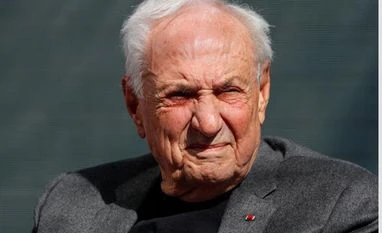 "Frank Gehry, the most celebrated architect of his time, passes away at 96")
Explore Business Standard

Associate Sponsors
Among his many masterpieces are the Guggenheim Museum in Bilbao, Spain; The Walt Disney Concert Hall in Los Angeles and Berlin's DZ Bank Building
Frank Gehry, who designed some of most imaginative buildings ever constructed and achieved a level of worldwide acclaim seldom afforded any architect, has died. He was 96.
Gehry died Friday in his home in Santa Monica after a brief respiratory illness, said Meaghan Lloyd, chief of staff at Gehry Partners LLP.
Gehry's fascination with modern pop art led to the creation of some of the most striking buildings ever constructed. Among his many masterpieces are the Guggenheim Museum in Bilbao, Spain; The Walt Disney Concert Hall in Los Angeles and Berlin's DZ Bank Building.
He also designed an expansion of Facebook's Northern California headquarters at the insistence of the company's CEO, Mark Zuckerberg.
Gehry was awarded every major prize architecture has to offer, including the field's top honour, the Pritzker Prize, for what has been described as refreshingly original and totally American work.
Other honours include the Royal Institute of British Architects gold medal, the Americans for the Arts lifetime achievement award, and his native country's highest honour, the Companion of the Order of Canada.
Years after he stopped designing ordinary looking buildings, word surfaced in 2006 that the pedestrian Santa Monica mall project that had led to his career epiphany might be headed for the wrecking ball. Gehry admirers were aghast, but the man himself was amused.
"They're going to tear it down now and build the kind of original idea I had," he said with a laugh.
Eventually the mall was remodelled, giving it a more contemporary, airy outdoor look. Still, it's no Gehry masterpiece.
Gehry, meanwhile, continued to work well into his 80s, turning out heralded buildings that remade skylines around the world.
The headquarters of the InterActiveCorp, known as the IAC Building, took the shape of a shimmering beehive when it was completed in New York City's Chelsea district in 2007. The 76-story New York By Gehry building, once one of the world's tallest residential structures, was a stunning addition to the lower Manhattan skyline when it opened in 2011.
That same year, Gehry joined the faculty of his alma mater, the University of Southern California, as a professor of architecture. He also taught at Yale and Columbia University.
Not everyone was a fan of Gehry's work. Some naysayers dismissed it as not much more than gigantic, lopsided reincarnations of the little scrap-wood cities he said he spent hours building when he was growing up in the mining town of Timmins, Ontario.
Princeton art critic Hal Foster dismissed many of his later efforts as oppressive, arguing they were designed primarily to be tourist attractions. Some denounced the Disney Hall as looking like a collection of cardboard boxes that had been left out in the rain.
Still other critics included Dwight D. Eisenhower's family, who objected to Gehry's bold proposal for a memorial to honour the nation's 34th president. Although the family said it wanted a simple memorial and not the one Gehry had proposed, with its multiple statues and billowing metal tapestries depicting Eisenhower's life, the architect declined to change his design significantly.
If the words of his critics annoyed Gehry, he rarely let on. Indeed, he even sometimes played along. He appeared as himself in a 2005 episode of The Simpsons cartoon show, in which he agreed to design a concert hall that was later converted into a prison.
He came up with the idea for the design, which looked a lot like the Disney Hall, after crumpling Marge Simpson's letter to him and throwing it on the ground. After taking a look at it, he declared, Frank Gehry, you've done it again! Some people think I actually do that, he would later tell the AP.
Ephraim Owen Goldberg was born in Toronto on Feb. 28, 1929, and moved to Los Angeles with his family in 1947, eventually becoming a US citizen. As an adult, he changed his name at the suggestion of his first wife, who told him antisemitism might be holding back his career.
Although he had enjoyed drawing and building model cities as a child, Gehry said it wasn't until he was 20 that he pondered the possibility of pursuing a career in architecture, after a college ceramics teacher recognized his talent.
It was like the first thing in my life that I'd done well in, he said.
He went on to earn a degree in architecture from the University of Southern California in 1954. After serving in the Army, he studied urban planning at Harvard University.
His survivors include his wife, Berta; daughter, Brina; sons Alejandro and Samuel; and the buildings he created.
Another daughter, Leslie Gehry Brenner, died of cancer in 2008.
(Only the headline and picture of this report may have been reworked by the Business Standard staff; the rest of the content is auto-generated from a syndicated feed.)
First Published: Dec 06 2025 | 8:01 AM IST

