
Germany conducts checks at land borders to crack down irregular migration
The police controls began at the borders with France, the Netherlands, Belgium, Luxembourg and Denmark
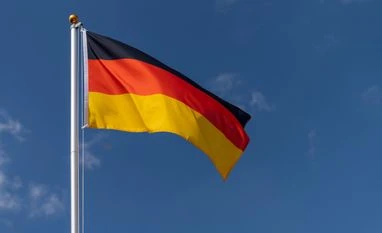 "Germany conducts checks at land borders to crack down irregular migration")
WebinarsNew
Deep DiveNew
Explore Business Standard
The police controls began at the borders with France, the Netherlands, Belgium, Luxembourg and Denmark
Germany on Monday began random checks at its borders with five Western European nations as it seeks to crack down on irregular migration, expanding a system of controls that are already in place at four other borders.
The police controls began at the borders with France, the Netherlands, Belgium, Luxembourg and Denmark on Monday morning and are due to continue for six months. Germany has already been carrying out the checks at its borders with Poland, the Czech Republic, Austria and Switzerland since last year.
Germany, a European Union member, announced last week that it was expanding border checks to all nine of its land borders this week as part of an effort to crack down on irregular migration and crime following recent extremist attacks.
Last month, a knife attack blamed on a Syrian asylum-seeker in Solingen killed three people. The suspect claimed to be inspired by the Islamic State group. In June, a knife attack attributed to an Afghan immigrant left a police officer dead and four other people wounded.
The border controls are testing European unity because it is seen by some as a step away from the spirit of the EU's free travel arrangement known as Schengen. The freedom of citizens in Europe to travel freely across borders for work and pleasure is one of the most beloved benefits of the EU.
According to the EU, member states are allowed to temporarily reintroduce controls at the EU's so-called internal borders in case of a serious threat, such as one to internal security. But it also says border controls should be applied as a last resort in exceptional situations and must be time-limited.
Such limitations are often put in place during major sporting events, including the recent Olympic Games in Paris and the European soccer championship.
The unpopular coalition government of Chancellor Olaf Scholz has imposed the border controls as it seeks to crack down on irregular immigration after the far right did well in two recent state elections in eastern Germany. Another is coming next Sunday in Brandenburg, the state surrounding Berlin.
(Only the headline and picture of this report may have been reworked by the Business Standard staff; the rest of the content is auto-generated from a syndicated feed.)
First Published: Sep 16 2024 | 2:51 PM IST


 Connect with us on WhatsApp