Home / World News / Nepal protests: Gen Z leaders meet Prez, army chief to form interim govt
Nepal protests: Gen Z leaders meet Prez, army chief to form interim govt
Former chief justice Sushila Karki, Kathmandu Mayor Balendra Shah and two others were among those being considered by the protesting Gen Z group to lead the interim government, sources added
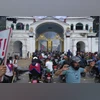
Nepal plunged into a political crisis as Oli resigned on Tuesday in the face of massive protests, prompting the Nepal Army to take over the law and order situation. (Photo:PTI)
2 min read Last Updated : Sep 11 2025 | 10:31 PM IST
Representatives of the protesting 'Gen Z' group, Nepalese President Ramchandra Paudel and Army Chief Ashok Raj Sigdel were holding talks at the army headquarters in Bhadrakali on Thursday to pick a leader to run an interim government, sources said.
Former chief justice Sushila Karki, Kathmandu Mayor Balendra Shah and two others were among those being considered by the protesting Gen Z group to lead the interim government, they added.
The interim leader will replace Prime Minister K P Sharma Oli, who resigned on Tuesday following a violent student-led agitation.
An Army spokesperson confirmed that discussions are ongoing with various stakeholders. He, however, did not provide any names.
We are holding rounds of talks with different stakeholders. The talks are mainly focused on finding a way out from the current stalemate and at the same time maintaining law and order situation in the country, the Army spokesperson said.
There were dozens of youths eagerly waiting outside the Army Headquarters to hear the decision as the meeting progressed.
A similar meeting was held on Wednesday, but it yielded no results. According to sources, the meeting is aimed at finding a way out of the current political stalemate, including nominating a caretaker leader and drawing a roadmap ahead.
The new executive head will be the one who will conduct fresh elections within a specified time frame, the sources added.
Apart from Karki and Shah, the other two names under consideration are former CEO of Nepal Electricity Authority Kulman Ghising and Mayor of Dharan Harka Sampang.
Though sources suggested that Mayor Shah has expressed his support for Karki, the picture is still not clear as to who will head the new cabinet. There are reservations in a section of the Gen Z group about her name.
Nepal plunged into a political crisis as Oli resigned on Tuesday in the face of massive protests, prompting the Nepal Army to take over the law and order situation.
Meanwhile, a small group of students from major parties, holding demonstrations in some parts of Kathmandu, have cautioned that the Constitution should be preserved and democracy and human rights should be protected while forming a new government.
(Only the headline and picture of this report may have been reworked by the Business Standard staff; the rest of the content is auto-generated from a syndicated feed.)


 "Nepal protests: Gen Z leaders meet Prez, army chief to form interim govt")

