
Pope Leo XIV's name choice shows his commitment to social justice
Pope Leo XIII, who was head of the Catholic Church from 1878 to 1903, laid the foundation for modern Catholic social thought, most famously with his 1891 encyclical Rerum Novarum
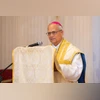 "Pope Leo XIV's name choice shows his commitment to social justice")
WebinarsNew
Deep DiveNew
Explore Business Standard
Pope Leo XIII, who was head of the Catholic Church from 1878 to 1903, laid the foundation for modern Catholic social thought, most famously with his 1891 encyclical Rerum Novarum
Pope Leo XIV's choice of name signals a commitment to social justice which is very much in line with the late Pope Francis' global ministry.
I think a lot us had a question mark when they elected an American, and then he selected the name Pope Leo XIV, said Natalia Imperatori-Lee, the chair of religious studies at Manhattan University. It really means to me he will continue the work of Leo XXIII.
Pope Leo XIII, who was head of the Catholic Church from 1878 to 1903, laid the foundation for modern Catholic social thought, most famously with his 1891 encyclical Rerum Novarum, which addressed workers' rights and capitalism at the dawn of the industrial age.
He criticised both laissez-faire capitalism and state-centric socialism, giving shape to a distinctly Catholic vein of economic teaching.
The name is a deep sign of commitment to social issues," said Imperatori-Lee. I think this (new) pope is saying something about social justice, by choosing this name, that it is going to be a priority. He is continuing a lot of Francis' ministry.
Another predecessor, Pope Leo I, was known for repelling the barbarian invasion of Atilla the Hun in 452 AD and dissuading him from sacking Rome through diplomacy, Italian Cardinal Maurizio Piacenza told RAI Italian state TV.
He also noted that Pope Leo XIII elevated the Sanctuary of Our Lady of the Rosary of Pompeii to a papal basilica in 1901.
For most of the Catholic Church's first millennium, popes used their given names. The first exception was the 6th century Roman Mercurius, who had been named for a pagan god and chose the more appropriate name of John II.
The practice of adopting a new name became ingrained during the 11th century, a period of German popes who chose names of early church bishops out of a desire to signify continuity, according to Rev. Roberto Regoli, a historian at Rome's Pontifical Gregorian University.
For many centuries, new popes tended to choose the name of the pope who had elevated them to cardinal. John was the most popular, chosen by 23 popes, followed by Benedict and Gregory, each with 16.
It was from the mid-20th century that new popes begin to choose names signaling the aim of their papacy, Regoli said.
(Only the headline and picture of this report may have been reworked by the Business Standard staff; the rest of the content is auto-generated from a syndicated feed.)
First Published: May 09 2025 | 7:35 AM IST


 Connect with us on WhatsApp