
Protesters gather outside UN climate summit hall as progress on deal slows
Activists waved flags, snapped their fingers, and hummed and mumbled chants in a silent protest, with many covering their mouths with the word Silenced
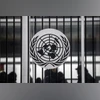 "Protesters gather outside UN climate summit hall as progress on deal slows")
WebinarsNew
Deep DiveNew
Explore Business Standard
Activists waved flags, snapped their fingers, and hummed and mumbled chants in a silent protest, with many covering their mouths with the word Silenced
Hundreds of activists formed a human chain outside one of the main plenary halls at the United Nations climate summit on what is traditionally their biggest protest day during the two-week talks.
The demonstration in Baku, Azerbaijan will be echoed at sites around the world in a global day of action for climate justice that's become an annual event.
Activists waved flags, snapped their fingers, and hummed and mumbled chants in a silent protest, with many covering their mouths with the word Silenced.
Demonstrators held up signs calling for more money to be pledged for climate finance, which involves cash for transitioning to clean energy and adapting to climate change.
It comes as negotiators at the venue try to hammer out a deal for exactly that but progress has been slow and observers say the direction of any agreement is still unclear.
Tired but inspired, activists vow to keep fighting' Lidy Nacpil said protestors like her are not surprised about how negotiations are going. But past wins like a loss and damage fund that gives developing nations cash after extreme weather events exacerbated by climate change keep organisers going, said Nacpil, a coordinator with the Asian Peoples' Movement on Debt and Development.
The role we play is to increase the pressure, she said of the action. We know we're not going to get the results that the world needs in this round of negotiations, but at least to bring us many steps closer is our hope, is our aim.
She added: I think we have no option but to keep fighting ... It's the instinctive response that anyone, any living being, living creatures will have, which is to fight for life and fight for survival.
Tasneem Essop said she was inspired by the action, which was challenging to organise. To be able to pull off something where people feel their own power, exercise their own power and get inspired in this creative way, I'm super excited about this, she said.
Essop says she's not very optimistic about an outcome on finance, but knows next week will be pivotal. We can't end up with a bad deal for the peoples of the world, those who are already suffering the impacts of climate change, those who need to adapt to an increasing and escalating crisis, she said. We fight until the end.
On a deal for climate cash, there's not much progress Negotiators at COP29, as the talks are known, are working on a deal that might be worth hundreds of billions of dollars to poorer nations. Many are in the Global South and already suffering the costly impacts of weather disasters fueled by climate change.
Several experts have said USD 1 trillion a year or more is needed both to compensate for such damages and to pay for a clean-energy transition that most countries can't afford on their own.
Samir Bejanov, deputy lead negotiator of this year's climate talks said in a press conference that the climate finance talks were moving too slowly.
I want to repeat our strong encouragement to all parties to make as much progress as possible, he said. We need everyone to approach the task with urgency and determination.
Observers were also disappointed at the pace of progress.
This has been the worst first week of a COP in my 15 years of attending this summit, said Mohamed Adow, of climate think tank Power Shift Africa. "There's no clarity on the climate finance goal, the quality of the finance or how it's going to be made accessible to vulnerable countries.
I sense a lot of frustration, especially among the developing country blocks here, he said.
Panama environment minister Juan Carlos Navarro agreed, telling The Associated Press he is not encouraged by what he's seeing at COP29 so far.
What I see is a lot of talk and very little action, he said, noting that Panama is among the group of countries least responsible for warming emissions but most vulnerable to the damage caused by climate change-fueled disasters.
We must face these challenges with a true sense of urgency and sincerity, he said. We are dragging our feet as a planet.
(Only the headline and picture of this report may have been reworked by the Business Standard staff; the rest of the content is auto-generated from a syndicated feed.)
First Published: Nov 16 2024 | 6:28 PM IST


 Connect with us on WhatsApp