
QUAD foreign ministers concerned about East and South China sea situation
The leaders expressed their support for ASEAN and its centrality, the Pacific Islands Forum and Pacific-led regional groupings, as well as the Indian Ocean Rim Association
 "QUAD foreign ministers concerned about East and South China sea situation")
Explore Business Standard

Associate Sponsors
Co-sponsor
The leaders expressed their support for ASEAN and its centrality, the Pacific Islands Forum and Pacific-led regional groupings, as well as the Indian Ocean Rim Association
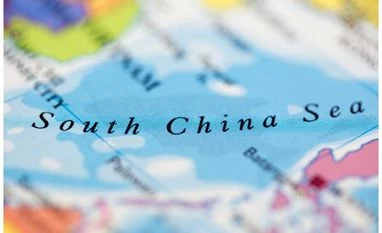
The Foreign ministers of the QUAD nations met in Washington, DC, on July 1 to reaffirm their steadfast commitment to a free and open Indo-Pacific. US Secretary of State Marco Rubio, External Affairs Minister S Jaishankar, Japan's Minister of Foreign Affairs Takeshi Iwaya, and Australian Foreign Minister Penny Wong expressed concern about the situation in the East China Sea and South China Sea.
The four leaders reiterated their strong opposition to any unilateral actions that attempt to change the status quo by force or coercion. Foreign Ministers expressed concern regarding dangerous and provocative actions, including interference with offshore resource development, the repeated obstruction of the freedoms of navigation and overflight, and the dangerous maneuvers by military aircraft and coast guard and maritime militia vessels, especially the unsafe use of water cannons and ramming or blocking actions in the South China Sea.
The joint statement released following the QUAD Foreign Ministers Meeting stated, "We remain seriously concerned about the situation in the East China Sea and South China Sea. We reiterate our strong opposition to any unilateral actions that seek to change the status quo by force or coercion. We express our serious concerns regarding dangerous and provocative actions, including interference with offshore resource development, the repeated obstruction of the freedoms of navigation and overflight, and the dangerous maneuvers by military aircraft and coast guard and maritime militia vessels, especially the unsafe use of water cannons and ramming or blocking actions in the South China Sea."
"These actions threaten peace and stability in the region. We are seriously concerned by the militarization of disputed features. We emphasize the importance of upholding freedom of navigation and overflight, other lawful uses of the sea, and unimpeded commerce consistent with international law, as reflected in the United Nations Convention on the Law of the Sea (UNCLOS)," it added.
The four leaders reaffirmed that maritime disputes must be resolved peacefully and as per international law and reiterated that the award rendered by the Arbitral Tribunal on July 12, 2016, is a significant milestone and the basis for peacefully resolving disputes between the parties.
According to the joint statement, the foreign ministers of India, the US, Australia, and Japan underscored their commitment to defending the rule of law, sovereignty, and territorial integrity. "We are committed to a region where all countries are free from coercion and strongly oppose any unilateral actions that seek to change the status quo by force or coercion."
During the meeting, the four leaders discussed the opportunities and challenges in the Indo-Pacific and how they can further harness the strengths and resources of the QUAD to advance peace, security and prosperity, working with the regional partners. ALSO READ: QUAD to reiterate commitment to free Indo-Pacific: US State Dept official
"To ensure the QUAD's enduring impact, we are pleased to announce today a new, ambitious, and strong agenda focused on four key areas: maritime and transnational security, economic prosperity and security, critical and emerging technology, and humanitarian assistance and emergency response. Through this renewed focus, we will sharpen the QUAD's ability to leverage our resources to address the region's most pressing challenges," it added.
The leaders expressed their support for ASEAN and its centrality, the Pacific Islands Forum and Pacific-led regional groupings, as well as the Indian Ocean Rim Association (IORA).
The Foreign Ministers of the QUAD nations expressed concern regarding the abrupt constriction and future reliability of key supply chains, particularly critical minerals. They emphasised the importance of diversified and reliable global supply chains.
The joint statement said, "We are deeply concerned about the abrupt constriction and future reliability of key supply chains, specifically for critical minerals. This includes the use of non-market policies and practices for critical minerals, certain derivative products, and mineral processing technology."
"We underscore the importance of diversified and reliable global supply chains. Reliance on any one country for processing and refining critical minerals and derivative goods production exposes our industries to economic coercion, price manipulation, and supply chain disruptions, which further harms our economic and national security," it added.
The four leaders condemned North Korea's destabilising launches using ballistic missile technology and its continued pursuit of nuclear weapons in violation of multiple UN Security Council resolutions (UNSCRs). They reaffirmed their commitment to the complete denuclearisation of the Korean Peninsula, consistent with relevant UNSCRs.
Jaishankar, Wong, Rubio, and Iwaya urged North Korea to abide by all its obligations under the UNSCRs. They expressed "grave concern" over North Korea's malicious cyber activity, including cryptocurrency theft and use of workers abroad to fund North Korea's unlawful weapons of mass destruction and ballistic missile programs.
The four leaders said that they will continue to support efforts to address contraventions of North Korea-related UNSCRs and urge all UN Member States to abide by their international obligations under the UNSCRs to implement sanctions, including the prohibition on the transfer to North Korea or procurement from North Korea of all arms and related material.
They expressed concern about the nations that are deepening military cooperation with North Korea, which directly undermines the global non-proliferation regime and emphasised the necessity of immediate resolutions of the abductions issue.
(Only the headline and picture of this report may have been reworked by the Business Standard staff; the rest of the content is auto-generated from a syndicated feed.)
First Published: Jul 02 2025 | 10:03 AM IST

