Mark Landler
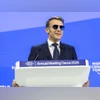
When President Emmanuel Macron of France welcomed the leaders of Denmark and Greenland for lunch in Paris on Wednesday, he was still sporting the blue-tinted aviator sunglasses that have become both a stylish personal accessory and a kind of metaphor for Top Gun-like swagger.
His punchy message hadn’t changed from when he first wore the shades last week, during a speech at the World Economic Forum in Davos, Switzerland: France, he vowed, would stand firm with its neighbours as they face an acquisitive President Trump. Greenland was a “strategic wake-up call for all of Europe,” he declared.
For Macron, Davos was a gift. The sunglasses — necessary, because of a medical condition in his eye — and his meme-ready repetition of the phrase “for sure” in his speech turned him into a social-media sensation. His defiant tone won him rare support across France’s fractured political landscape, after a year in which he had been punished by voters for pushing through an unpopular pension reform and written off by many as a lame duck.
With France’s domestic turmoil subsiding for now, analysts said Macron, 48, would not face pressure to resign or call an early election. That will free him to roam the world stage. Llorca said he hoped Macron would reach for the grand vision of a united, sovereign and self-reliant Europe that he first articulated in a landmark speech at the Sorbonne in 2017.
Beyond speeches and symbolic acts, though, Macron still faces tough constraints, starting with Europe’s disjointed leadership, which makes uniting the Continent behind ambitious goals challenging for anybody.
France’s domestic disarray has diminished its influence within the European Union (EU) at a time when the EU is exercising a more central role in coordinating defence policy, amid pressure from Trump and threats from Russia. France itself has balked at some changes, like allowing Britain to play a full role in a common procurement system for military hardware. Its squabbles with Germany have so far grounded plans for a next-generation European fighter jet.
France’s straitened finances, which were at the root of its monthslong budget impasse, will limit its capacity to rearm on the scale of its German neighbours. At current spending levels, analysts say, France is not on track to meet the pledge by North Atlantic Treaty Organization (NATO) members to spend 5 percent of their gross domestic product on defence and defence-related programs by 2035.
Moreover, the maneuvering before next year’s elections will give France’s political parties little reason to grant Macron major victories, even on issues involving defence and security.
Then, too, there is a fear that the far-right party, the National Rally, which leads opinion polls, will take control of France next year. That, in turn, would raise profound questions about France’s role in Europe, starting with its support for Ukraine’s membership in the European Union. The party remains ambivalent about Russia, with some of its members reluctant to confront President Vladimir V Putin. Nearly nine years into his presidency, analysts say, Europe’s leaders are finally rallying behind Macron’s call for Europe to wean itself off reliance on the American security umbrella.

 "Sunglasses and global turmoil give Macron a rare lift at home and abroad")

