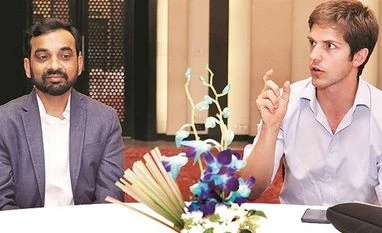
Mahesh Babu, the company's CEO said that in the last fiscal year, the company was able to sell more than 4,000 vehicles, of which passenger cars accounted for around 1,300 units. It accounted for around 0.5 per cent of the entire sales volume of Mahindra & Mahindra in the last fiscal year.
While this year, riding on optimism over adoption of electric vehicles in many Indian states and formulation of favourable state government incentives, he expects sales volume to double.
“The passenger car sales have been stagnant while sales of commercial vehicles have more than doubled and institutional sales have been good. Now, we will be focusing on sales to fleet operators which is expected to drive growth”, he said.
A significant portion of Babu’s optimism arises out of its recent partnership with Zoomcar, which has targeted to build a significant fleet of electric cars.
Greg Moran, CEO at Zoomcar said that this company, which offers self-driven car rentals sourced from individual owners, has targeted a fleet size of 15,000-20,000 electric vehicles by 2020.
Zoomcar’s current fleet size is 4,000 cars which, Moran plans to increase to 30,000-40,000 by 2020.
The biggest disadvantage of electric vehicles is the limitation of charging stations and points and the run-time of cars on a single charge which is slowing down its adoption. Typically meant for intra-city commutation, e2oPlus, Mahindra Electric’s flagship model can cover a 100-km distance on a single charge.


 "Mahindra Electric, Uber, Ola, Zoomcar, Mahesh Babu, Mahindra Finance")