


Home / India News / Newsmaker: Meet Bharat Vatwani, a helping hand for mentally-ill vagrant
Newsmaker: Meet Bharat Vatwani, a helping hand for mentally-ill vagrant
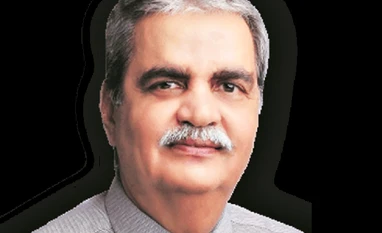
Vatwani and his wife Smita, both trained psychiatrists, have been working since 1988
 "Newsmaker: Meet Bharat Vatwani, a helping hand for mentally-ill vagrant")
premium
Last Updated : Jul 30 2018 | 2:33 AM IST
The Shraddha Rehabilitation Foundation is about simplicity. “Shraddha is a humane experiment, perhaps the only one of its kind in India, providing treatment, custodial care and rehabilitation to a neglected group of mentally-ill wandering roadside destitute and reuniting them with their lost families...” its mission statement says.
Its founder, Bharat Vatwani, was among the winners of the 2018 Ramon Magsaysay Award, the equivalent of the Nobel in the social activity sphere.
Explaining the magnitude of the problem, the Foundation says, according to a NIMHANS report submitted to the central government, mental illness afflicts 13.7 per cent of the population that is, 167 million Indians, with 1.9 per cent of the population (23 million Indians) afflicted with severe mental disorders.
“80 per cent of our districts run without a single psychiatrist. While India has a ratio of three psychiatrists for every million population, the WHO estimates of 2011 indicate that 81 per cent people with severe mental disorders receive no treatment in India. There are just 43 government-funded mental hospitals with 17,800 beds. This coupled with a meagre 10,000 beds available in psychiatry wards of government hospitals makes for an average of one bed available for 44,000 people. The incidence of mental illness among the homeless is over 50 per cent. With the government spending 0.06 per cent of its budget on mental health, there is serious underinvestment,” the foundation says.
Vatwani and his wife Smita, both trained psychiatrists, have been working since 1988 to address a part of this huge problem. They have successfully treated and reunited hundreds of patients, mostly destitute who have wandered away from home. “Schizophrenia is characterised by a profound disruption in thinking and perception, affecting the patient’s loss of sense of self, language and thought, and the impaired functioning causing loss of acquired abilities, leading to loss of livelihood and relationships. Shraddha has focussed on roadside destitute who are mentally ill and need treatment, rehabilitation, and reunion with their loved ones. There is no known institution in India that services these marginalised members of our society,” the Vatwanis say.
One among hundreds of before and after stories chronicled and recorded by Shraddha is about Revallamma. The 35-year-old woman who was picked up from Mumbai streets and brought to the Foundation. She was laughing, muttering to herself and displayed symptoms of mental illness. Within six weeks of nursing and psychiatric care and treatment, her condition improved and she was able to tell doctors the name of the village which was about 200 km from Hyderabad, in Andhra Pradesh. She had been away for four years and her mother had stopped looking for her in despair. The reunion was emotional and joyous.
Over 3,000 ‘vagrants’ and ‘tramps’ have been rescued by Shraddha.
Shraddha says its major organisational weakness is its lack of appeal to the common person in terms of empathy to the cause which it represents. “Unlike the cause of the child or the cause of the old age or the cause of religion which are so often espoused by the common Indian, the cause of the wandering insane does not appeal to people,” the organisation says. It also lacks of proper, institutionalised PR and a steady flow of funds.
The Magasaysay award will bring recognition and some money. But the Vatwanis will not be deterred by a want of either.