


Let Only Red Flowers Bloom: How Xi is remodelling Chinese identity
His programmes are not only questioning but even verifying loyalty, with the ideal of Chinese women shifting in the face of dwindling population
 "BOOK")
premium
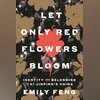
Let Only Red Flowers Bloom: Identity and Belonging in Xi Jinping’s China
5 min read Last Updated : Jan 29 2026 | 10:51 PM IST
Listen to This Article
Let Only Red Flowers Bloom: Identity and Belonging in Xi Jinping’s China
By Emily Feng
Published by Crown
285 pages ₹2,206
Emily Feng’s Let Only Red Flowers Bloom: Identity and Belonging in Xi Jinping’s China is, in her words, “a book about identity in China, how the state controls expressions of identity, and who gets to be considered Chinese”. Historically, identity construction has played a crucial role in nation building; in Xi’s China, it is intertwined with “the project of Chinese rejuvenation, and in the process, [has] redrawn the contours of Chinese identity”. Xi has successfully redefined the idea of what it means to be Chinese and of an ideal Chinese citizen. Absolute, blind and unquestioning loyalty to the Party is non-negotiable. The legitimacy of this loyalty is interlinked to whether one is ethnically Han or non-Han, atheist or religious.
Xi’s programme not only questions but also verifies loyalty in all domains: Politics, economics or the personal. When it comes to economics, Xi has not hesitated from trimming the private sector and its supporters. Jack Ma’s fate is well known, highlighting the dictum that there is no seat of power outside of the Party and wealth does not necessarily translate into security. “In the end, the Party trumped all. It gave you opportunities to create fabulous wealth and it could also take everything away in an instant,” Feng writes. The relentless anti-corruption drive has also reasserted the supremacy of the Party.
Though the Chinese media has long been mandated to toe the Party line, a booming internet landscape has not made it possible to escape the Party’s command and control. The luxury of anonymity does not exist. Xi has been pushing the idea of “cyber sovereignty”, asserting that, “Like in the real world, freedom and order are both necessary in cyberspace. Freedom is what order is meant for, and order is the guarantee of freedom.”
Xi has also been driving the idea of what it means to be an ideal Chinese woman against the backdrop of the declining population. “[Today] … reproduction and marriage remain influential in shaping how the country understands female identity and the role women should play in Chinese society.” From pushing draconian policies such as the one-child policy to encouraging women to have more children today, the state continues to define the role of the Chinese women.
This renewed creation of identity has also ruthlessly redefined the Party’s approach towards China’s 55 ethnic minorities, including the Uyghurs, Tibetans and Huis. The Chinese state has been unyielding in controlling the narrative vis-à-vis religion. In this context, the author makes an interesting observation: “Many Han Chinese today still find it inconceivable that they can convert to Islam. Muslims, they believe, have to be born Muslim.”
The world is aware of the “Sinification” and “Hanization” programmes in Xinjiang, the most recent of which pushed millions of minorities into vocational/educational centres in an attempt to mould their identities to Party specifications. To erase the distinct ethnic traits of the minorities, the state dictates the architecture, language, food and even names. The emphasis on the use of mandarin has undermined minority languages while strengthening the idea of uniformity and linear history.
Feng, ethnically Han and a reporter for NPR, offers a nuanced understanding of what the Chinese state demands from its citizens through multiple interviews. According to Xi, there is a uniquely Chinese way of running a country, one administered by the Party alone. The abandonment of the idea of “one country, two systems” that governed Hong Kong since the British left and the weakening of the city’s Basic Law are testament to this dictum. As Feng points out, “The protests that kicked off that summer in 2019 were Hong Kong’s biggest protests yet, one over the identity of Hong Kong and what it should stand for.”
The National Security Law has changed everything. “The law’s precepts were diametrically opposed to Hong Kong values, the core of its identity and what had separated it in spirit, if not politically from mainland China,” Feng says. With respect to Taiwan, the one-China policy complicates the debate. The more Taiwan wants to assert its distinct identity, and tries to “peel away the layers of state ‘Chinese-ness’ imposed on its Taiwanese identity” the more the questions surrounding ethnicity are exposed.
The book describes how Xi has unleashed the full might of the state to streamline any independent and critical voices coming from investigative journalists, human rights lawyers, LGBTQ communities, minorities and so on. Even the diaspora is not immune to the long arm of the Party. “The diversity of the Chinese diaspora, now numbering some 60 million people, has led to literal clashes in Chinese identity politics on American college campuses and cities,” Feng writes. To be Chinese, wherever you are, means adhering to the Party line and working towards the “rejuvenation of the Chinese nation” as envisaged by the Party. In short, as the title of the book suggests, Xi’s garden permits only red flowers to bloom; everything else is relentlessly and mercilessly pruned.
The reviewer is associate professor, O P Jindal Global University
Topics : Xi Jinping China BOOK REVIEW Book reading BS Reads