


Facelift for stations a priority
High-speed trains, better parcel traffic promised; religious tourism to be promoted
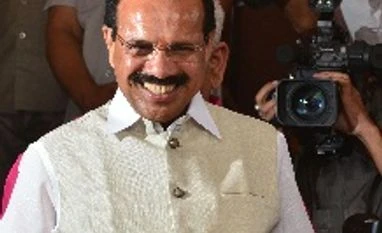)
In a significant departure from populist announcements in past railway budgets, Minister D V Sadananda Gowda's proposed initiatives for the coming year have tried to strike a balance and set a reform path.
With a focus on passenger amenities, Gowda has laid down a plan for modernisation of stations. The cash-starved Indian Railways plans to rope in private entities for station management, including ensuring cleanliness, safe drinking water and battery-operated cars at stations. Budgetary allocation towards cleanliness at stations has been increased 40 per cent compared to 2013-14.
For these initiatives, the railway minister sought the help of non-governmental organisations, trusts, charitable institutions and companies. Experts, however, say the Railways' track record of engagement with the private sector isn't encouraging.

High Speed Rail Corporation was allocated Rs 100 crore. The funds will be used to train railway officials and undertake various feasibility studies for the expansion of high-speed network across the country.
The Mumbai-Ahmedabad corridor has been identified as the country's first high-speed corridor. Currently, feasibility studies on this corridor are being conducted by Japan International Cooperation Agency. Earlier, RITES, an enterprise of the government of India had also carried out a feasibility study.
Nine corridors have been identified for semi high-speed trains (160-200 km/hr) on existing tracks.
| GOWDA’S BLUEPRINT |
|
To boost efficiency and devise new strategies, the Railways plans to set up incubation centres for new ideas. A railway university for technical and non-technical courses has been proposed, though no budgetary allocation has been made towards this.
In another initiative, the railway ministry will hire summer interns from management and technical institutions. Project-monitoring and management groups will be set up at the state and Railway Board levels. These groups will comprise officers from state governments and the railway ministry.
To ensure efficiency in parcel and passenger movements, parcel traffic will now be segregated and private entities will be roped in to enhance these services
Through third-party audits, a quality-assurance mechanism will also be put in place. To improve the quality of food served in trains, the Railways will introduce ready-to-eat meals of reputed brands, in a phased manner. Expansion of food courts and SMS-supported food orders are other key initiatives planned.
Compared with the 67 express trains introduced in the 2013-14 budget, Gowda introduced only 27. The number of new passenger trains stood at eight, against 26 in 2013-14.
Earlier, a high-level committee on safety had cautioned against increasing the number of trains on existing route lengths.
For more road over-bridges and road under-bridges, a provision of Rs 1,785 crore was made. These will be constructed through cost-sharing agreements with states. Automatic doors for sub-urban and long-distance coaches will be introduced on a pilot basis.
Allocation to critical projects in the Northeast was increased 54 per cent. Of the 23 projects in that region, 11 have been identified as national projects. The Railways is also working with the government of Jammu & Kashmir to connect the Udhampur-Banihal portion.
With a focus on religious tourism, the Railways plans to link the key 'chaardhaam' pilgrimage sites. Also on the cards is educational tourism in the Northeast.
Don't miss the most important news and views of the day. Get them on our Telegram channel
First Published: Jul 09 2014 | 12:47 AM IST