


GenAI making IT biz model outdated, says HCLTech CEO C Vijayakumar
IT major will hire more people at the entry level but need specialised skillsets
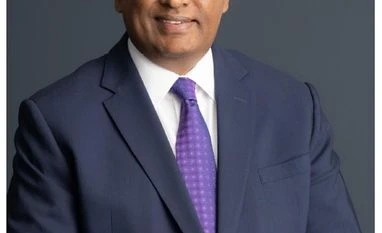 "C Vijayakumar, CEO and managing director, HCLTech")
C Vijayakumar, CEO and managing director, HCLTech
Listen to This Article
The business model of India's IT services industry, built on a symbiotic relationship between revenue and higher employee addition, is out of date and needs to change as new-age technologies such as generative artificial intelligence (GenAI) disrupt the models, said C Vijayakumar, chief executive officer (CEO) of HCLTech.
GenAI has threatened to upend the model established for decades, mainly used for operations support and maintenance of large IT infrastructures, by focusing more on faster output and using a fraction of the workforce that was previously needed.
"The time is out for that model," Vijayakumar said at the Nasscom Technology & Leadership Forum (NTLF) in Mumbai, adding that the aim of clients is to double the revenue with half the existing headcount.
"There has been a lot of linearity in revenue growth for the last 30 years. So, that should start changing. Instead of more input and number of people, there should be more output and outcome, a shift from people-based to platform services. Instead of services, it should be IP-infused solutions as GenAI offers a lot of productivity possibilities," he told Business Standard in an interaction later.
Vijayakumar explained that unlike cloud and digitisation, which were the main topics of discussion a decade ago, the conversation around AI is different. "The changes that AI is assuring are very different, and we need to be more proactive to even categorise our revenues to create completely new businesses," he said.
Also Read

 "stock market")
 "hcltech")
 "Infosys")
 "Infosys")
Analysts and experts have been saying that revenue growth and headcount addition in IT services companies will no longer move in the same trajectory, and HCLTech CEO's comments are one of the clearest indications to that change.
"The decoupling will happen and in the next few years, it will be much more pronounced," he added.
The top five IT firms saw a headcount reduction of 2,587 for the three months ended December 2024, compared to an addition of 15,000 employees in the previous quarter.
Vijayakumar also said that this shift will also mean change in the way skills are hired. “We will hire more people at the entry level but need specialised skillsets. But the expectations from them will be higher. We need to train them more, put them through some simulations, so that they can validate code written by coding assistants rather than just writing code; GenAI gives us higher automaton depending on what we do,” he said.
For software services, one can get about 30 per cent automation, in BPO it is about 40-50 per cent while for IT operations, it gives you 10-12 per cent more, he said. “We will also do external hiring, we will be looking at about 100-200 people with highly specialised skillsets," he added.
Vijayakumar also said that India should build its own large language models (LLMs) to reduce dependency on other countries.
"We should not assume that these (language) models will continue to be open source. I think these are going to be the coins on which geopolitics is going to be played off. To have a long-term competitive advantage, it makes a lot of sense to build and the costs are coming down. We need to find ways to very economically create a training infrastructure to train the models," he said.
More From This Section
 "apple, apple logo")
 "Amazon")
 "Honeywell")
 "Moneyboxx")
Topics : Artificial intelligence HCLTech IT Industry
Don't miss the most important news and views of the day. Get them on our Telegram channel
First Published: Feb 24 2025 | 8:04 PM IST