


Datanomics: How India-Afghanistan ties have shifted under Taliban 2.0
India cautiously renews economic engagement with Afghanistan, balancing humanitarian aid and trade ties without extending formal recognition to the Taliban regime
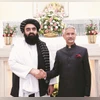 "xternal Affairs Minister S Jaishankar and his Taliban counterpart Amir Khan Muttaqi.")
premium
xternal Affairs Minister S Jaishankar and his Taliban counterpart Amir Khan Muttaqi.
Listen to This Article
With tensions rising between its neighbours Pakistan and Afghanistan, India this week reaffirmed support for the latter’s stability and promised economic cooperation. Since the Taliban’s return in 2021, India’s economic engagement with Taliban has seen a shift — from robust development aid and trade during former president Ashraf Ghani’s regime, it is now more pragmatic. India’s plans to upgrade its Kabul mission and reopen visa services, along with the recent meeting between External Affairs Minister S Jaishankar and his Taliban counterpart Amir Khan Muttaqi, indicate a cautious effort to rebuild ties.