


Cabinet approves ₹23,731 crore GOBARdhan scheme for compressed biogas
The Union Cabinet has approved the ₹23,731-crore GOBARdhan scheme to scale up compressed biogas production, strengthen the circular bioeconomy and boost clean energy adoption
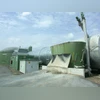 "biogas, biogas plants")
Listen to This Article
A ₹23,731 crore scheme to convert India’s farm refuse and municipal waste into clean fuel and organic manure was approved on Thursday by the Union Cabinet, chaired by Prime Minister Narendra Modi.
Titled “GOBARdhan”, the circular bioenergy scheme will be in effect from 2026-27 to 2035-36 to establish compressed biogas (CBG) as a major pillar of India’s future energy mix.
The scheme will make use of the country’s agricultural residue, cattle dung, press mud, organic waste in cities, and other biomass resources, according to an official statement.
“Through assured demand, remunerative and stable pricing, capital assistance, pipeline infrastructure, credit support and technology development, GOBARdhan will provide the strong and predictable framework required to take India’s CBG sector to national scale,” the Cabinet said, adding the scheme aims to increase CBG production 10-fold and mobilise private investment in circular bioeconomy.
The government is implementing the Sustainable Alternative Towards Affordable Transportation (SATAT) initiative, the Market Development Assistance (MDA) Scheme for organic manure, the Biomass Aggregation Machinery (BAM) Scheme, the Development of Pipeline Infrastructure (DPI) Scheme and Central Financial Assistance (CFA) for CBG plants under the National Bioenergy Programme.
Also Read

 "Highway construction, Infra, Road, Highway")
 "biogas, biogas plant")
 "The National Highways Authority of India's (NHAI) plan to switch to satellite-based toll collection system will not just eliminate the physical toll booths and the road congestion, but will also offer a significant opportunity to insurance companies")
 "Narendra Modi, PM Modi, Modi")
 "META, APOLOGY")
Together, these initiatives have enabled the commissioning of over 200 CBG plants, established production and offtake systems, strengthened the organic manure value chain and demonstrated the potential of CBG across feedstocks and geographies.
“GOBARdhan now takes this progress to the next level. Administered by the Ministry of Petroleum and Natural Gas, the Scheme creates one integrated platform across the entire CBG value chain. This will enable faster implementation, stronger project economics and greater certainty for investors, lenders and developers,” the Cabinet said.
CBG is chemically equivalent to natural gas and can be integrated into the gas ecosystem, combining the benefits of a renewable fuel with the reach and utility of India’s expanding gas infrastructure.
Each CBG plant also creates a local circular economy around agricultural residue, cattle dung and other organic resources. It generates opportunities in feedstock supply, transportation, plant operations and organic manure production, while supporting cleaner waste management and lower greenhouse gas emission.
The GOBARdhan scheme will introduce a stable, administered CBG price of ₹2,110 per metric million British thermal unit (MMBTU), supported through a government-backed pricing framework that will provide long-term revenue visibility.
Commenting on the scheme, Sanjay Ganjoo, director general, Indian Federation of Green Energy, said it had the potential to do for India’s biogas sector what the production-linked initiative scheme did for solar manufacturing — transform policy intent into bankable projects.
The government has defined six “growth engines” under GOBARdhan, including assured CBG offtake, stable the CBG pricing framework, capital assistance, development of pipeline infrastructure, credit guarantee support, and a CBG ecosystem challenge fund.
Under the scheme, a dedicated CBG offtake assurance framework will be established.
“Procurement by City Gas Distribution entities will support achievement of the notified CBG Obligation trajectory of 3 per cent in 2026-27, 4 per cent in 2027-28 and 5 per cent from 2028-29 onwards in the CNG (Transport) and PNG (Domestic) segments,” the Cabinet said.
The GOBARdhan scheme will also introduce a stable, administered CBG price of ₹2,110 per metric million British thermal unit (MMBTU), supported through a government-backed pricing framework that will provide long-term revenue visibility.
Eligible greenfield CBG projects will receive capital assistance of up to ₹2 crore per tonne per day (TPD) of installed CBG capacity.
This support will extend beyond the core plant machinery to critical value-chain assets for feedstock aggregation, organic manure processing and value addition.
Brownfield projects expanding their production capacity will also be eligible.
“A dedicated Credit Guarantee mechanism will strengthen lender confidence and expand the flow of institutional credit to eligible MSME-based CBG projects. By sharing a portion of lending risk, the mechanism will improve access to affordable finance, reduce collateral requirements and support faster project development,” the Cabinet said.
Further, the dedicated CBG challenge fund will support feedstock resource assessment and mapping, feedstock aggregation infrastructure, district-level CBG development planning, technology adoption, process improvement, value addition of organic manure, and capacity building.
“India’s challenge has never been feedstock availability. The real bottlenecks have been assured offtake, stable pricing, evacuation infrastructure and efficient feedstock aggregation. By supporting both production and distribution infrastructure, the government has addressed the sector’s most critical challenges,” he said.
Ganjoo said assured offtake and pipeline connectivity would improve project bankability, enhance investor confidence and provide lenders with the long-term revenue visibility required to finance projects. Also, organised procurement of paddy straw, press mud and other biomass will strengthen farmer participation and create rural value chains.
More From This Section
 "A coal stockpile at a power plant in Tuticorin, India")
 "Labour ministry")
 "MSMEs, retail, small business, R&D")
 "India, economy, market, Indian economic growth, inflation")
 "Diya Kumari, Diya")
Topics : Narendra Modi Union Cabinet Biogas
Don't miss the most important news and views of the day. Get them on our Telegram channel
First Published: Aug 06 2026 | 6:22 PM IST