


Centre imposes steel safeguard duty for 3 years; up to 12% on imports
The Centre has converted the provisional safeguard duty on steel into a three-year levy of up to 12 per cent to curb cheap imports, mainly from China and other exporting nations
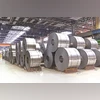 "steel, steel industry")
The safeguard duty will be levied at 12 per cent from April 21, 2025 to April 20, 2026.
Listen to This Article
The Centre has imposed a safeguard duty of up to 12 per cent on import of some steel products for three years, aiming to shield domestic producers from low-priced steel products from China and some other countries.
The Central government had in April this year imposed a 12 per cent “provisional” safeguard duty on these steel imports, which expired on 7 November. According to experts, it pulled down monthly volumes by around 33 per cent year-on-year.
Safeguard duties are temporary trade remedies allowed under WTO norms to protect domestic industries from import surges.
The move comes after the Directorate General of Trade Remedies’ (DGTR’s) final findings in August, which concluded that imports of key steel flat products had risen in a “recent, sudden and significant manner, threatening serious injury to the domestic industry”.
The Centre’s “provisional” safeguard duty was based on DGTR’s preliminary findings.
Also Read

 "Steel stocks rally for 2nd straight day on Wednesday.")
 "steel")
 "Tata Steel Ltd. plant in IJmuiden, Netherlands")
 "steel")
The Tuesday notification -- issued by the Union finance ministry -- says that the safeguard duty applies to a broad range of steel flat products including hot-rolled coils, sheets and plates, hot-rolled plate mill plates, cold-rolled coils and sheets, metallic coated steel and other colour-coated products classified under the Customs Tariff Act.
The duty will be levied at 12 per cent from April 21, 2025 to April 20, 2026. The rate will taper to 11.5 per cent in the second year and 11 per cent in the third year, with the safeguard protection ending on April 20, 2028.
Country-specific exemptions have also been provided for imports from certain developing nations, though China and, for some selected products, Vietnam and Nepal, have been excluded from these relaxations. Several specialised steel products including stainless steel, electrical steel, tinplate and aluminium-coated steel are excluded from the scope of the duty.
Imports priced above specified threshold levels on a Cost, Insurance and Freight (CIF) basis will be exempt from this recent levy.
These include hot-rolled coils, sheets and plates priced at or above $675 per tonne, cold-rolled coils and sheets priced at or above $824 per tonne, metallic coated steel priced at or above $861 per tonne, and colour-coated products priced at or above $964 per tonne.
The extension comes at a time when domestic steelmakers are facing margin pressure despite steady domestic demand. However, muted global demand and threat of routing of surplus steel into the country continue to be a worry.
Earnings are expected to remain subdued as margins have tightened due to softer prices, Sumit Jhunjhunwala, vice-president and sector head at ICRA, said during the rating agency’s recent webinar on steel industry trends and outlook.
Domestic steel prices have been trading at unusually steep discounts to import parity. Hot-rolled coil prices were around ₹ 46,000 per tonne in early December, compared with landed import costs of around ₹54,000 per tonne, implying a discount of nearly $93 per tonne.
Jhunjhunwala described the situation as “historically unusual”, noting that domestic prices typically trade at parity or at a slight premium when demand is strong.
Jhunjhunwala said Ebitda per tonne is expected to be around $108 in FY26, at the lower end of ICRA’s $100-$150 per tonne range for a stable outlook. He cautioned that further cost, price or demand headwinds in FY27 could lead to a revision of the sector outlook to negative.
The pressure stems from muted global demand. China’s real estate sector has seen negative investment growth for more than three years, while Chinese steel exports have nearly doubled over the past decade to about 120 million tonnes, adding to global price pressure, Jhunjhunwala said.
Safeguard duty, which was in place for 200 days, helped ease imports.
Jhunjhunwala said the provisional safeguard duty had helped curb imports, with monthly volumes contracting around 33 per cent year-on-year.
Welcoming the move, Naveen Jindal, president of the Indian Steel Association, said the safeguard duty is a calibrated policy measure aimed at maintaining stability in the domestic steel market while ensuring continuity of supply for consumers and infrastructure projects.
While the global steel industry is grappling with weak demand and excess capacity, Jindal said India continues to see growth supported by domestic consumption and infrastructure-led expansion under the Atmanirbhar Bharat framework. He cautioned that the diversion of surplus steel capacity from countries such as China, Japan, Korea and Vietnam has implications for domestic capacity utilisation, investment planning and employment.
“The safeguard duty helps restore competitive balance and support the domestic steel value chain,” Jindal said, adding that further trade remedies may be considered as part of a broader policy approach if global supply imbalances persist.
More From This Section
 "India Russia, India-Russia flag")
 "Indian economy, trade, exports, imports")
 "Renewable energy, climate")
 "Oil imports, Crude oil")
 "Lending")
Topics : Steel producers Steel Industry Steel imports
Don't miss the most important news and views of the day. Get them on our Telegram channel
First Published: Dec 31 2025 | 1:25 PM IST