


India-US trade deal: DDGS duty cuts raise concerns despite tariff rate caps
India-US interim trade framework cuts tariffs on several agricultural items, but Commerce Minister Piyush Goyal said sensitive products such as apples, soybean oil and DDGS will be capped under quotas
 "Soyabean oil")
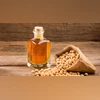
Soybean oil attracts around 16.5% duty on all crude forms, and nearly 36 per cent duty on all refined variants | Photo: IndiaMART
Listen to This Article
India and the United States on Saturday unveiled an interim framework for a bilateral trade deal that cuts or reduces tariffs for a wide range of goods, including agricultural exports.
Under the interim framework, the US will eliminate or lower duties on a swathe of agricultural items that include dried distillers’ grains (DDGs), red sorghum for animal feed, tree nuts, fresh and processed fruit, soybean oil, wine and spirits, and additional products.
Commerce Minister Piyush Goyal, in a press conference on Saturday afternoon, clarified that proposed duty reduction under the new trade deal on items which are of concern, such as soybean oil, DDGS, apples, long staple cotton and soybean oil, will be under tariff rate quota instead of being unrestricted.
Apples will have a quota as per the current import levels, but will face a minimum import price (MIP) of Rs 80 per kg and a duty of 20 per cent, Goyal said.
“This effectively means that apples from the US will have a restricted entry in India and not be priced below Rs 100 per kg,” Goyal clarified.
Also Read

 "trade talk, US India")
 "After deal, US trade body map shows PoK, Aksai Chin as part of India")
 "textile, textiles")
 "MEA on Energy security")
 "gems, jewellery")
He said that India already imports around 600,000 tonnes of apples from various countries, including the US.
Data show that in 2024, of the almost 500,000 tonnes of apples imported into India, roughly 26 per cent or around 133,447 tonnes, came from Iran, while another 23 per cent, about 116,680 tonnes, came from Turkiye, and 42,716 tonnes, or 8.2 per cent, from Afghanistan. India had lowered additional reciprocal duty on US apples a few years back.
Soybean oil currently attracts around 16.5 per cent duty on all crude forms, and nearly 36 per cent duty on all refined variants.
In the 2024-25 edible oil year, data show that India imported close to 4.8 million tonnes (MT) of crude soybean oil, of which the US contributed 0.18 MT, or around 3.7 per cent. The bulk of the soybean oil came from Argentina and Brazil, as well as Russia.
Traders that Business Standard spoke to said US soybean oil is typically priced higher than that from Argentina or Brazil, which does not make it an ideal choice for Indian buyers.
With the interim framework now in place for the trade deal, traders feared a surge in imports from the US as the price of US soybean oil would come down once India drops the import duties for crude and refined variants.
However, Goyal clarified that such fears are unfounded as soybean oil imports will be subject to a tariff rate quota.
Similarly, Goyal clarified that dried distillers’ grains with solubles (DDGS) will also have a quota and that cheap imports have been allowed due to demand from the animal husbandry industry.
As per the US Grains Council, US ethanol plants have production capacity of more than 15 billion gallons of ethanol and 44 million metric tonnes (MMT) of DDGS. US data show that exports of DDGS have exploded from 5 MT in 2009 to more than 10 MMT across 58 countries in 2022-23.
Its southern neighbour Mexico purchased the bulk of DDGS exports, accounting for more than 20 per cent of the export market, while South Korea was the second-largest buyer. Vietnam, Indonesia, and Canada rounded out the top five importers for 2022-23.
As per a note on the US Grains Council website, the Indian market has the potential to import more than 700,000 tonnes of US DDGS annually, but technical barriers exist.
Traders fear that uncontrolled entry of American DDGS could have a cascading impact on prices of domestically produced DDGS, volumes of which have increased significantly due to the country's large production of grain-based ethanol.
Additionally, this could also affect India's soymeal pricing, which has already dropped sharply over the past few years due to its wide replacement by DDGS in animal feed.
Soybean rates have also stayed below the minimum support price (MSP) levels for much of the past few years due to DDGS use in animal feed as soybean extraction gives as much as 18 per cent oil and only the balance as meal.
On cheap import of cotton, Goyal clarified that items such as long staple cotton are not produced in India and that some imports have been continuing since the previous government's term.
As for whether allowing DDGS from the US is an indirect entry of genetically modified (GM) crops into the food chain - most DDGS in the US is produced from GM grains - Goyal clarified that when cereals and food items are processed they lose their genetic modification component.
He said the ministry of environment and forest also has strict rules on allowing import of GM materials in India, which will be followed.
Regarding the strict quality and non-tariff barriers that Indian agriculture products face in the US, Goyal said that India, too, enforces several quality measures on agriculture imports and that ensuring quality is in the interest of Indian farmers.
Landmark deal to protect sensitive crops, says Goyal
He termed the framework agreement as a landmark deal for Indian farmers as it will protect all sensitive crops.
“India’s agricultural goods such as spices, tea, coffee, cocoa, coconut oil, vegetable wax, recant, brazzle nut, cashew nut, chestnut, lots of fruits and vegetables such as avocados, banana, guava, mangoes, papaya, pumpkin, mushrooms, vegetable plaiting materials, roots, cereals such as barley, canary seeds, cocoa, sesame seeds, banana pulp will become zero from the existing 50 per cent thereby helping Indian farmers,” he pointed out.
Frozen vegetables, pulses, dairy and cereals kept out of trade deal
Earlier in the day, Goyal had clarified in a series of X posts that frozen vegetables such as potatoes, peas, and beans, among others, have been denied entry into India under the trade deal, as have provisionally preserved vegetables such as cucumbers and gherkins and assorted canned vegetables.
Additionally, no dried vegetables, beans, pulses, roots, tubers from the US have been allowed entry into the Indian markets as part of the deal. However, citrus fruits, oranges, mandarins, and grapefruits will now be allowed, while strawberries remain outside the purview of the deal.
He also said that major crops such as wheat, rice, cereals, wheat flour, and all major dairy products have been kept out of the deal.
A few days ago, Union Agriculture Minister Shivraj Singh Chouhan had said that the Indian market has not been opened up for major crops, such as staple grains like millets, staple fruits, or dairy products as part of the India-US trade deal.
Chouhan welcomes interim framework, says Indian crops are safe
On Saturday, Chouhan in a statement welcomed the interim framework, saying that Indian crops are safe. "No corn, wheat, rice, soy, poultry products, milk, cheese, ethanol, fuel, or tobacco will come from America," he said, refuting allegations from the Opposition that Indian farmers would be ruined and devastated.
“Today, they should see that with the agreement reached under the leadership of the Prime Minister, the interests of farmers have been fully protected,” Chouhan said in a statement.
More From This Section
 "Sanjay Malhotra, Governor, Reserve Bank of India (RBI)")
 "kerala water metro")
 "Jitin Prasada, Jitin")
 "Russian oil")
 "Anganwadi Centre")
Don't miss the most important news and views of the day. Get them on our Telegram channel
First Published: Feb 07 2026 | 11:11 AM IST