


Revenue secretary calls for trust-based, tech-driven customs reforms
Arvind Srivastava says next phase of customs reform must deepen stakeholder trust and leverage technology as India's expanding trade ecosystem places new demands on governance
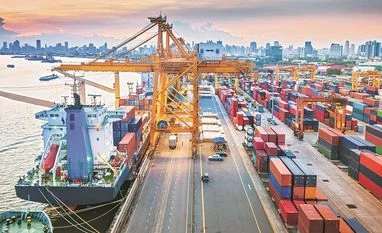 "Trade exports")
The ICEGATE 2.0 initiative, in particular, is expected to advance the creation of a unified national trade interface.
Listen to This Article
The next phase of Customs reforms must be driven by enhanced stakeholder trust and advanced technology, as India’s trade ecosystem grows increasingly complex and digital, said Revenue Secretary Arvind Srivastava on Thursday.
India’s expanding trade volumes and integration into global value chains have placed “fresh demands” on governance at a critical juncture in its economic journey, he said at the National Symposium on Customs Reform 2026 in New Delhi.
“Customs administration occupies a uniquely strategic position in this transformation. It is not merely a regulatory authority but an institution that enables economic growth, strengthens supply chains, protects society, and enhances India’s global competitiveness,” he said.
The reforms announced in the recent Union Budget reflect a clear and consistent policy direction, Srivastava noted, highlighting two core principles — trust in stakeholders and effective use of technology.
“The challenge before us is how this trust can be credibly experienced on the ground by industry, and how technology can become an effective enabler.”
Also Read

 "manufacturing sector, economy, GDP growth")
 "tax, taxes, I-T, retunrs, filing")
 "US supreme court")
 "Ireland")
 "engineering, Railways, Bihar")
In a notable step, the tax department has placed draft rules in the public domain for stakeholder feedback, a move Srivastava described as reflecting “intellectual confidence” and openness to incorporating industry suggestions.
Given the multi-agency nature of modern trade processes, involving Customs, regulatory bodies, logistics operators, exporters and importers, reforms require an “all-of-government” and “all-stakeholder” approach, he said.
The ICEGATE 2.0 initiative, in particular, is expected to advance the creation of a unified national trade interface by integrating partner government agencies into a seamless electronic clearance system, Srivastava noted.
As India seeks to expand its manufacturing base and support MSMEs, startups and digital entrepreneurs, Customs procedures must enable exporters to access global markets with greater speed and certainty, he said.
Indian Customs has already implemented several structural changes in recent years, including faceless assessment, risk management systems, strengthened non-intrusive inspection, and integrated digital platforms, he noted. These measures have helped reduce dwell times and improve transparency.
However, the “biggest task” ahead, according to him, is ensuring that policy intent is genuinely experienced by industry on the ground, which will require continued capacity building in both human resources and technology systems.
With India pursuing the Viksit Bharat 2047 vision, efficient and technology-enabled border management will remain central to sustaining economic momentum, he added.
More From This Section
 "industry")
 "RBI, Reserve Bank of India")
 "soybean")
 "Union Commerce and Industry Minister Piyush Goyal at Manthan 2026, the annual flagship event of Business Standard")
 "Import, export, trade")
Topics : Custom duty hike taxes India trade
Don't miss the most important news and views of the day. Get them on our Telegram channel
First Published: Feb 26 2026 | 1:12 PM IST