


India's trade talks with the US face new test as EU deal shows major gaps
As the White House and European Commission offer starkly different versions of their trade pact, it gives India's negotiators ample reason to be alarmed
 "Modi, Trump")
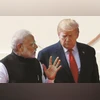
The India-US trade deal, still under negotiation, has several unresolved tensions and with the August 1 deadline looming, Indian negotiators are alarmed with the way other trade pacts have shaped.
Listen to This Article
The newly announced US-European Union (EU) trade agreement, hailed as “historic” by the White House, is already under scrutiny, not because of what it includes, but because of how differently both sides are likely to interpret it. It also raises concerns for India, which is currently negotiating a similar trade deal with the Donald Trump-led US administration.
The Trump administration's sweeping claims, from $750 billion in energy purchases to EU procurement of American defence equipment, are being met with diplomatic silence in Brussels. The mixed messaging is fueling unease in Indian trade and diplomatic circles, where negotiators fear falling into similar traps of post-deal narrative asymmetry.
What’s the latest
The White House has released a detailed fact sheet celebrating the new trade deal with the EU, calling it a “generational modernization” of the transatlantic alliance. The document claims the EU will eliminate all tariffs on US industrial goods, invest $600 billion in the US, and buy $750 billion worth of American energy by 2028.
The agreement, the White House claims, includes new commitments on digital trade, defence procurement, pharmaceuticals, and regulatory cooperation—presented as a landmark win for American exporters.
But analysts have pointed out inconsistencies and exaggerated claims. A viral thread on X by an Euronews journalist Jorge Liboreiro breaks down section-by-section how many of the “commitments” are vague, previously announced, or not backed by official EU documentation.
Also Read

 "income tax itr taxation")
 "Working professional")
 "TCS, Tata Consultancy Services")
 "Working professional")
 "Apple iPhone 16E")
European leaders too have voiced concerns. German Chancellor Friedrich Merz said that while the EU was able to protect its core interests, he would have welcomed further easing of transatlantic trade, reported CNBC. In a social media post, France’s minister for Europe Benjamin Haddad called the deal “unbalanced”, even as it would bring “temporary stability” to some sectors.
Disputed claims in US-EU trade deal
Several core elements of the deal, as presented by the US, are already raising eyebrows:
Pharmaceutical tariffs: The US claims the EU will impose a new 15 per cent tariff on American pharma exports, raising questions about timing and legality under World Trade Organization (WTO) rules. Trade experts point out that EU pharma tariffs are already low and increasing them would be politically untenable in Europe. There is also confusion on whether this refers to a penalty or a removal of existing barriers. Also read: Trump gets economy he wants, but growth risks may spoil his victory lap
Defence procurement: According to the White House, the EU has agreed to buy “significant amounts” of American military equipment. But EU procurement is driven by individual member states and typically falls outside the scope of trade pacts. Analysts say such a claim is more aspirational than contractual.
Digital trade: The White House fact sheet states that the EU has promised not to impose “network usage fees” and will maintain zero customs duties on electronic transmissions. Yet, there is no clear confirmation from the EU side. The language around “unjustified digital trade barriers” appears to target European data regulations, which the EU defends as sovereignty issues.
Agriculture and metals: While the US outlines tariff removals and “meaningful quotas,” it's unclear how this aligns with the EU’s Common Agricultural Policy or its strict food safety rules. The US also claims sectoral tariffs on metals (50 per cent on steel, aluminium, copper) will remain, but this is inconsistent with ongoing WTO disputes.
Massive EU investment in the United States: The fact sheet states that an investment of $600 billion will be made by the European Union in the United States over the course of Trump’s term. This new commitment is being made in addition to the more than $100 billion already invested annually by EU companies in the United States.
Energy buyout: A total of $750 billion worth of US energy exports will be purchased by the European Union through 2028. Through this, American energy dominance will be strengthened, European reliance on adversarial sources will be reduced, and the trade deficit with the EU will be narrowed.
Why it matters for India
India is in delicate trade negotiations with both the US and the EU. The ambiguity in the US–EU deal serves as a cautionary tale. Commerce Minister Piyush Goyal described the talks as “making fast progress” and even “fantastic", while noting unresolved issues, especially over agriculture and dairy tariffs. Indian markets remain jittery, with benchmark indices hovering instead of rallying, weighed down by anxiety around potential fallout from stalled trade talks and looming tariffs
Several of the US-EU deal’s themes like pharmaceutical exports, digital economy regulation, and food safety barriers directly overlap with India’s areas of concern. For instance, India is a major exporter of generic drugs to the EU (total pharmaceutical exports reached about $30.5 billion in FY25, marking a 9-10 per cent increase from the previous year. Europe accounted for approximately 18.9 per cent of these exports — equivalent to roughly $5.8 billion in total pharma shipments to the EU and other European countries). If regulatory harmonisation with the US tightens EU standards, Indian pharma firms could face tougher compliance rules.
Meanwhile, the emphasis on strong rules of origin and digital sovereignty could also affect India’s digital services exports and its ambitions to craft its own data laws without external pressure. On agriculture, India's long-standing resistance to opening up dairy and processed food sectors could come under greater scrutiny in future deals, especially if the US uses the EU agreement as a template.
What are the pain points in the India-US trade deal?
The India-US trade deal, still under negotiation, has several unresolved tensions.
Tariff issues and deadlines: The US had set an August 1, 2025 deadline threatening tariff increases on Indian exports, but trade talks have not concluded, causing uncertainty and business slowdown in sectors like gems, textiles, toys, and automobiles. The US is poised to implement higher tariffs (up to 26 per cent) on Indian imports if no deal is reached. But India is being cautious due to complications in recent US trade deals with other countries like Japan, Indonesia, and Vietnam.
Market access barriers: Indian negotiators face challenges in opening access for key sectors like agriculture and automobiles, which are significant job creators domestically. This impasse has slowed down finalising the deal.
Digital taxation dispute: A significant sticking point is the US demand that India commit not to reintroduce the equalisation levy (a digital tax on online advertising, often called the 'Google tax'). Indian legal advisers have warned against accepting this as it represents a unilateral obligation on India without reciprocity from the US, potentially setting a risky precedent for future trade talks.
India resisting unbalanced demands: US exporters have long demanded wider access to Indian agricultural markets, including genetically modified products, which India continues to restrict. In the dairy sector, Washington has repeatedly raised concerns over India’s religious and safety standards on dairy imports.
A pattern of overstatement by Trump administration
This is not the first time Team Trump has oversold a trade deal. The first Trump-era USMCA (United States-Mexico-Canada Agreement) was described as a “complete overhaul", though many provisions mirrored the NAFTA agreement it replaced.
In the US-China Phase One deal (January 2020), Trump had claimed $200 billion in Chinese purchases of US goods, a target that was never met. Similarly, in the US-Canada dairy dispute, the US touted “massive new access", which Canadian officials quietly disputed.
These instances reflect a broader strategy: high-octane PR around trade deals. With a US election approaching, the narrative power of such agreements is not lost on either party.
What’s next for India?
Both countries remain engaged in round-the-clock talks to resolve tariff issues and avoid the activation of a potential 26 per cent duty on Indian exports to the US. Negotiators are working to clinch at least an interim agreement that would secure India’s preferential access and prevent tariffs from being reinstated.
More From This Section
 "CPI inflation for farm workers, rural labourers fell in May")
 "Ajay Bhushan Pandey | Illustration: Ajay Mohanty")
 "inflation")
 "Asian Development Bank (ADB) President Masato Kanda")
 "retail")
Don't miss the most important news and views of the day. Get them on our Telegram channel
First Published: Jul 29 2025 | 5:54 PM IST