


Russia backs RIC revival, Lavrov says India-China ties show improvement
Sergey Lavrov confirms Russia's support for RIC's revival, says India and China have reached an understanding on border issues and criticises Nato's provocative tactics
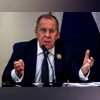 "Russian Foreign Minister Sergei Lavrov speaks at a press conference, during the G20 summit, in New Delhi, Photo: Reuters")
During his address, Lavrov also alleged that the North Atlantic Treaty Organization (Nato) has been trying to lure India into anti-China intrigues | Photo: Reuters
Listen to This Article
Russia's Foreign Minister Sergey Lavrov on Thursday (local time) said that Moscow is “genuinely interested” in the relaunching of operations within the framework of the Russia-India-China (RIC) format.
Lavrov made these remarks in his opening speech at the plenary session of the international public and political conference on forming a single and equitable system of security and cooperation in Eurasia, TASS reported.
He added, “I would like to confirm our genuine interest in the earliest resumption of the work within the format of the troika — Russia, India, China — which was established many years ago on the initiative of (former Russian prime minister) Yevgeny Primakov, and which has organised meetings more than 20 times at the ministerial level since then, not only at the level of foreign policy chiefs, but also the heads of other economic, trade and financial agencies of the three countries.”
During his address, Lavrov also alleged that the North Atlantic Treaty Organization (Nato) has been trying to lure India into anti-China intrigues. He said, “I have no doubts that our Indian friends, and I say this based on confidential conversations with them, obviously see this trend that can be deemed as a large provocation.”
The RIC troika has been paused since the Galwan clashes between India and China in 2020. Commenting on the border situation between India and China, Lavrov noted, “As of today, as I understand, an understanding has been reached between India and China on how to ease the situation on the border, and it seems to me that the time has come for the revival of this RIC troika.”
Also Read

 "Russian Foreign Minister Sergei Lavrov speaks at a press conference, during the G20 summit, in New Delhi, Photo: Reuters")
 "Sergey Lavrov, Sergey")
 "Sergey Lavrov, Sergey")
 "Asian markets, stock market trading")
India-China ties
Prime Minister Narendra Modi met Chinese President Xi Jinping in October 2024 on the sidelines of the Brics Summit in Russia’s Kazan. The meeting between the two leaders was seen as a thaw, during which they expressed a need to improve bilateral relations.
The relations between India and China were strained following the Galwan clashes of 2020, leaving 20 Indian soldiers and four Chinese soldiers dead. Following the clashes, India and China stopped patrolling several points along the border in Ladakh to avoid new confrontations.
More From This Section
 "defence forces, Indian army")
 "Union Defence Minister Rajnath Singh (centre) with top brass of India's armed forces at the CII annual summit in New Delhi on Thursday. (Photo: CII)")
 "Lt General Rajiv Ghai, Rajiv Ghai, AK Bharti, AN Pramod, Operation Sindoor")
 "defence budget, national security")
 "Samir V Kamat,Samir V, DRDO Chairman")
Don't miss the most important news and views of the day. Get them on our Telegram channel
First Published: May 30 2025 | 7:47 AM IST