


Why Ozempic maker Novo Nordisk is losing its lead in weight-loss drugs
The Danish drugmaker led the obesity revolution with Ozempic and Wegovy but now lags Eli Lilly in efficacy, trials, and strategy in a $150-bn market
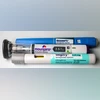 "Weight loss drugs, Wegovy, Ozempic, Zepbound, and Mounjaro")
Weight loss drugs like Wegovy, Ozempic, Zepbound, and Mounjaro are medications used to help manage weight by targeting specific hormones in the body that regulate appetite and metabolism. (Photo: AdobeStock)
Listen to This Article
In 2023, Novo Nordisk overtook Louis Vuitton Moët Hennessy (LVMH) to become Europe’s most valuable company, riding the meteoric rise of its weight-loss and diabetes drugs, Wegovy and Ozempic. But soon after, the Danish firm has seen its dominance slip as rival Eli Lilly surged ahead in drug efficacy, manufacturing, and marketing.
Despite controlling 62 per cent of the GLP-1 agonist market, drugs that mimic gut hormones to suppress appetite, Novo Nordisk’s share prices have tumbled over 50 per cent in the past year. Internal struggles, product shortages, and clinical trial disappointments have raised doubts about the company’s long-term prospects in a market expected to be worth $150 billion annually by 2035, reported The Wall Street Journal (WSJ). Also read: Chubby isn't cute: Belly fat in kids linked to heart risk by age 10
Earlier this month, these concerns culminated in a surprise leadership shakeup. The company’s controlling foundation forced the ouster of CEO Lars Fruergaard Jørgensen, signalling a growing urgency to course-correct.
How Wegovy’s underestimation hurt Novo Nordisk’s momentum
Novo Nordisk’s early misstep was a critical underestimation of demand for Wegovy, launched in 2021 as a weight-loss version of its blockbuster diabetes drug Ozempic. Based on the limited uptake of an earlier weight-loss drug, Saxenda, the company prepared for modest sales and used a cautious manufacturing model, blending internal and contract production.
But five weeks post-launch, prescriptions for Wegovy exceeded what Saxenda had taken five years to achieve. Instead of scaling up rapidly, Novo responded by limiting supply, urging doctors not to start new patients and rationing lower-dose starter kits to protect supplies for existing users, according to WSJ.
Also Read

 "A P Singh, Air Chief Marshal")
 "summers, heat, rising tempertature, warm climate")
 "Iran, Iran flag")
 "air cargo airplane aviation")
 "Christian James Michel, AugustaWestland PMLA case")
This decision had serious consequences. Shortages pushed consumers toward compounded, copycat versions of semaglutide sold at lower prices through US compounding pharmacies. Telehealth platforms capitalised on this gap, offering cheaper alternatives and eating into Novo Nordisk’s market share.
It is important to note that the firm has recently announced that it plans to bring Wegovy to Indian markets as well.
How Eli Lilly capitalised on Novo Nordisk’s supply and trial delays
Eli Lilly, once trailing in the weight-loss space, quickly filled the supply void. It launched Mounjaro for diabetes in 2022 and followed up with Zepbound, a weight-loss version, in 2023. Zepbound’s clinical data showed over 20 per cent body weight reduction, surpassing Wegovy’s results. Also read: What happens to your weight after stopping Ozempic, Wegovy or Mounjaro?
While Lilly also faced supply constraints, it managed to resolve them faster than Novo Nordisk. Today, weekly US prescriptions for Zepbound have overtaken Wegovy’s, and Mounjaro is closing in on Ozempic’s numbers.
Lilly also moved faster on consumer engagement. It launched a direct-to-patient service offering discounted weight-loss drugs and was first to partner with telehealth firm Ro. Novo Nordisk only rolled out similar initiatives months later.
Lilly’s drug pipeline surges while Novo Nordisk stumbles in trials
While Lilly has emerged with a promising R&D pipeline, Novo Nordisk has faced disappointing results. In December, lacklustre trial data for its experimental combination drug CagriSema triggered a 20 per cent plunge in its share value, erasing nearly $100 billion in market capitalisation.
Although CagriSema is still in phase 3 trials and has demonstrated weight-loss benefits, it has failed to distinguish itself from existing therapies in head-to-head comparisons.
Meanwhile, Eli Lilly’s Orforglipron, a once-daily oral GLP-1 agonist, has cleared initial phase 3 trials. Analysts see this as a significant development, as small-molecule oral drugs are typically cheaper and easier to manufacture compared to injectables.
Novo Nordisk hopes to bring an oral form of semaglutide (Wegovy) to market by the end of 2025, but it is already perceived as lagging in the next-generation obesity drug race. Eli Lilly, meanwhile, announced earlier this month that a head-to-head clinical trial showed that its obesity drug tirzepatide (sold as Mounjaro) led to greater weight loss in adults than semaglutide (sold as Wegovy).
India’s anti-obesity drug market quadruples in five years
India’s anti-obesity drug market has expanded more than fourfold over the past five years, driven by a surge in lifestyle-related diseases, greater affordability, and a growing willingness among affluent consumers to pay for weight-loss treatments. Data from PharmaTrac, an industry tracker, shows the market reached ₹576 crore as of March 2025, up from ₹133 crore in March 2021.
The growth has been spearheaded by GLP-1 receptor agonists, particularly semaglutide, which accounts for 69 per cent of the market at ₹397 crore. Novo Nordisk’s oral semaglutide pill, Rybelsus, launched in 2022, has emerged as the key growth driver, overtaking older molecules such as orlistat and liraglutide. Also read: In weight loss battle, Novo and Lilly face offensive from licenced copies
However, price remains a key barrier to wider access. Eli Lilly’s Mounjaro is priced between ₹14,000 to ₹17,500 per month in India, depending on the dosage, making it unaffordable for most patients outside the top-income bracket. Analysts estimate that even if just 0.5 per cent of India’s 101 million diabetics adopt these injectable therapies, the market could generate $1.5 billion in annual revenue.
Despite the premium pricing, market experts expect significant expansion post-2026, when semaglutide goes off-patent and generic versions become available. According to Vishal Manchanda, senior vice-president of institutional research at Systematix Group, generics are likely to be priced up to 95 per cent lower, triggering a dramatic rise in volumes.
Meanwhile, non-GLP-1 weight-loss drugs continue to maintain a limited footprint. Orlistat holds a market value of ₹72 crore, followed by dulaglutide (₹72 crore) and liraglutide (₹34 crore), according to Pharmarack data. Additionally, scientists have found that certain weight-loss drugs, originally developed to treat type 2 diabetes, might not only help people shed kilos but also significantly lower the risk of obesity-related cancers.
Can Novo Nordisk regain its global weight-loss drug dominance?
Despite its setbacks, Novo Nordisk is not out of the picture. It has ramped up investment in production, including a $16 billion deal through its foundation to acquire contract manufacturer Catalent. In the US, it recently partnered with CVS to make Wegovy the preferred weight-loss drug under the pharmacy chain’s benefit plans.
The battle between Novo Nordisk and Eli Lilly is far from over. Both companies dominate the GLP-1 market, and the cost, efficacy, and safety of future therapies will determine how market share evolves.
More From This Section
 "Lemons, Vitamin C")
 "health emergency kit, health kit")
 "Alcohol consumption")
 "sperm donation, reproductive health")
 "heart health, sick men, man")
Topics : BS Web Reports Novo Nordisk weight loss Eli Lilly
Don't miss the most important news and views of the day. Get them on our Telegram channel
First Published: May 29 2025 | 4:07 PM IST