


Home / India News / Andhra plans ₹25K incentive for second child under new population policy
Andhra plans ₹25K incentive for second child under new population policy
Andhra Pradesh has proposed a structured population management strategy, including a Rs 25,000 incentive for a second child, as the state confronts a falling fertility rate
 "Chandrababu Naidu, Andhra CM")
premium
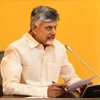
Andhra Pradesh Chief Minister N. Chandrababu Naidu | Image: X
4 min read Last Updated : Mar 05 2026 | 7:50 PM IST


Listen to This Article
Andhra Pradesh Chief Minister N. Chandrababu Naidu on Thursday addressed the State Legislative Assembly outlining a comprehensive Population Management Strategy aimed at addressing the state’s declining fertility rate and emerging demographic challenges.
As part of the proposed policy framework, the state government is considering financial incentives to encourage families to have more children. The Chief Minister announced that families having a second or third child may receive Rs 25,000 at the time of delivery, describing the incentive as a potential catalyst to help stabilise fertility levels in the state. The proposed incentive will be part of a broader “Poshan–Shiksha–Suraksha” support package, which aims to provide nutritional support, education assistance, and healthcare services to families and children.
The initiative is a first-of-its-kind effort by a state government in India to proactively address falling fertility levels through a structured demographic policy framework. The Chief Minister emphasised the long-term economic implications of demographic change, noting that Andhra Pradesh must prepare early to sustain its workforce, social stability, and economic growth in the coming decades.
Presenting the government’s assessment, Naidu noted that the state’s Total Fertility Rate (TFR) has declined to around 1.5, significantly below the replacement level of 2.1 required to maintain population balance. He said that if the trend continues, Andhra Pradesh’s demographic window — when the working-age population is at its peak — could close by 2040, which may affect future labour availability and economic productivity.
The Chief Minister said that several advanced economies are already facing similar demographic pressures due to ageing populations and shrinking workforces, and Andhra Pradesh must act early to avoid such challenges.
Highlighting broader demographic trends, the presentation indicated that the state’s median age has been rising faster than the national average and that the share of elderly citizens could increase significantly in the coming decades. The Chief Minister stressed that population planning must now move beyond the traditional focus on population control and instead adopt a more holistic approach centred on “population care,” where the state enables families through healthcare, education, and social support systems while allowing individuals to make informed reproductive choices.
Under the proposed support framework, the government also plans to provide nutrition assistance during early childhood, free education up to the age of 18 for the third child in public or residential schools, and fertility treatment support including IVF services through government hospitals. The Chief Minister said these measures are intended to reduce the financial burden on families while strengthening child development outcomes and improving long-term human capital.
The proposed population management strategy will be operationalised through a Five-Pillar Model designed to address demographic issues across different stages of life.
The first pillar, MATRUTVA, focuses on strengthening maternal healthcare systems and reproductive services in government hospitals. The approach aims to improve pregnancy care, expand infertility treatment options, and promote informed reproductive choices while ensuring safer maternal health outcomes.
The SHAKTI component aims to strengthen women’s participation in the workforce and improve access to healthcare, education, and economic opportunities. The initiative includes measures to improve workplace support systems, childcare infrastructure, and parental leave policies while promoting greater gender equality in economic participation.
Recognising the rise in the elderly population, the KSHEMA pillar focuses on building healthcare and social support systems for senior citizens. The policy seeks to transform demographic ageing into a “silver dividend” by promoting active ageing, geriatric healthcare services, and opportunities for senior citizens to contribute through mentoring and flexible employment.
The NAIPUNYAM pillar focuses on preparing the state’s workforce for future economic demands through large-scale skill development initiatives aligned with industry needs. The programme aims to strengthen the care economy and build a future-ready workforce in sectors such as technology, electronics, and green energy.
SANJEEVANI is envisioned as a statewide digital public health delivery and care coordination platform. The system aims to integrate hospitals, diagnostics, and health records into a unified health ecosystem that supports preventive healthcare, life-cycle health management, and improved access to medical services across the state.
The Chief Minister said that the proposed population management policy will be placed in the public domain for wider consultation before it is finalised. The state government aims to gradually stabilise fertility levels while strengthening healthcare, education, and workforce systems to ensure long-term demographic and economic sustainability for Andhra Pradesh.
Topics : N Chandrababu Naidu Andhra Pradesh population