


Bhagavad Gita and Natyasastra join Unesco's Memory of the World Register
The inclusion of Bhagavad Gita and Nāṭyaśāstra in Unesco's Memory of the World Register brings its total number of inscribed collections to 570, and India's contributions in it to 14
 "Bhagavad Gita, Natyasastra")
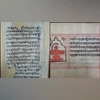
Bhagavad Gita (left) and Nāṭyaśāstra (right) | Image source: Bhandarkar Oriental Research Institute


Listen to This Article
Two of India’s foundational texts—the Bhagavad Gita and Nāṭyaśāstra —have been added to Unesco’s Memory of the World Register, joining a list of 74 new documentary heritage entries from 72 countries and four international organisations, Unesco said on Friday (IST). This brings the total number of inscribed collections to 570, and India’s contributions to 14.
This year’s list includes entries reflecting the scientific revolution, women’s contributions to history, and pivotal milestones in international cooperation—such as the Geneva Conventions, the Universal Declaration of Human Rights, and the Windhoek Declaration on press freedom.
Bhagavad Gita joins Unesco’s heritage documents
From India, the Bhagavad Gita was recognised for its deep philosophical and cultural significance. Comprising 700 verses, the Gita is embedded in the Mahabharata and takes the form of a dialogue between Lord Krishna and Arjuna on the eve of battle. Unesco highlighted its role in synthesising major streams of Indian philosophical thought—from Vedic to Buddhist, Jain, and materialist schools—and noted its longstanding global appeal, with translations and interpretations spanning centuries and continents.
Nāṭyaśāstra added to Unesco’s heritage documents
The Nāṭyaśāstra, attributed to Bharatamuni and preserved at the Bhandarkar Oriental Research Institute, is regarded as the earliest and most comprehensive treatise on performing arts. Dating back to around the 2nd century BCE, the text outlines the grammar of drama, dance, and music, introducing key concepts such as rasa (aesthetic experience) and bhava (emotion) that have defined Indian artistic expression for millennia. Unesco called it a “profound contribution to world literature.”
Indian leaders express pride on Unesco’s inclusion of scripts
Following the announcement, Indian leaders welcomed the recognition. Prime Minister Narendra Modi described it as a global acknowledgment of India’s rich cultural legacy, calling the inscriptions “a proud moment for every Indian.” Union Culture Minister Gajendra Singh Shekhawat echoed the sentiment, noting that this brings India’s total entries on the register to 14.
Also Read

 "Singapore")
 "Kanger Valley National Park")
 "Chausath Yogini Temple, Mitaoli")
 "Education")
 "Devendra Fadnavis, Devendra, Fadnavis")
External Affairs Minister S Jaishankar called the move a “true recognition of India’s documentary heritage” and “rich culture”.
Unesco’s Memory of the World Programme
The Memory of the World Programme, established in 1992, aims to identify and preserve the most significant documentary heritage from around the world and make it universally accessible.
Unesco Director-General Audrey Azoulay spoke on the importance of preserving documentary heritage, calling it “an essential yet fragile element of the memory of the world.” She emphasised the organisation’s ongoing efforts to safeguard such collections and share global best practices.
More From This Section
 "Sunny Deol's film, ‘Jaat'")
 "Toll Plaza")
 "Supreme Court, SC")
 "YS Jagan Mohan Reddy, Andhra Pradesh, jaganmohan reddy")
 "Center to fund chennai metro")
Don't miss the most important news and views of the day. Get them on our Telegram channel
First Published: Apr 18 2025 | 2:49 PM IST