


China's rare earth ban to have short term hit; seeking alternatives: Goyal
Union Minister Piyush Goyal said that the Indian embassy is in dialogue with China and the commerce ministry is also working on the issue
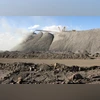 "Rare earth mineral mining in Inner Mongolia, China. In April, China stopped almost all shipments of critical minerals that are needed for cars, jet fighters and other technologies. | Image Credit: Reuters")
Piyush Goyal said that the government and the industry are working actively on solutions, including diplomatic engagement, to resolve the matter. | Image Credit: Reuters
Listen to This Article
Commerce and Industry Minister Piyush Goyal on Monday said China’s restrictions on the export of rare earth elements and related magnets will have short-term impacts on the domestic automotive and white goods sectors.
He further added that the government and the industry are working actively on solutions, including diplomatic engagement, to resolve the matter.
Goyal is on an official visit to Switzerland to meet Swiss leaders and businesses and explore new avenues under the recently signed Trade and Economic Partnership Agreement (TEPA) between India and the European Free Trade Association (EFTA).
"Obviously, there are issues around the stopping of permanent magnets from China to India, which will affect our auto sector, particularly, and several white gods and other sectors Some companies have put in their applications, and we hope that good sense should prevail and they will get their approvals for permanent magnets," he told reporters.
He also said that the Indian embassy is in dialogue with China and the commerce ministry is also working on the issue.
Also Read

 "Xi Jinping, Donald Trump")
 "Ministry of Mines set to release list of critical minerals for India")
 "china Flag, China")
 "china Flag, China")
 "Maruti Suzuki")
A wake-up call: Goyal
Goyal further added that the companies are also looking at Indian Rare Earths Limited (IREL) by providing the necessary materials to be able to develop, speed up the development of domestic products. "In a way, it's a wake-up call for all those who have become over-reliant on certain geographies. It's a wake up call for the whole world that you need trusted partners in your supply chain," Goyal said.
When questioned about the possibility of introducing a production-linked incentive (PLI) scheme for the sector, the minister said that he has engaged with the automobile companies, who remain "very" confident about resolving the issue.
"They are in dialogue with our innovators, startups and they say they will take care of any funding requirement or pricing correction that may need to encourage faster roll out and growth of this sector," Goyal said.
What's the rare earth magnet issue?
In response to increased tariffs from the United States under President Donald Trump, China introduced new export controls on seven key rare earth elements and associated magnets starting April 4.
The elements affected—samarium, gadolinium, terbium, dysprosium, lutetium, scandium, and yttrium—are essential in sectors such as defence, energy, and automotive technology. Under the new rules, Chinese firms must now obtain special defence-related licences before they can export these materials.
China is home to about half of the world’s rare earth reserves and is responsible for 70 per cent of global extraction and more than 90 per cent of processing. While the United States, Brazil, and Australia also have significant reserves, India’s share stands at around 7 to 8 per cent.
However, Australia, Brazil, and the US produce very little in terms of rare earth magnets. Hong Kong contributes 10 to 15 per cent of rare earth ore extraction, whereas Japan and South Korea account for 2 to 4 per cent. Vietnam and Malaysia handle 7 to 8 per cent of processing, with the majority of processing activities still concentrated in China.
According to media reports, global automakers have expressed concerns over potential supply-chain disruptions caused by the export ban of rare earth magnets. In Japan, Suzuki Motor had to halt production of its Swift model due to the shortage. Meanwhile, India’s auto industry group SIAM has reportedly warned the government of a complete production halt as early as late May or early June. (With inputs from PTI.)
More From This Section
 "jobs, resume, employment")
 "Manila, Philippines")
 "Sugar")
 "Cables")
 "India, Indians, mumbai, population, economy")
Don't miss the most important news and views of the day. Get them on our Telegram channel
First Published: Jun 10 2025 | 6:06 PM IST