


US-China trade talks enter day 2 in London amid rare earths, export dispute
US-China trade talks aim to defuse rising tensions over chip exports and critical minerals, revive Geneva truce, and ease strain on global supply chains amid signs of economic stress
 "Xi Jinping, Donald Trump")
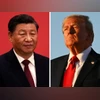
US-China Trade Talks Extend Into Second Day in London Amid Efforts to Defuse Rare Earths Dispute | Photo: Xi Jinping (left), Donald Trump (right)


Listen to This Article
Trade negotiations between the United States and China are set to continue for a second day in London on Tuesday, as top economic officials from both countries seek to defuse tensions that have widened beyond tariffs to include restrictions on technology exports and rare earth shipments - issues threatening global supply chains and economic growth.
Talks began on Monday at Lancaster House, a 19th-century mansion near Buckingham Palace, and ran for more than six hours, concluding around 8 pm local time.
Efforts to revive Geneva truce with China amid US allegations
The talks aim to revive a temporary truce agreed in Geneva last month, which briefly eased trade tensions and calmed markets. However, Washington has since accused Beijing of backtracking on its commitments, particularly around the export of rare earth minerals, critical components in technologies ranging from smartphones to electric vehicles and military systems. China has denied these allegations.
US President Donald Trump on Monday told reporters at the White House that the negotiations were “going well” and that he was “only getting good reports” from the delegation in London. “China’s not easy,” he reiterated, offering no further detail. When asked whether his administration would consider lifting recent export curbs, he replied, “We’ll see.”
Export curbs take centre stage in US-China London talks
Treasury Secretary Scott Bessent leads the US delegation, which includes Commerce Secretary Howard Lutnick, whose agency oversees export controls, and US Trade Representative Jamieson Greer. Their Chinese counterparts are headed by Vice Premier He Lifeng, joined by Commerce Minister Wang Wentao and the ministry’s chief trade negotiator, Li Chenggang.
Also Read

 "Ren Zhengfei, Huawei")
 "china Flag, China")
 "Asian market, Asian stocks")
 "US China flag, US-China flag")
 "US China trade war, US , China, tariff hike, donald trump, Chinese goods, wto, world trade organisation, US tariff hikes, global trade war, American goods")
The inclusion of Lutnick, who did not participate in the earlier Geneva talks, is seen by some analysts as a sign that export controls are now central to the discussions, Reuters reported.
Among the key points on the table is the potential loosening of US restrictions on items such as chip design software, advanced chemicals, jet engine components, and nuclear materials. In exchange, Washington is seeking guarantees that Beijing will ease its export limits on rare earths. China currently produces nearly 70 per cent of the global supply.
Nvidia chips remain restricted
White House economic adviser Kevin Hassett spoke on the urgency of the issue, saying the US wants a “handshake from China” on rare earths following a rare call between Trump and Chinese President Xi Jinping last week.
In an interview with CNBC, Hassett said the US expected rare earth shipments to resume in volume if a deal is reached.
However, he clarified that the highest-end Nvidia semiconductors, specifically the H2O chips used for training AI models, would remain subject to export control. “The very, very high-end Nvidia stuff is not what I’m talking about,” he said.
Economic pressure mounts for both US and China
The London talks come at a sensitive moment for both economies, which are showing signs of strain following Trump's renewed tariff orders since his return to the White House in January. Chinese customs data showed that exports to the US plunged 34.5 per cent year-on-year in May, the steepest decline since February 2020, at the onset of the Covid-19 pandemic.
On the US side, household and business confidence have declined, and GDP contracted in the first quarter amid a record surge in imports, as consumers raced to make purchases ahead of expected price hikes.
Despite these headwinds, inflation has so far remained contained and the labour market resilient, though economists expect pressures to mount over the summer.
Rare earths dispute triggers industrial disruptions
The rare earths standoff follows China's decision in April to suspend exports of a wide range of critical minerals and magnets, disrupting industries including automotive, aerospace, semiconductors, and defence. According to Reuters, China has since granted temporary export licences to suppliers serving the top three US automakers, following the Trump-Xi call.
Legal uncertainty also looms over the broader trade framework. On Monday, the Trump administration filed arguments appealing a US trade court ruling that found its tariffs on Chinese goods exceeded legal authority. The case may reach the Supreme Court, depending on the outcome at the appellate level.
More From This Section
 "Miguel-Uribe-")
 "Canada, Mark Carney")
 "US flag, USA")
 "trade, import, export, container, shipping")
 "US President Donald Trump")
Topics : US China trade war US China China US trade Trade talks China exports Exports BS Web Reports
Don't miss the most important news and views of the day. Get them on our Telegram channel
First Published: Jun 10 2025 | 9:03 AM IST