


NITI Aayog charts 'development-first' road map to Net Zero 2070 goal
Plans to ensure progressive decoupling of economic growth and emission
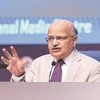 "NITI Aayog CEO BVR Subrahmanyam")
NITI Aayog CEO BVR Subrahmanyam
Listen to This Article
India becoming a $30 trillion economy by 2047, when it seeks to be a “Viksit Bharat”, will not come in the way of the country’s greenhouse-gas emission achieving net zero 23 years later, with the transition anchored in demand moderation, large-scale electrification, and financial and institutional reform, according to the NITI Aayog.
In a series of 11 reports focusing on multiple sectors, the Centre’s official think tank has framed a “development-first” net-zero transition, which lays out how India can achieve its developmental goals in a low-carbon manner.
At the core of the strategy is the finding that economic growth and gas emission can be progressively decoupled.
In the first report, the body projects India’s final energy demand will increase 2.1–2.6 times by 2070 over 2025 levels, even as gross domestic product rises 11-fold, if improvements in energy efficiency, accelerated electrification, and greater circularity are achieved across sectors.
Speaking at the launch of the report, NITI Aayog Chief Executive Officer BVR Subrahmanyam said India had not contributed to the global climate-change problem, but was one of the countries most affected by it.
Also Read

 "Vikram Misri, Vikram, Misri")
 "power, energy")
 "MEA on Energy security")
 "Nirmala Sitharaman, nirmala sithraman in parliament")
 "US-India, US-India flag, US India flag")
“I think that is the injustice of the whole thing,” he said.
The Aayog has emphasised that demand-side action — such as efficiency, behavioural change, and material circularity — are among the most cost-effective levers for India’s net-zero transition.
“Most demand side interventions have low or even negative marginal costs of abatement. Their adoption eases infrastructure pressures, and accelerates emissions cuts,” the report noted.
The organisation has called for an economy-wide “avoid–shift–improve” framework, which includes a compact, transit-oriented urban design, a strong push for public and shared transport, super-efficient appliances and equipment, and circular-economy measures such as higher scrap use in steel and aluminium and lower clinker ratios in cement.
“These developmental choices, embedded in the sectoral transition plans, are not constraints on growth but enablers of sustainable prosperity,” the report added.
Electrification is described as the “principal pathway for low-carbon growth”. Electricity’s share in final energy demand is projected to go up from about 21 per cent in 2025 to 60 per cent by 2070 in the net-zero situation, driven by electric mobility, electric process heat, and electric cooking.
The study calls for grid modernisation, time-of-day tariffs, a flexible operation of coal during the transition, and a rapid rollout of storage as core-system reforms.
Emphasising the importance of diversification and competition, Vice-Chairman Suman Bery said the “mission-based” pushes, including nuclear, could create high-cost domestic lobbies that reduce flexibility.
“We’ve gone from a completely state-dominated electric power system, (to an) electricity system with the Electricity Act of 2003, to now with renewables, an ecosystem which is largely in the private sector, and we get benefits from that in terms of nimbleness,” he said, adding that preserving competition and a good market design were crucial in avoiding a high-cost energy system.
Financing emerges as the most binding constraint. Achieving net zero would require a cumulative investment of about $22.7 trillion by 2070, far above the current flows.
Against this, a financing gap of $6.5 trillion needs to be met, largely through external sources.
“International capital, particularly concessionary finance and grants, will be critical to supporting technologies essential for Net Zero that are not yet commercially viable,” the report highlighted.
Calling India’s net-zero challenge “immense and unprecedented”, Chief Economic Advisor V Anantha Nageswaran said the transition would require large amounts of endogenous investment.
“The bulk of the resources has to be found domestically, which means not only financialising some of the assets that Indian households have, but also a continuous generation of household savings has to happen, which in turn means dependence on employment generation, which means more investment, and that is how the endogenous circle plays out,” he added.
The report recommends a “National Green Finance Institution” to anchor blended finance and guarantees, unified climate-finance taxonomy, and deeper corporate bond markets to crowd in private and foreign capital.
The study underlines the social and spatial implications of the transition, calling for district-level transition plans.
It proposed a body under the Prime Minister’s Council on Climate Change.
More From This Section
 "National Highways Authority of India, NHAI (Photo: X/@NHAI_Official)")
 "Reserve Bank of India, RBI")
 "Piyush Goyal, Piyush")
 "Coking Coal")
 "Industry has called for the time-bound and uniform implementation of the four Labour Codes to improve ease of doing business")
Topics : Climate Change Niti Aayog energy sector
Don't miss the most important news and views of the day. Get them on our Telegram channel
First Published: Feb 09 2026 | 9:34 PM IST