


Before time caught the train, every window seat was front-row to India
Back when India moved slowly, every window seat came with a view, and every rail journey came with excess baggage - food, fears, family drama
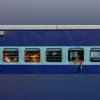 "Train, Indian Railway")
premium
(Photo: Shutterstock)
7 min read Last Updated : Jul 24 2026 | 10:12 PM IST
Listen to This Article
Nostalgia is like a grammar lesson: you discover the present tense, but the past perfect.
For those of us who grew up in the 70s, childhood was measured not in school terms or birthdays, but in train journeys. And among them all, none possessed quite the mythic grandeur of the annual pilgrimage from Asansol to Madras, as Chennai was then known.
This was not travel. It was an expedition — an annual family production mounted with military precision and all the hijinks of a dramedy.
Today, a flight deposits you in Chennai in under three hours, your discomfort outsourced to airport lounges, overpriced sandwiches, and online check-ins. Back then, travelling nearly 1,700 kilometres across India was an endurance sport, a family ritual, and a moving theatre rolled into one. By the time you reached Madras Central, you had crossed not merely states but epochs, climates, languages, temperaments and, occasionally, your own patience.
My journey began before the train even arrived.
On a bitter winter evening in Asansol, I would be wrapped up like a human burrito and shepherded to the station, where families stood beneath Favre-Leuba clocks guarding mountains of luggage as though awaiting evacuation. There was always the mandatory headcount and luggage count, conducted with the seriousness of an Army major inspecting parade ground order. Parents counted children, children counted comics, and fathers counted tickets every 11 minutes because Indian fathers of that era believed tickets had a habit of wandering off when unattended.
Then came the hunt for the porter — or, as every child of the era knew him, the “coolie” in his unmistakable red uniform. He balanced impossible towers of luggage on his head, disappeared into crowds and reappeared elsewhere entirely, usually at the exact moment someone was convinced he had vanished forever. Looking back, they resembled fleet-footed Pina Bausch performers choreographing middle-class anxiety.
Naturally, our coach was always stationed at the extreme end of the platform. Indian Railways appeared to believe passengers should earn their seats through a modest walk. So we marched, wheeled, puffed, and perspired our way towards it, dragging those indestructible VIP suitcases wrapped in thick blue canvas covers. The suitcase itself could survive minor acts of God. But heaven forbid it acquired a scratch.
Middle-class India believed in preservation as a way of life. Sofa sets wore towels. Television remotes wore plastic. Pressure cookers carried a kind of silent dignity. And suitcases wore armour.
Then came the sacred ritual of waiting for the reservation chart to be pasted outside the compartment. People gathered around it with the intensity usually reserved for election results or examination lists. Would we get the lower berth? Would someone occupy our seats and spread themselves out with the confidence of a Mughal emperor? Would the dreaded letters “RAC” appear beside our names, condemning us to a journey spent half-seated, half-standing, and fully resigned?
Long-distance trains connecting eastern India to Madras in the late 70s and early 80s took well over 30 hours. Steam locomotives were fading away, but soot still seemed part of the journey’s design. I remember pressing my face against the grimy window grille in fascination, only to emerge looking like a Victorian child who had spent the afternoon down a coal shaft. Coal-faced and triumphant.
The analogue era demanded participation. Nobody disappeared into screens because there were none. Entertainment travelled in canvas holdalls: Enid Blyton paperbacks, Tinkle, Amar Chitra Katha, dog-eared comics exchanged with strangers, and glossy film magazines with Rekha gazing from the cover in a sultry pose that somehow survived being sandwiched between railway timetables and banana chips. And then, inexplicably, a Mills & Boon, purchased with astonishing generosity by my father, who perhaps imagined romance could coexist harmlessly with The Famous Five.
We played cards. We attempted dumb charades. We argued over Monopoly rules with increasing conviction as the journey progressed. We stared out of windows for hours because landscapes were enough. The bay seat was prime real estate. Once claimed, its occupant stretched out as though owning the route itself.
Food punctuated time. Stations announced themselves through smell. Kharagpur arrived with tea and sympathy. Vizag with buttermilk and hot medu vadas expertly passed through windows. Khurda Road inspired collective vigilance. Shoes were wrapped carefully and tucked under our feet by my mother, who treated train travel as a combination of family holiday and security drill. She guarded her jewellery and traveller’s cheques, tightly rolled into a pocket she had stitched into her petticoat.
My father occupied the upper berth and somehow managed the impossible feat of remaining alert while snoring like a jet engine. At every major halt, he would hop off to refill Milton water bottles, buy snacks or chase tea sellers with the determination of someone who believed refreshments required personal supervision.
My mother and I would immediately slip into mild panic. What if the train started? What if he missed it? What if we arrived in Madras with luggage, child, and no husband?
Minutes later, he would reappear jogging heroically alongside the moving train, thrusting parcels of steaming vadas wrapped in banana leaves like a victorious Olympic relay runner.
Meanwhile, my mother and I practised advanced bladder management. Indian Railways toilets in those years required courage, timing, and philosophical acceptance. Before escorting me there, my mother would send my father on a reconnaissance mission. He would return and solemnly announce, with the gravity of a man reporting on conditions, that the toilet in the next coach was “cleaner”. “Cleaner”, by Indian Railways standards, meant you could enter without questioning civilisation itself.
Compassion travelled with discomfort. Beggars moved through compartments asking quietly for coins. Hawkers sang out their wares. Families exchanged food without fuss. Children traded comics as though money had no relevance. Strangers became temporary neighbours simply because the journey required it.
And then there were the rivers. Crossing the Krishna and Godavari bridges felt like a change in rhythm more than a change in place. Coins were tossed through windows for luck, flashing briefly before disappearing into ancient waters below. Outside, landscapes shifted imperceptibly. Bengal’s industrial greys softened into Odisha’s open stretches, then into Andhra’s sunburnt fields. The rhythm of wheels became hypnotic.
Finally, deep into the night, Madras announced itself. Not with a voice, but with light. The familiar glow of the Ashok Leyland factory signalled arrival long before the station did.
We knew we had arrived.
Despite carrying the unmistakable perfume of Indian Railways — metal, dust, upholstery, and humanity — my mother sprang into action. Out came the compact mirror. Lipstick was applied. Sari pleats were straightened. My hair, which had spent 36 hours negotiating its own independence, was combed back into submission.
And there, beneath the cavernous arches of Madras Central, my grandfather waited.
Suddenly, 36 hours of soot, snoring, anxiety, cramped berths, and endless tracks seemed entirely worthwhile.
Because some journeys do not merely take you somewhere. They take you back to a country that travelled more slowly, worried more openly, packed more food than necessary, and believed happiness could be found in a window seat, an Enid Blyton from Higginbothams, a hot vada at Vizag, and the certainty that, no matter how late the train ran, Grandpa would still be waiting at the other end.
Eye culture is a weekly column devoted to subjects such as art, dance, music, film, sport, and science
Disclaimer: These are personal views of the writer. They do not necessarily reflect the opinion of www.business-standard.com or the Business Standard newspaper
Topics : BS Opinion train Railways eye culture