


Best of BS Opinion: Uncertainty rules in a world in flux
Thanks to President Donald Trump, not just the world but even the US Fed remains in a state of suspense over how his tariff-threats will pan out in the real world
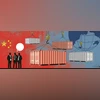 "Us trade policy, china trade")
There is no recourse within the WTO system for China’s trading partners if they want to correct this issue. It is not entirely surprising that both parties in the US have lost faith in WTO dispute settlement. (Illustration: Ajaya Mohanty)
Listen to This Article
Hello and welcome to BS Views, our daily roundup of today's editorial page.
Our columns today span the gamut of life on a large scale, covering as diverse issues as trade, cricketing leagues, to share buybacks, to China's role in the global system, and the fight tuberculosis. All of these are variously impacted by their respective policy-deciding bodies, all of whom could do better. Read on to find out more!
Uncertainty continues to roil global trade, but now it is becoming clearer that even the US Fed is recognising the fallout of President Trump's rhetoric around tariffs, notes our first editorial. US Fed chief Jerome Powell has admitted that uncertainty is high, and the Fed seems willing to wait and watch the impact of Trump's policies. Its reciprocal tariff plan could also disrupt global trade. Such a disruption would complicate policy choices for the Fed. Investors and policymakers in India will need to be prepared for uncertainty.
Our second editorial asks for a reconsideration of the IPL. As team valuations reach new heights, the BCCI should reconsider the direction and future of the sport. As a 'charitable organisation', BCCI earnings are tax free if the money is used to promote cricket. It may be worth adjusting the format to something like the US' NFL, with a second-tier franchise that would permit promotion or relegation. This would also spread the riches around. The BCCI and the ICC should impose restrictions on ownership geographies. It would be a pity if traditions like the Ashes or the Border-Gavaskar trophy were to lose out to T-20s.
Our columnist Debashis Basu notes that share buybacks are globally a popular mechanism for companies to return capital to shareholders, among other benefits. However, onerous Indian policy has disincentivised such buybacks, with the state's aim seeming to be only to extract as much money as possible by taxing buybacks. The government seems to have thought it was freeing the corporate sector from buyback tax by shifting it on to shareholders. Shareholders are unlikely to be excited about such a high tax. Buybacks that use tax-paid past profits ought to be left alone. It is time for a relook, he argues, saying that a low, flat tax policy will boost the market at no additional cost and cheer millions of shareholders.
Mihir Sharma writes that instead of painting the US as the villain in the current trade imbroglio, perhaps we should turn our gaze to China. The basic flaw of how global trade functions is the assumption that all economies are similarly structured, and that costs, subsidies and protections are transparent. Unfortunately, the biggest trading power in the world - China - does not meet these criteria. It is to this baseline problem that US actions, and those of others from the European Union to India, are responding. China's domestic imbalances have mutated to cover the world. Mutual benefits provided by trade can only be fixed by addressing the root cause — Chinese domestic policies.
Rebecca Robbins takes a closer look, via John Green’s new book, 'Everything Is Tuberculosis', at the impact of USAID cuts on efforts to combat the world's most fatal infectious disease - tuberculosis. The book, she says, is a plea to readers to care about a disease that doesn’t directly affect them. Green encounters the disease through a teenage wracked by the disease. Unfortunately, Green remains ambiguous about who to blame for the disease. He also leaves unanswered why TB has persisted when other diseases have been eradicated.
More From This Section

 "Key indices put up best weekly showing in yrs")
 "Finance ministry")
 "Trump")
 "Heartbeat")
 "cash flow, market, Rupee, cash, liquidity")
Don't miss the most important news and views of the day. Get them on our Telegram channel
First Published: Mar 24 2025 | 6:15 AM IST