


The new bad boy of B-town: Aurangzeb joins Gabbar and Mogambo in infamy
The sixth Mughal emperor, Aurangazeb, is the hot villain in Indian cinema now. But what do our favourite villains say about us?
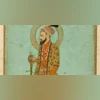 "Aurangzeb")
Akshaye Khanna played the role of Aurangzeb in recent blockbuster Chhaava. (Photo: Wikimedia Commons)
Listen to This Article
In recent years, Aurangzeb Alamgir, the sixth Mughal emperor who ruled large swathes of the Indian subcontinent from 1658 to 1707, has joined the disreputable rogues gallery of Gabbar Singh, Shakal, Mogambo, Dr Dang and other memorable villains produced by Bollywood over the decades. However, unlike the other villains, who featured in a single film and met their just ends before the end credits, Aurangazeb has already served as the monstrous baddie in several films, both in Hindi and other languages.
In the 2020 film, Tanhaji: The Unsung Hero, directed by Om Raut, former video jockey Luke Kenny played the Mughal emperor in a small role. Bobby Deol took on the role in the 2023 Telugu film, Hari Hara Veera Mallu, directed by Krish Jagarlamudi. The 2024 Marathi film, Chhatrapati Sambhaji, directed by Rakesh Subesingh Dulgaj, featured Rajit Kapoor as the same character. And, earlier this year, Akshaye Khanna played the same role in the blockbuster Chhaava, directed by Laxman Utekar. The film has already raked in Rs 800 crore at the box office. So what has made Aurangazeb the favourite new on-screen bad boy? And what does his ascent to the throne of villainy say about us, the audience of Indian cinema?
Syed Ali Nadeem Rezavi, a history professor at Aligarh Muslim University, list at least 15 films between 1941 and 2020, featuring five of the six great Mughals — chronologically, Babur, Humayun, Akbar, Jahangir and Shah Jahan. These films include grand and successful epics, like Mughal-e-Azam (1960), directed by K. Asif, and Jodha Akbar (2008), directed by Ashutosh Gowarikar. Though both films were more fictional than historical, they highlighted, claims Rezavi, Akbar’s policy of “sulh-i kul, or absolute peace, which attempted at reconciliation and understanding between different faiths.”
Implemented in 1580, this policy was the culmination of religious tolerance measures introduced by Akbar during his reign, including the abolition of jizya, or pilgrimage tax on Hindus, in 1564, and the inclusion of Hindu Rajputs in the higher echelons of Mughal aristocracy, through marriage and military alliances. Though both films had several historical inaccuracies and anachronisms, they reflected the official secular aspirations of successive post-Independence governments in India, claim historians and film scholars.
The other major films that Rezavi includes in his list are pre-Independence features, Taj Mahal (1941), directed by Manubhai Wakil, and Mumtaz Mahal (1944), directed by Kidar Nath Sharma. Both films celebrated the crowning glory of Mughal architecture, the Taj Mahal, a mausoleum constructed by Shah Jahan for his wife Mumtaz Mahal in Agra. In the years leading to Independence in 1947, these films followed the nationalist narrative of India’s pre-colonisation glory. The Taj Mahal as an eternal symbol of love — and somewhat metonymic of India itself — continued to feature in films such as Taj Mahal (1963), directed by M. Sadiq, and Taj Mahal: An Eternal Love Story (2005), directed by Akbar Khan.
Also Read

 "Raj Thackeray, Raj, Thackeray")
 "Devendra Fadnavis, Devendra, Fadnavis")
 "Curfew, Nagpur Curfew")
 "Aurangzeb")
 "chart")
Films on Mughal emperors or the Mughal era made in the first decade after Independence — Baiju Bawra (Vijay Bhatt, 1952), Anarkali (Nandlal Jaswantlal, 1953) and Mirza Ghalib (Sohrab Modi, 1953) — “proclaimed the aspirations of the early Nehruvian era, celebrating India’s composite culture”, writes Rezavi.
Aurangazeb, however, remained conspicuously absent from almost all these films. The 1958 film, Lala Rookh, directed by Akhtar Siraj and produced by Ismat Chughtai, was based on the eponymous poem by 19th-century British poet Thomas Moore, on Aurangazeb’s daughter Lala Rookh. However, the film does not feature the Mughal emperor.
Perhaps, Aurangazeb’s reputation as a religious bigot, who reintroduced the jizya and demolished temples like the Kashi Vishwanath in Varanasi in 1669, and for being an absolute killjoy by allegedly withdrawing royal patronage for music — though historians like Katherine Butler Brown argue for a more nuanced analysis — made him a persona non grata for Indian filmmakers. Can you think of classic Bollywood films without half a dozen good songs?
Aurangazeb’s reputation as a religious bigot and imperialist aggressor, who expanded his empire but destabilised it as well, was possibly established by historian Jadunath Sarkar in his 1912 book Aurangazeb and His Times. A series of succession wars, coups and maladministration so weakened the Mughal empire that barely three decades after Aurangazeb’s death in 1707, Iranian invader Nadir Shah sacked and looted Delhi in 1739, taking away with him the precious and notorious Kohinoor diamond. By the second half of the 18th century, the British had established themselves as a major power in the north and east of the country.
India’s first prime minister Jawaharlal Nehru, influenced by Sarkar, described the emperor as “a bigot and austere puritan” in his magnum opus, The Discovery of India (1946). In filmmaker Shyam Benegal’s adaptation of Nehru’s book, for the 53-episode TV drama Bharat Ek Khoj (1988), Aurangazeb, played by Om Puri, is the familiar bigot. In recent years, historians such as Audrey Trushke, have tried to reassess Aurangazeb’s 49-year-long rule, arguing that the stamp of bigotry on the Mughal emperor elides a more complicated persona. “As misinformation and condemnation of Aurangzeb swirl about twenty-first-century South Asia, the man himself remains an enigma,” writes Trushke.
Aurangazeb’s reputation as an Islamic tyrant has made him a favourite punching bag for the Hindu right. In 2015, barely a year after Prime Minister Narendra Modi-led Bharatiya Janata Party came to power in the Centre, it renamed Aurangazeb Road in New Delhi as Dr A. P. J. Abdul Kalam Road, after India’s 11th president. The city of Aurangabad in Maharashtra was renamed as Chhatrapati Sambhajinagar, in 2022.
Linguists Małgorzata Fabiszak and Rani Rubdy argue, in a 2021 essay, that renaming of places, such as Aurangazeb Road, is a sort of “symbolic marking of the territory” that “can be recruited for a political agenda going beyond memory politics”. The recent controversy over Aurangazeb’s grave in Khulabad, a small town about 300 km northeast of Mumbai, with many Hindu right activist calling for it demolition, leading to violent clashes in Nagpur last month, is also a result of “the swirl of misinformation around Aurangazeb”.
Film scholars, such as Ajay Gehlawat and others, have shown how the Hindu right has utilised the Indian film industry for propaganda. It is, thus, hardly a surprise that films have started reflecting popular anti-Aurangazeb sentiments, casting him as the archetype of the menacing Islamic tyrant. In Chhava, an elaborate sequence shows how Aurangazeb orders the spectacular torture of the Maratha ruler Shambhaji (Vicky Kaushal), eventually killing him. Though the scenes have their origins in history, the way they are mounted is similar to the depiction of the torture and martyrdom of Catholic saints in Baroque art. It is intended to evoke a strong emotional reaction and outrage in the audience, which is does successfully, with many audience members reportedly leaving the cinemas in tears.
But what does the cinematic renewal of Aurangazeb as a villain say about the audience? In the introduction to their book Villains and Villainy: Embodiments of Evil in Literature, Popular Culture and Media (2011), literary scholar Anna Fahraeus and cultural studies scholar Dikmen Yakalı Çamoğlu argue: “The hero — who usually wins — cannot exist without an opponent in one form or the other. The villain embodies this opposition and can present a fascinating complex of characteristics.” Further, they argue that villainy is “integral in narratives that reflect the innermost fears of the human psyche.”
Thus, Maratha historical figures, such as Shivaji, Shambhaji or Tanhaji emerge as heroes for the Hindu right through a binary othering of the Muslim Aurangazeb. “Every era seems to have its enemy others,” writes media and cinema studies scholar Lennart Soberon, in a 2021 essay, on villains in American action films.
A similar review by popular film historian Balaji Vittal in his book Pure Evil: The Bad Men of Bollywood (2021), shows how the evolution of the villainous figure in the Hindi film industry, from pre-Independence to the early 2000s reflects social anxieties and moral panics.
From the colonial overlords in the pre-independence era to treacherous Pakistanis during times of conflict and war (Border, 1997; Lakshya, 2004), greedy zamindars (Do Bigha Zamin, 1953), unscrupulous moneylenders (Mother India, 1957), bloody-thirsty dacoits (Sholay, 1975) and mastermind criminals (Jewel Thief, 1967; Don, 1978), right down to neoliberal anti-heroes (Baazigar, 1993) and terrorists (Mr India, 1987; Black Friday, 2005), Bollywood film villains have consistently reflected the contemporary national paranoia.
Early in his book, Vittal also narrates an interesting story about another film on the Marathas that got into trouble with the censors. In 1931, the censor board refused to clear V. Shantaram’s silent feature Swarajyache Toran, with Shantaram himself playing the role of Shivaji. The frequent use of the word “swarajya” (freedom) and Shivaji hoisting a flag did not go down well with the head of the censor board, who also happened to be the commissioner of Bombay (Mumbai) police.
Film historian Sanjit Narwekar tells Vittal: “People knew that when Shivaji was talking about Purna Swaraj… it meant Purna Swaraj [complete independence] of India”. Shantaram made a few cuts and secured the censor’s certificate by renaming the film as Uday Kal. Film scholar Prem Choudhary claims, in his 2000 book Colonial India and the Making of Empire Cinema that Uday Kal was “the first film which explicitly politicised the figure of Shivaji”. Aurangazeb’s tyranny in the film was a metaphor for colonial tyranny, which could not be directly represented in films then. Which villains do our contemporary filmmakers find difficult to represent on screen?
(Uttaran Das Gupta is an independent writer and journalist)
(These are the personal opinions of the writer. They do not reflect the views of www.business-standard.com or the Business Standard newspaper)
(These are the personal opinions of the writer. They do not reflect the views of www.business-standard.com or the Business Standard newspaper)
More From This Section
 "Trump tariffs")
 "Trump tariffs")
 "regulation")
 "politics, social media, political agenda")
 "markets")
Don't miss the most important news and views of the day. Get them on our Telegram channel
First Published: Apr 05 2025 | 8:21 PM IST