


Home / Specials / Supplements / BS Samriddhi: Uttar Pradesh's sugar industry grows by leaps and bounds
BS Samriddhi: Uttar Pradesh's sugar industry grows by leaps and bounds
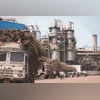
The state's sugar sector has over the years successfully transitioned from conventional sugar production to integrated complexes, producing sugar, ethanol, power, and bio-fertilisers
 "Sugar mill")
premium
5 min read Last Updated : Dec 30 2025 | 6:25 AM IST
Listen to This Article
From being a significant contributor to India’s ethanol blending programme to initiating projects for social development, Uttar Pradesh’s sugar industry has grown immensely in the last eight years under the Yogi Adityanath government, expanding its wings beyond sugar production to rural development, renewable energy, farmer welfare, and national economic progress.
Besides paddy and wheat, sugarcane is a major cash crop of UP, with 4.5 million farmer households directly involved in its cultivation across the state.
In the 2024-25 sugar season that ended in September 2025, sugarcane was grown in around 2.95 million hectares of land in Uttar Pradesh, producing around 249.42 million tonnes of sugarcane with an average yield of 8.32 tonnes per hectare.
Mills crushed around 95.50 million tonnes of sugarcane to produce around 9.25 million tonnes of sugar with an average recovery of 9.67 per cent with B-heavy molasses.
Data showed that almost 122 sugar mills operated in the state in the 2024-25 season for around 133 days, producing almost 4.87 million tonnes of molasses and 1.80 billion litres of ethanol.
The industry also generated around 2,912 million units of cogeneration power in the 2024-25 financial year and has a per day crushing capacity of around 840,000 tonnes.
In recent years, one of the major achievements of the sector has been timely and full payment of sugarcane dues, with cane payments exceeding ₹35,000 crore annually.
In one of the sharpest hikes in the sugarcane State Advised Price (SAP), the state government, a few weeks back, had announced a ₹30 per quintal increase in the SAP of sugarcane for the 2025-26 season, taking the procurement price of the cash crop to ₹400 per quintal for early maturing varieties.
For common varieties, the SAP will be ₹390 per quintal, up from ₹360 in the previous season.
The last time SAP of sugarcane was increased more than the 2025-26 season was back in 2021-22, when it went up from ₹315 to ₹340 for common varieties, while for early maturing varieties, it was ₹350 per quintal.
The more than 8 per cent price hike will translate into an additional income to sugarcane farmers by ₹3,000 crore in the current crushing season, the government claimed.
Integrating diversification
The sugar industry in the state has embarked on a massive diversification and value-addition drive. It has over the years successfully transitioned from conventional sugar production to integrated complexes, producing sugar, ethanol, power, and bio-fertilisers.
It has contributed significantly to India’s ethanol blending programme, aligned with the target of 20 per cent blending by 2025 by supplying around 1.80 billion litres of ethanol in 2024-25 to oil marketing companies (OMCs), saving about ₹8,000 crore of foreign exchange annually.
The industry has also established significant co-generation projects using bagasse to produce green electricity. The installed capacity now exceeds 2,000 Mw.
Presently, many of its projects are registered under the Clean Development Mechanism (CDM), earning carbon credits while contributing to clean energy, supplying around 3,000 million units of green energy every year.
As part of its corporate social responsibility activities, the sugar sector in Uttar Pradesh is actively engaged in healthcare, education, sanitation, women empowerment, and rural upliftment projects. Initiatives such as ‘Nai Umeed’ reflect the industry’s commitment to social development.
As far as employment and rural development is concerned, the sugar industry supports over one million livelihoods in Uttar Pradesh, including farmers, transporters, vendors, skilled and unskilled workers.
By locating mills in rural areas, the sector has driven economic activity and improved living standards across the state.
New growth avenues
When it comes to green energy and UP’s sugar sector, a notable new addition and business opportunity for the millers is the production of compressed biogas (CBG). The abundant feedstock such as press mud, filter cake, spent wash, and other organic residues offer steady raw material for CBG production.
CBG plants can provide a new income source independent of sugar and ethanol that could aid in significant reduction in methane emissions while supporting clean mobility.
The state and central government together provide multiple incentives for setting up CBG plants that include the SATAT scheme and other state policies that support CBG procurement by OMCs.
Another area in which the sugar industry in Uttar Pradesh is steadily progressing is production of sustainable aviation fuel (SAF). Sugar mills producing ethanol can integrate alcohol-to-jet (ATJ) technologies for SAF. There is growing global demand for low-carbon value chains and SAF perfectly fits into this. With airlines and regulators mandating increasing SAF blending, long-term offtake of this clean fuel is a certainty.
Uttar Pradesh is among the very few states in the country that is planning to have a separate policy on SAF, which, according to sources, is at the draft stage. The sector is also actively nurturing biomass-based renewable power as bagasse, that is cogenerated, can supply green electricity for electrolysis.
That apart, sugar mills are also working towards developing their sugar complexes into decentralised hydrogen hubs that can act as rural green hydrogen production clusters. Hydrogen can support captive uses— boilers, mobility, fertiliser blending in agricultural regions.
The National Green Hydrogen Mission encourages biomass-based renewable hydrogen production with viability gap funding.
The green hubs will also involve dispensing ethanol (E100/E20) from sugar mills within mill premises, which can promote clean mobility.
This would bypass intermediaries, improve margins and cash flow stability. For the consumer, it not only will bring convenience, but will also help in creating an ecosystem for farm-to-fuel retailing in rural and semi-urban areas.
Uttar Pradesh’s sugar and ethanol sector is poised for a big leap forward and a little push from the central and state governments in the form of favourable policies will further enable it to realise its full potential.