


A mystery power outage forces Madrid to adjust to life off the grid
By the time Prime Minister Pedro Sanchez finally addressed the nation six hours later, people in downtown Madrid were gathering around the old-fashioned transistor radio to get the latest news
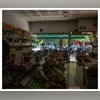 "store, grocery store")
A store during a power outage in Madrid on April 28. Photo: Bloomberg
Listen to This Article
By Ben Sills
At 12:33 p.m., in the span of five seconds almost two-thirds of Spain disappeared off the grid. It wasn’t just that the lights suddenly went out. In the age of cashless payments and with virtually everything on your smartphone, millions rediscovered the joys of analog technology.
By the time Prime Minister Pedro Sanchez finally addressed the nation six hours later, people in downtown Madrid were gathering around the old-fashioned transistor radio to get the latest news. Many spilled outdoors into the sidewalks to share drinks in the spring sunshine.
No one was going anywhere. Trains stopped running. Hundreds of flights were canceled. Some went into panic-buying mode for groceries. Tennis play at the Madrid Open was suspended. But trading at the stock exchange wasn’t affected — perhaps down to back-up generators.
Also Read

 "Blackout, power cut, Power blackout")
 "Spanish Prime Minister Pedro Sanchez")
 "Axis Bank’s Burgundy Private and Hurun India rich list")
 "European Union flag")
 "Donald Trump, Trump")
Sanchez had no explanation, despite the hours spent in emergency meetings with Red Electrica SA. By the time the power had returned and cell phone reception was back, it was dark and Spaniards were ready to turn in earlier than the norm. There was a sigh of collective relief that things were grinding back to normality — but still no clarity was shed.
“What has caused this sudden vanishing of supply?” Sanchez said in his second address at night. “That’s something that experts have not yet been able to determine.”
What is certain is that the mystery around a blackout that affected large swathes of the Iberian peninsula and even parts of Southern France has yet again exposed Europe’s energy vulnerabilities at a delicate geopolitical moment.
More than two decades ago, Italy succumbed to its own dramatic outage, and it’s still learning the lesson about being over reliant on a neighbour for its energy needs.
In Madrid, hours of chaos suggested how modern society and major capitals will react to the unexpected scenario of being stripped of all that keeps it nominally safe and connected.
By 6:30 p.m. on Monday, the Serrano metro station on Madrid’s Golden Mile shopping district was still sealed off with police tape and staff in the Loewe store were taking down the designer handbags from their display to stash them away safely.
At Michael Kors next door, the shelves were already empty, a pair of steel stepladders bearing witness to the precautions the shop had taken as a pair of mounted police trotted along the sidewalk opposite.
Only in Prada were the thousands of euros worth of designer goods still in their usual place. “Because we have armor-plated shutters that seal off the whole shop front,” said the manager as he locked the door.
The blackout led to a total collapse of phone and internet services. Some 35,000 people were trapped on trains when the services collapsed.
At the bus stop outside Madrid’s City Hall, the line of people waiting to get home snaked across the neighbouring plaza and along the street.
“It’s one of many,” said a policeman watching. The queue ran past the Naval Museum toward the park outside the old Stock Exchange building, where three students from the Instituto Empresa business school were lying on the grass soaking up the last of the sun and joking.
“For the apocalypse,” laughed 18-year-old Gabriela Vara. “I love it,” said Ernesto Cabrera, 20, from Cuba. “Never in your life are you going to get another day like this. We just met in the street.”
Between them, they’ve got 65 euros in cash to pay for dinner, though everywhere is closed anyway. “This is dinner,” says Cabrera, holding up a tube of Pringles chips.
They’ve all got exams later this week. But the course materials are all online so they literally have no books they could be studying from.
Beyond the surprise afternoon off, there are serious questions about how the government of Spain handled this particular crisis. Sanchez is no stranger to criticism — he’s scraped by his share of elections and contemplated resigning a year ago. He took his time to face the public while his counterpart in Portugal spoke up sooner.
“In Norway, where I come from, the government would 100 per cent have said something,” said 20-year-old Signe Villum. “We don’t know anything.”
The problem with the lack of immediate answers is that the risk of speculation running amok is much bigger now than it was just a couple of decades ago, when flip phones and not smartphones were the norm. Left to opine on the source of the outage, Villum was quick to proffer a theory: “Cyberattack.”
That is one scenario Portuguese Prime Minister Luis Montenegro tried to dispel, saying there was “no indication” of it. The conspiracy-minded students aren’t convinced. 10
It’s been a day of rumors, with people in the street coming up with their own interpretation of what “anomalous oscillations” and “induced atmosphere vibration” mean, all terms they picked up on the radio.
With most of the usual information networks down and sirens blaring down Madrid’s main boulevard, the Paseo de la Castellana, swarms of office workers were just trying to get home.
More than a few had to check into whatever hotel they could find.
In the Rosewood Villamagna Hotel on the Castellana, emergency generators kept the bar and restaurant buzzing as staff tried to keep their increasingly frazzled guests happy. One northern European dressed all in black with long ginger hair angrily asked for food, or even just an ATM. But as he soon discovered, no one uses or accepts cash anymore.
In the Santo Mauro Hotel, a few blocks away, beleaguered staff were turning away potential guests.
Locals queued outside of a half-shuttered Carrefour Express in the hope of purchasing last-minute provisions, despite the checkout assistant trying to explain that without power there was no way to sell anything.
In Calle Argensola, a block away from the Supreme Court, neighbors were broadcasting to the street with an analog radio set from a third-floor balcony. People gathered to hear reports of thousands of people across Spain expected to be sleeping in rail stations on Monday night.
Police vans blocked the main rail hub in Madrid with the hum and pungent smell of diesel generators. Thousands of people, perched on suitcases and bags, were trying to push their way onto the few buses that managed to make their way through the logjam.
Slowly, through the evening, there were signs that the system was sparking back into life. Power company Endesa SA said a third of its customers had energy back and that it was prioritizing special consumers like hospitals and critical infrastructure.
Pietro Agostini had spent the afternoon on a bench opposite the Royal Botanical Gardens making detailed drawings of ants in his sketch book. “It’s awesome,” the 26-year-old zoology student said. “I’m just going to wait for the electricity to come back on.”
And then, just after 10 p.m., the lights came back on in central Madrid, and a cheer rang out from house to house. For Agostini, it was time to put his pencil down.
More From This Section
 "Donald Trump, Trump")
 "Mark Carney, Canada PM")
 "Mark Carney")
 "Donald Trump, Trump")
 "Donald Trump, Harvard University")
Topics : Spain Power blackout
Don't miss the most important news and views of the day. Get them on our Telegram channel
First Published: Apr 29 2025 | 9:26 AM IST