


Donald Trump's tariff chaos leaves global trade partners in uncertainty
Gone is the idea that the White House would strike 90 deals in 90 days after a period of rapid-fire negotiation, as Trump pledged in April
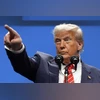 "Donald Trump, Trump")
Even for those who have not yet received a letter the developments have underscored that any negotiations are precarious. (Photo: PTI)
Listen to This Article
By Jeanna Smialek
Six months into his new administration, Trump’s assault on global trade has lost any semblance of organisation or structure. He has changed deadlines suddenly. He has blown up negotiations at the 11th hour, often raising unexpected issues. He has tied his tariffs to complaints that have nothing to do with trade, like Brazil’s treatment of its former president, Jair Bolsonaro, or the flow of fentanyl from Canada.
Talks with the United States were like “going through a labyrinth” and arriving “back to Square 1,” said Airlangga Hartarto, the Indonesian minister for economic affairs, who met with US officials in Washington on Wednesday. The resulting uncertainty is preventing companies and countries from making plans as the rules of global commerce give way to a state of chaos. “We’re still far away from making real deals,” said Carsten Brzeski, global head of macroeconomics at the bank ING in Germany. He called the uncertainty “poison” for the global economy.
Gone is the idea that the White House would strike 90 deals in 90 days after a period of rapid-fire negotiation, as Trump pledged in April. Instead, Washington has signed bare-bone agreements with big trading partners including China, while sending many other countries blunt and mostly standardised letters announcing hefty tariffs to start on August 1. Policymakers in Indonesia, Japan and elsewhere learned about those letters only when Trump posted them on social media. Trading partners who have received such letters are now frantically pushing to reduce the country-specific rates, which range from 25 per cent to 50 per cent, though Trump has at some points suggested that room to negotiate may be limited.
Even for those who have not yet received a letter the developments have underscored that any negotiations are precarious. Trade deals appear to hinge on one person, Trump, and even carefully constructed agreements can be upended on his whim.
Also Read

 "US President Donald Trump")
 "US President Donald Trump (left) Brazilian President Luiz Inácio Lula da Silva (right)")
 "The site after several vehicles fell into the Mahisagar river when a portion of a four-decade-old bridge collapsed. | PTI Photo")
 "Stock Market, BSE, NSE, Nifty, Capital")
 "Marco Rubio")
In early April, Trump announced across-the-board tariffs that applied in different amounts to different countries, calculated using a simple equation that relied in part on a nation’s trade gap with the US.
After Trump unveiled the numbers on a poster in the Rose Garden of the White House, a rapid volley of negotiations kicked off. The US announced a framework agreement with Britain in May, and a handshake with Vietnam last week that now appears to be in flux, but most countries have not made a deal yet. And so even those who thought that they might be close to an agreement are watching those careful negotiations implode.
US’ trading partners have seen that there are no guarantees, except that further trade whiplash probably lies ahead.
The European Union has been working toward an agreement that would likely include a 10 per cent base-line tariff, with exemptions for key goods like Airbus airplanes and a possible softening of some sector tariffs. In return, the bloc would pledge to buy more from and invest more in the US. But EU officials have long been unwilling to say they think a deal is likely. The US lurched into a sudden trade war with Brazil on Wednesday after Trump announced in a letter to President Luiz Inácio Lula da Silva of Brazil that 50 per cent tariffs would take effect on August 1.
More From This Section
 "Marco Rubio")
 "it industry it sector jobs employee")
 "Bitcoin")
 "red sea houthi yemen terrorist pirates trade security")
 "Houthis")
Topics : Donald Trump trade Global economy
Don't miss the most important news and views of the day. Get them on our Telegram channel
First Published: Jul 11 2025 | 10:31 PM IST