


Japan presses US for swift tariff talks amid rising business losses
The talks come as Japan continues to push for exemptions from US tariffs, including a 25 per cent duty on global auto imports that began in early April
 "japan share stock market, japanese stocks, japan")
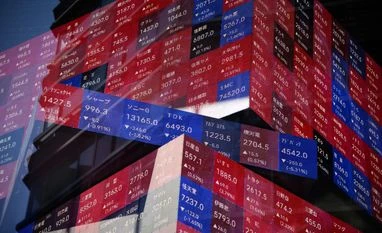
Prime Minister Ishiba also spoke on Monday with Singapore’s Prime Minister Lawrence Wong about the broader impact of US tariffs and China’s responses.(Photo: Bloomberg)
Listen to This Article
Japan’s lead negotiator for upcoming trade talks with the US has raised concerns over the economic impact of Trump-tariffs. They said, Japanese companies are losing money ‘day by day’ and are urging for quick action to limit the losses.
According to a report by the AFP, Economic Revitalisation Minister Ryosei Akazawa will travel to Washington this week to represent Japan in negotiations, Prime Minister Shigeru Ishiba told lawmakers on Monday.
Japan push for tariff exemptions
The talks come as Japan continues to push for exemptions from US tariffs, including a 25 per cent duty on global auto imports that began in early April. A separate 24 per cent tariff specifically targeting Japanese goods has been paused for now, but concerns remain.
“As some tariffs have already taken effect, Japanese companies' profits are being cut day by day. The sooner (the issue is addressed), the better,” Akazawa said in parliament.
Also Read

 "Mohan Yadav, Mohan, MP CM, Yuriko Koike, Tokyo Governor")
 "Japan flag, Japan")
 "Japan defence budget")
 "Yen, Japan Currency")
 "Shigeru Ishiba, Shigeru, Ishiba")
In Washington, Akazawa is expected to press hard for a re-evaluation of the tariffs. “I will do my best, bearing in mind what’s best for our national interests and what is most effective,” he said.
Talks are expected to take place on Wednesday with US Treasury Secretary Scott Bessent and Trade Representative Jamieson Greer, according to Japanese media reports. Japan is one of the largest foreign investors in the US. Vehicles made up about 28 per cent of Japan’s $142 billion worth of exports to the US last year.
Japan weighs tariff fallout
Prime Minister Ishiba also spoke on Monday with Singapore’s Prime Minister Lawrence Wong about the broader impact of US tariffs and China’s responses. Ishiba said, “The current situation is serious for Japanese companies operating in Southeast Asian countries including Singapore,” according to Tokyo’s foreign ministry.
Ahead of the trip, Akazawa told Japan’s Yomiuri Shimbun newspaper that understanding the US position would be key. “We have to convey our message that we have serious concerns as to consistency with the World Trade Organization agreement and Japan-US trade agreement,” he said.
Akazawa also mentioned he is open to discussing development of liquefied natural gas (LNG) fields in Alaska if the US brings it up. President Trump recently said Japan and South Korea are interested in cooperating on an LNG pipeline project in Alaska.
Trump’s flip-flop on tariffs
In 2025, President Trump introduced a series of new tariffs that have shaken up global trade. In February, he placed a 25 per cent tariff on most goods from Mexico and Canada, saying it was to fight drug trafficking and illegal immigration.
By March, the US also started charging 25 per cent on all steel and aluminium imports, removing past exemptions.
On April 2 — what Trump called ‘Liberation Day’— he announced a 10 per cent tariff on all imports and even higher tariffs (up to 50 per cent) on goods from 57 countries, including Japan. While the 24 per cent tariff on Japanese goods was paused for 90 days, the same did not apply to China, which faced even higher rates reaching 145 per cent.
These moves sparked concern around the world. Countries like Canada and Mexico criticised the US for breaking trade agreements, and markets fell as investors worried about the risk of a global trade war.
Japan, heavily affected by the new auto tariffs, has been pushing hard for exemptions.
Meanwhile, the US also began a new investigation into semiconductor imports, which could lead to more tariffs in the future. Many economists believe these actions could raise prices for everyday goods and even lead to a recession if the situation continues to escalate.
More From This Section
 "pakistan Flag")
 "Dubai airport, Dubai international airport")
 "Chinese workers, Chinese")
 "Han Duck-soo, South Korean PM")
 "Katy Perry")
Don't miss the most important news and views of the day. Get them on our Telegram channel
First Published: Apr 14 2025 | 3:06 PM IST