


Sam Altman backtracks on for-profit ambitions, OpenAI to remain non-profit
US AI-research and deployment company OpenAI has decided to go with a public benefit corporation (PBC) while still keeping the non-profit in charge, satisfying regulators, the public, and investors
 "Sam Altman")
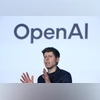
Sam Altman-led OpenAI to remain non-profit | Photo: Bloomberg
Listen to This Article
OpenAI has shelved its plan to convert into a fully conventional for-profit entity, instead opting to maintain control under its original non-profit board, the Financial Times reported on Tuesday.
This decision comes after the US AI-research and deployment company faced strong criticism from its co-founder Elon Musk, former employees, academics, and civic groups, who were concerned that OpenAI was moving away from its mission to create AI for the public good.
Initially, OpenAI had been preparing to simplify its corporate structure to attract greater investment, proposing a transition to a public benefit corporation (PBC) model that would have diluted the non-profit’s direct control. However, after months of public and legal scrutiny, including a lawsuit from Musk alleging breach of contract and improper transfer of charitable assets, the company announced it would proceed with restructuring its for-profit arm as a PBC while keeping the non-profit firmly in charge. ALSO READ | OpenAI exploring social network that could directly rival Elon Musk's X
Non-profit board to retain governance of OpenAI
Under the revised framework, investors such as Microsoft and SoftBank, as well as employees, will receive traditional equity stakes. The non-profit, however, will retain governance authority and hold a significant ownership share in the for-profit division. This balance is meant to satisfy regulators and show that OpenAI is still focused on serving the public.
The decision comes amid intense negotiations with the attorneys-general of Delaware and California, who are monitoring whether the restructuring honours OpenAI’s non-profit obligations. Both states are involved in making sure the process is fair, with Delaware’s top lawyer stressing that the public should benefit.
Also Read

 "OpenAI")
 "Sam Altman")
 "OpenAI's GPT-4o")
 "OpenAI, ChatGPT, AI")
 "Alibaba, Qwen, Qwen3, AI")
OpenAI investors to benefit regardless of company status
OpenAI recently raised $40 billion, led by SoftBank, with terms that let investors pull out if the restructure wasn’t done in time. The new setup keeps some control with the non-profit but removes profit limits for investors. According to a report by Bloomberg, this updated model appeases investors, as OpenAI expects $12.7 billion in revenue this year, even with rising development costs. ALSO READ | OpenAI to raise $40 bn in funding round led by SoftBank for AI research
Why did OpenAI want to become a for-profit organisation?
OpenAI was launched as a non-profit in 2015 and added a capped-profit subsidiary in 2019 to secure the funding needed to build large-scale AI systems. But growing commercial ambitions, combined with a global AI race and increased investor appetite, pushed the organisation to consider more market-friendly reforms.
Now, the pivot back to non-profit control is being viewed as a strategic compromise. Experts, cited by Financial Times and Bloomberg, note that the true test will be how much influence the non-profit continues to exert over AI deployment and governance. Legal and philanthropic experts have pointed out that scrutiny over the balance between public and private benefit will likely intensify.
Experts also believe that the new structure strikes the necessary balance between mission integrity and financial viability, allowing OpenAI to remain competitive without sacrificing oversight.
More From This Section
 "Donald Trump, Trump")
 "Donald Trump, Trump")
 "Donald Trump, Trump")
 "Donald Trump, Japan PM Shigeru Ishiba")
 "Friedrich Merz")
Topics : Artificial intelligence OpenAI BS Web Reports
Don't miss the most important news and views of the day. Get them on our Telegram channel
First Published: May 06 2025 | 1:35 PM IST