


Here is why South Korea's ex-President Yoon could face death penalty
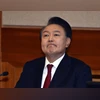
South Korean President Yoon Suk Yeol was removed by the Constitutional Court following his declaration of martial law. He appeared at his criminal trial on Monday facing rebellion charges
 "Yoon Suk Yeol, Yoon Suk, South Korea President")
If found guilty of rebellion, Yoon Suk Yeol could receive a life sentence or even a death penalty
Listen to This Article
Ten days after Yoon Suk Yeol’s removal from office over his martial law declaration, the former conservative South Korean president made his first appearance on Monday at his criminal trial facing rebellion charges.
Yoon became the first president in South Korea´s history to be indicted while serving after his controversial proclamation of military rule and deployment of troops to Seoul streets in December. The Seoul Central District Court is currently reviewing whether Yoon’s martial law imposition amounted to an act of masterminding a rebellion. If found guilty of rebellion, he could receive a life sentence or even a death penalty.
Here is what to know about the trial:
What did Yoon Suk Yeol do?
Facing an impasse over an unresolved Budget Bill and corruption allegations, Yoon declared martial law on December 3, 2024, and sent military forces including helicopters to the Parliament. Yoon claimed that he was protecting the nation from elements sympathetic to North Korea.
In response crowds of hundreds assembled outside Seoul’s National Assembly in protest. Yoon was forced to withdraw his order within six hours as lawmakers moved quickly to oppose it. Protests persisted the next day, spearheaded by Opposition Democratic Party members. South Korea’s Constitutional Court officially removed President Yoon Suk Yeol from office in April upholding the impeachment vote passed by parliament late last year.
Also Read

 "Han Duck-soo, South Korean PM")

 "South Korea, S Korea")
 "South Korea flag")
 "National Stock Exchange, NSE")
Yoon’s trial: What are the central issues?
The central question in Yoon’s criminal trial is whether his decision to send hundreds of soldiers to the National Assembly and election commission offices was an unlawful attempt to close these institutions.
Although South Korea’s constitution doesn’t permit a president to shut down the legislature even under martial law, Suk Yeol’s martial law directive explicitly announced the suspension of all political activities at the National Assembly. READ | South Korea to hold election on June 3 to replace ousted President Yoon
The Seoul court will determine if there was intent to subvert constitutional governance, and will separately evaluate various specific actions, including the context in which military and police forces were deployed, Yang Hong-seok, a lawyer was cited as saying.
According to some legal observers, the charges were debatable as his decree didn’t lead to major violence or cause any severe civilian casualties.
If found guilty of insurrection, Yoon could be sentenced to life in prison or receive a death sentence.
Yoon denies insurrection charges in court
The former president has denied charges of insurrection during his criminal trial. The ousted leader insisted in the Seoul Central District Court on Monday that his declaration of martial law late last year was “not a coup d’etat”. Yoon argued that martial law was needed to alert the people to the actions of the majority opposition party and that he had no intention of paralysing the country.
What lies ahead for Yoon Suk Yeol?
A snap presidential election in South Korea will take place on June 3 to replace Yoon. The election is expected to be influenced by intense political division, likely resulting in a direct fight between the two main political parties: Suk Yeol’s conservative People Power Party and its chief liberal opponent, the Democratic Party.
More From This Section
 "Google, Alphabet, Playstore")
 "US China flag, US-China flag")
 "china Flag, China")
 "Neela")
 "Nissan")
Don't miss the most important news and views of the day. Get them on our Telegram channel
First Published: Apr 15 2025 | 1:32 PM IST