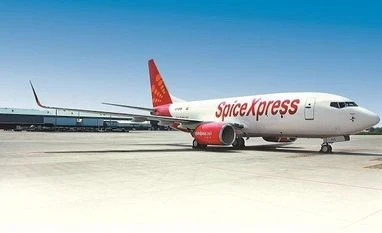
The result: Between March 25 and June 12, the airline operated close to 2,360 cargo flights and transported over 16,700 tonnes. With demand picking up, it recently converted three of its Bombardier Q400 passenger aircraft into freighters and plans to add more dedicated freighters. The airline says in the period of March 1 to the first week of June, revenues from the segment grew 75 per cent compared to the corresponding period last year. The company attributes the growth to the groundwork done before the coronavirus crisis hit hard, venturing into new categories at the right time and smart management of its main resource, the aircraft.
Think of the time when the coronavirus crisis had just started engulfing the country and there was a sudden spike in the need for medical supplies. SpiceXpress stepped in with timely movement of critical medical supplies. “We have been regularly transporting medical and surgical supplies, sanitisers, face masks, coronavirus rapid test kits, IR thermometers etc. and providing doorstep deliveries of essential supplies, medicines and medical equipment to pharma companies and international retailers,” says Singh. It transports a wide range of items to 12,500 pin codes in India today.
In total, the airline has transported 1,201.59 metric tonnes (MT) of medical supplies from March 23 to June 9. Of these, SpiceJet transported 530 MT of medical supplies to and form Mumbai, Hyderabad, Hong Kong, Delhi and Guangzhou (international) and 415 MT to and form Delhi, Mumbai, Kolkata, Ankleshwar and Bengaluru (domestic) during the lockdown.
“Our cargo operations have grown rapidly during the lockdown. In March last week, we operated 100-odd cargo flights. Now we do that in two days,” says Singh.
In April, the SpiceJet operated India’s first cargo-on-seat flight carrying vital supplies in passenger cabin and belly space from Delhi to Chennai. Since then, the airline has been regularly deploying its B737 and Q400 passenger aircraft to carry cargo in the cabin before it decided to convert three of its aircraft for dedicated cargo operations.
The conversion process itself does not need any major structural modifications and was carried out by the company’s engineers. The operating crew also does not need any additional training to handle the cargo duties, says the airline. “The crew, however, needs an additional endorsement on their licence, which was arranged,” says a spokesperson.
It roughly needs around $5 million to convert a Boeing 737 and around $1.5 to convert a Q400 from a passenger aircraft to a cargo aircraft. On the clearances side, the approval of the regulator where the plane manufacturer is based — like in Boeing’s case FAA’s approval is required followed by DGCA approval in India — holds the key. “The advantage of having a carrier like Q400 is that you can literally convert it from passenger to cargo overnight. You don’t have to send it to a hangar or four-five organisations to make it cargo configured,” says Mark Martin, founder and CEO of aviation safety firm Martin Consulting.
Of course, there were some initial hitches and to get around those took time, says Singh. The biggest issue was ramping up infrastructure, which meant additional investment. “SpiceXpress provides door delivery to our customers and that needed a lot of investment. We had to set up warehouses. A lot of things that we carry like blood samples need a temperature-controlled environment and we had to set up that facility both in our planes and ground-support vehicles. In all, setting up the infrastructure took time.”
Then there were challenges in setting up a network. Flying a cargo aircraft is not exactly the same as flying a passenger plane. You can’t be operating from Point A to Point B. You need a proper network like, say, flying from Delhi-Mumbai-Chennai and back to Delhi where you park your plane. “Keeping a plane on ground is a costly affair but flying from Delhi to Mumbai and coming back to Delhi empty is not what any cargo airline can afford,” Singh explains.
Starting with medical supplies it has sought out opportunities in new categories. Today the airline operates special cargo flights to take farm produce to various domestic and international destinations. For example 253.88 MT lychee has been transported from West Bengal and Bihar to major destinations like Bengaluru, Mumbai, Chennai and Delhi during the lockdown period.
The shift helped in staying afloat when the whole aviation sector began to reel under the lockdown. “Our cargo business ensured that SpiceJet paid significant salaries to about 92 per cent of our people for the month of April and May when some of the biggest airlines around the world have announced job cuts,” says the spokesperson.
One subscription. Two world-class reads.
Already subscribed? Log in
Subscribe to read the full story →
Smart Quarterly
₹900
3 Months
₹300/Month
Smart Essential
₹2,700
1 Year
₹225/Month
Super Saver
₹3,900
2 Years
₹162/Month
Renews automatically, cancel anytime
Here’s what’s included in our digital subscription plans
Exclusive premium stories online
Over 30 premium stories daily, handpicked by our editors


Complimentary Access to The New York Times
News, Games, Cooking, Audio, Wirecutter & The Athletic
Business Standard Epaper
Digital replica of our daily newspaper — with options to read, save, and share


Curated Newsletters
Insights on markets, finance, politics, tech, and more delivered to your inbox
Market Analysis & Investment Insights
In-depth market analysis & insights with access to The Smart Investor


Archives
Repository of articles and publications dating back to 1997
Ad-free Reading
Uninterrupted reading experience with no advertisements


Seamless Access Across All Devices
Access Business Standard across devices — mobile, tablet, or PC, via web or app
)