HAL-like robot to assist astronaut in space odyssey

CIMON will verbally communicate step-by-step instructions to Gerst during three planned science experiments on the space station's European module
IBM
IBM
Reuters Cape Canaveral
Last Updated : Jun 30 2018 | 1:51 AM IST
A science fiction-inspired robot hardwired to assist astronauts will launch from Florida early Friday morning to become the first personal, artificial intelligence-powered companion in space.

The Crew Interactive Mobile Companion, or CIMON, is an English-speaking droid roughly the size of a basketball that will help German astronaut Alexander Gerst conduct experiments on the International Space Station. 

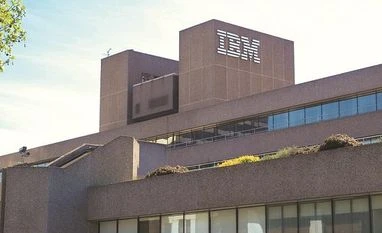
“What we’re trying to do with CIMON is to increase the efficiency of the astronaut,” Matthias Biniok, an engineer for chip maker IBM and one of the lead architects behind CIMON’s artificial intelligence, told Reuters. 

CIMON will verbally communicate step-by-step instructions to Gerst during three planned science experiments on the space station’s European module. Currently, astronauts read these instructions from a laptop, which Biniok says is an arduous process that a responsive, hands-free companion like CIMON can replace. “Right now our main mission is to support the astronauts with their daily tasks to save time, because time is the most valuable and most expensive thing on the ISS,” Biniok said.

The German Aerospace Center plans for CIMON to undergo three one-hour sessions to demonstrate how well the robot can help with experiments, like a crystal growth study, a test for its eight on-board cameras and an exercise to help Gerst solve a Rubik’s cube. 

CIMON will return to Earth on December 13. 

Biniok said the concept of CIMON was inspired by a 1940s science fiction comic series set in space, where a sentient, brain-shaped robot named Professor Simon mentors an astronaut named Captain Future. 

Philipp Schulien, a German engineer for CIMON’s hardware contractor, Airbus, said extending astronauts’ abilities in space is imperative for future space exploration journeys, like the crewed missions to Mars that are scheduled to take off as early as 2020. 

“There are certain effects that might appear during long-term missions like the so-called groupthink effect,” Schulien said, citing a behavioural phenomenon in which humans that spend lengthy periods of time in isolation are driven to make irrational decisions. “Long, isolated groups tend to stop communicating with the ground,” he said.

One subscription. Two world-class reads.

Already subscribed? Log in

Subscribe to read the full story →
*Subscribe to Business Standard digital and get complimentary access to The New York Times

Smart Quarterly

₹900

3 Months

₹300/Month

SAVE 25%

Smart Essential

₹2,700

1 Year

₹225/Month

SAVE 46%
*Complimentary New York Times access for the 2nd year will be given after 12 months

Super Saver

₹3,900

2 Years

₹162/Month

Subscribe

Renews automatically, cancel anytime

Here’s what’s included in our digital subscription plans

Exclusive premium stories online

  • Over 30 premium stories daily, handpicked by our editors

Complimentary Access to The New York Times

  • News, Games, Cooking, Audio, Wirecutter & The Athletic

Business Standard Epaper

  • Digital replica of our daily newspaper — with options to read, save, and share

Curated Newsletters

  • Insights on markets, finance, politics, tech, and more delivered to your inbox

Market Analysis & Investment Insights

  • In-depth market analysis & insights with access to The Smart Investor

Archives

  • Repository of articles and publications dating back to 1997

Ad-free Reading

  • Uninterrupted reading experience with no advertisements

Seamless Access Across All Devices

  • Access Business Standard across devices — mobile, tablet, or PC, via web or app

Next Story



