States fear losing revenue once agriculture market reforms kick in

The first of a two-part series looks at why states such as Punjab, which depend on taxes levied on mandi transactions, are disgruntled
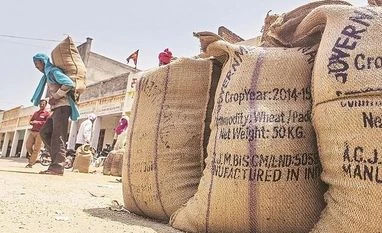
farmers, FCI, food corporation of india, grains, production, farmers, MSP, labourers,
Maharashtra, according to some reports, expects an annual loss of around 30-40 per cent in revenue if action shifts outside the mandis.
Sanjeeb Mukherjee New Delhi
6 min read Last Updated : Jun 10 2020 | 11:36 PM IST
As the Central government team was putting the finishing touches to legislation empowering farmers to sell their produce outside the designated mandis, someone had a last minute thought.
 
Given a revenue-starved government, why not levy a 1 per cent cess on all such non-mandi transactions? 
 
The idea, according to senior officials, was junked to avoid confusion on who should levy the cess, collect it, and distribute between the Centre and state and in what proportion.
 
There was also a fear that the famed ‘Inspector-Raj’, which the legislation sought to dismantle, might surge back once such a cess was levied.  
 
Finally, what emerged was that all transactions which are conducted in the ‘trade-area’, as per the Farmers’ Produce Trade and Commerce (Promotion and Facilitation) Ordinance 2020 should be exempted from any sort of market fee, levy, or cess.  
 
Both the farmer and the buyer have been kept out of the tax burden.

ALSO READ: Farm sector the only silver lining in FY21 as economy nears negative zone
 
As clarified by Agriculture Secretary Sanjay Agarwal in a recent interview to Business Standard, any such a cess or levy shall not be applied, even if the purchased goods move from one state to other, neither by the originating nor the  destination state.

On paper, this proposal is being seen as another step towards creating a single uniform market for agriculture produce. But the states view it as a brazen attempt to undermine their powers and jurisdiction.
 
The biggest impact will be on states such as Punjab, Haryana and a few others such as Maharashtra which get a good amount of their annual revenues from the taxes and cesses levied on mandi transactions.
 
Maharashtra, according to some reports, expects an annual loss of around 30-40 per cent in revenue if action shifts outside the mandis.
 
The Commission for Agricultural Costs and Prices (CACP) in its latest rabi report noted that in 2019-20, the statutory taxes (mandi tax/APMC cess and arthiya commission) levied on wheat in Punjab and Haryana were in the range of 5.5 per cent and 4.5 per cent.
 
In Uttar Pradesh and Madhya Pradesh, they were lower at 2.5 per cent and 2 per cent.
 
This tax goes up further when incidentals such the rural development and infrastructure development cess, commission to society, ‘nirashrit shulk,’ (a destitute fee) and ‘mopari charges’ etc are levied by states.
 
All of these increase the cost of procurement and restrict inter-state trade.
 
In mandis dealing with perishables, the market fee along with commissions can be in the 6-12 per cent range.
 
While these taxes are in many cases levied on traders, they  act as a deterrent for big buyers and processors as  they inflate their costs while the benefits are not passed on to the growers.
 
Interestingly, while, calling upon states to rationalize these taxes, the CACP in its report (made public a few weeks before the Trade Ordinance was promulgated) said that since these taxes and levies are among the main source of revenue for many state governments, they could be expected to be against abolishing them. That’s precisely why Punjab and others are complaining now.

 
In Punjab, the fear is also that once buyers actively start procuring from outside the mandis, some part of the annual wheat and rice purchases by the Food Corporation of India (FCI) might shift outside the mandis as the Corporation looks to cut its procurement incidentals.
 
This could, straight away, lead to an annual loss of almost Rs 5,000 crore of revenue collected through taxes on mandi transactions.
 
Without the mandi tax, some in Punjab fear rural development will suffer.
 
“To me the biggest loser in this will be the mandi and rural infrastructure like rural link roads which are financed from the mandi fees. Once, the revenues stop coming, investment for repairing and making them will dry up,” said Ajay Vir Jakhar, chairman, Bharat Krishak Samaj.
 
Officials in the state also fear that once the ‘arthiya’ system is abolished due to out-of-mandi transactions, the livelihoods of tens of thousands of labourers will be hurt because the firms who do non-mandi trading will mechanise the grain handling.

 
Jakhar said that if states lose control, then in 4-5 years, farmers will be left at the mercy of traders and companies.
 
“The move to me is also an acceptance by the government that they failed in the past decades to create new market players and infrastructure for farmers and are now passing responsibility to the private sector to deliver,” said Jakhar.  
 
He added that while it could not be disputed that mandis, manipulated by middleman and politicians, were not functioning efficiently, this was an overreaction. “This is like an amputation where a surgery would suffice,” he said.

NITI Aayog member and one of the main drivers of the Trade Ordinance, Ramesh Chand said that none of the ordinances (three in total) has anything to do with the FCI or the procurement mechanism under the Minimum Support Price system. The states, he said, are spreading falsehood.
 
On states fearing a significant loss of revenue once the Act comes into force, Chand asked: When a state builds a school, does it do so to earn revenue? When a state builds a hospital, does it charge a health cess? Then why this special treatment for mandis? And that too at the expense of farmers?
 
“In a mandi, at best one can charge for the service provided by it, but what has the rural development fee to do with mandi operations? Why do you want to charge something at the expense of farmers?” asked Chand. 
 
He said if a mandi fee were to be charged, it should be for the service provided and be in the range of 0.5-1 per cent. Period.
 

One subscription. Two world-class reads.

Already subscribed? Log in

Subscribe to read the full story →
*Subscribe to Business Standard digital and get complimentary access to The New York Times

Smart Quarterly

₹900

3 Months

₹300/Month

SAVE 25%

Smart Essential

₹2,700

1 Year

₹225/Month

SAVE 46%
*Complimentary New York Times access for the 2nd year will be given after 12 months

Super Saver

₹3,900

2 Years

₹162/Month

Subscribe

Renews automatically, cancel anytime

Here’s what’s included in our digital subscription plans

Exclusive premium stories online

  • Over 30 premium stories daily, handpicked by our editors

Complimentary Access to The New York Times

  • News, Games, Cooking, Audio, Wirecutter & The Athletic

Business Standard Epaper

  • Digital replica of our daily newspaper — with options to read, save, and share

Curated Newsletters

  • Insights on markets, finance, politics, tech, and more delivered to your inbox

Market Analysis & Investment Insights

  • In-depth market analysis & insights with access to The Smart Investor

Archives

  • Repository of articles and publications dating back to 1997

Ad-free Reading

  • Uninterrupted reading experience with no advertisements

Seamless Access Across All Devices

  • Access Business Standard across devices — mobile, tablet, or PC, via web or app

Topics :CoronavirusLockdownAgriculture marketingAgriculture reformState revenuesagriculture sectorfarmersAPMC ActAPMC mandisNiti AayogFood Corporation of India

Next Story


