After two years of fall, India's coal imports grow 8.1% in FY18

Total import was valued at $22 billion in 2017-18, around 4.9 per cent of all import in value terms
chart
Jayajit Dash Bhubaneswar
Last Updated : May 17 2018 | 6:52 AM IST
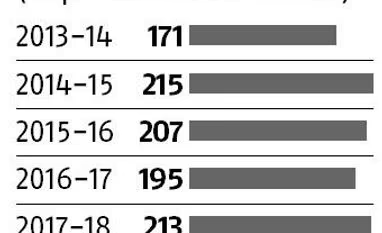
After two years of falling, the country’s coal import grew 8.1 per cent in 2017-18. There was sustained demand for coking coal from the steel sector and for steam or thermal grade coal from the power and cement sectors.

Data from the Centre for Monitoring Indian Economy (CMIE) shows the import at 213 million tonnes in FY18, up from 195 mt in FY17. After a peak of 215 mt in 2014-15, these had slid to 207 mt in FY16 and to 195 mt in FY17. And, although the central government wanted more use of domestically extracted coal, supplies were let down by transportation bottlenecks, especially shortages of railway rakes.

“The import trend will continue its uptrend, with the steel, power and cement industries expected to operate at higher capacities, aided by favourable demand. Also, domestic production is likely to stagnate, as there is no visible improvement in availability of railway rakes or infrastructure to evacuate coal,” said an analyst.

More, the talk of a ban on petcoke (petroleum coke) will tilt the market in favour of import. “Total import could be 235-245 mt if the government approves an order to ban use of petcoke, feedstock in the cement industry. An additional 35-40 mt of imported steam coal will be required to compensate for a petcoke ban,” goes a report from CARE Ratings.

Their report has forecast only 3.5-3.5 per cent growth in domestic coal output this financial year, to 705-712 mt. It has suggested swift auctioning of blocks with coking and steam coal reserves of 50 mt per annum to cut dependence on imported supplies.

In 2017-18, the two state run producers, Coal India (CIL) and Singareni Collieries Company together had an output of 629.4 mt, only 2.3 per cent over a year before. The official target was 662 mt.

The power sector reported shortfall in coal supplies by CIL. Coastal power plants opted for more of import due to this, even though domestic coal was cheaper. The country imported 46.5 mt of coking coal and 166 mt of thermal and other coal in FY18. Australia, Indonesia and South Africa are the biggest coal exporters to India, together 75-80 per cent in 
volume.

Total import was valued at $22 billion in 2017-18, around 4.9 per cent of all import in value terms. Coal is the fourth highest imported commodity, behind petroleum, precious stones and gold.

According to a report by FocusEconomics, demand from Asian markets for thermal coal resisted the usual seasonal slowdown in the early part of the April-June quarter and continues to defy the use of alternative energy sources. Demand for thermal coal is expected to stay solid this calendar year.

One subscription. Two world-class reads.

Already subscribed? Log in

Subscribe to read the full story →
*Subscribe to Business Standard digital and get complimentary access to The New York Times

Smart Quarterly

₹900

3 Months

₹300/Month

SAVE 25%

Smart Essential

₹2,700

1 Year

₹225/Month

SAVE 46%
*Complimentary New York Times access for the 2nd year will be given after 12 months

Super Saver

₹3,900

2 Years

₹162/Month

Subscribe

Renews automatically, cancel anytime

Here’s what’s included in our digital subscription plans

Exclusive premium stories online

  • Over 30 premium stories daily, handpicked by our editors

Complimentary Access to The New York Times

  • News, Games, Cooking, Audio, Wirecutter & The Athletic

Business Standard Epaper

  • Digital replica of our daily newspaper — with options to read, save, and share

Curated Newsletters

  • Insights on markets, finance, politics, tech, and more delivered to your inbox

Market Analysis & Investment Insights

  • In-depth market analysis & insights with access to The Smart Investor

Archives

  • Repository of articles and publications dating back to 1997

Ad-free Reading

  • Uninterrupted reading experience with no advertisements

Seamless Access Across All Devices

  • Access Business Standard across devices — mobile, tablet, or PC, via web or app

Next Story


