India needs to worry about short-term debt flows: US economist

India has been prudent in moving gradually when liberalising capital account, says Eichengreen
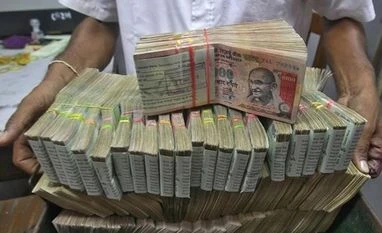
Photo: Reuters
An employee poses with the bundles of Indian rupee notes inside a bank in Agartala, the capital of Tripura. Photo: Reuters
Anup Roy Mumbai
Last Updated : Mar 28 2017 | 2:00 AM IST
Barry Eichengreen, professor of economics and political science at the University of California, Berkeley, has termed the gradual capital liberalisation of India as “prudent”, but stressed the country needs to keep an eye on the external commercial borrowings that are increasing at a fast pace.

“India has been prudent in moving gradually and incrementally when liberalising the capital account in the course of the last 25 years,” Eichengreen said, delivering Exim Bank’s 32nd Commencement Day Annual Lecture.

India, he said, started with a policy towards FDI inflows, followed by a policy towards portfolio equity inflows and then debt inflows, and turning last to a policy toward outflows, gradually raising ceilings and increasing the range of transactions.

“It has been wise to accompany that move with a more flexible exchange rate,” he said. But the country “needs to worry about short-term debt flows, including external commercial borrowing, whose relative importance has been rising in recent years, albeit from low levels”, the renowned economist said.

Also, “it needs to keep an eye on outward FDI, which is greater than in other emerging markets and where regulation is more permissive for corporates than individuals.”

The country also needs to further strengthen its banking system so that the banks, “especially public-sector banks with lower asset quality and governance issues, can cope with the volatility to which larger international financial flows give rise”, he said.

Presiding over the lecture, Reserve Bank of India (RBI) deputy governor S S Mundra said India’s policy framework towards capital account management had indeed served the country well. For example, the country’s external debt-GDP ratio “declined significantly from 38.7 per cent as at end-March 1992 to 23.7 per cent at end-March 2016,” Mundra said.


One subscription. Two world-class reads.

Already subscribed? Log in

Subscribe to read the full story →
*Subscribe to Business Standard digital and get complimentary access to The New York Times

Smart Quarterly

₹900

3 Months

₹300/Month

SAVE 25%

Smart Essential

₹2,700

1 Year

₹225/Month

SAVE 46%
*Complimentary New York Times access for the 2nd year will be given after 12 months

Super Saver

₹3,900

2 Years

₹162/Month

Subscribe

Renews automatically, cancel anytime

Here’s what’s included in our digital subscription plans

Exclusive premium stories online

  • Over 30 premium stories daily, handpicked by our editors

Complimentary Access to The New York Times

  • News, Games, Cooking, Audio, Wirecutter & The Athletic

Business Standard Epaper

  • Digital replica of our daily newspaper — with options to read, save, and share

Curated Newsletters

  • Insights on markets, finance, politics, tech, and more delivered to your inbox

Market Analysis & Investment Insights

  • In-depth market analysis & insights with access to The Smart Investor

Archives

  • Repository of articles and publications dating back to 1997

Ad-free Reading

  • Uninterrupted reading experience with no advertisements

Seamless Access Across All Devices

  • Access Business Standard across devices — mobile, tablet, or PC, via web or app

Next Story



