India's new willingness to binge on debt may leave economy far less secure

Once the pandemic retreats, India might end up with a debt-to-GDP ratio north of 90 per cent, compared to the low seventies at present
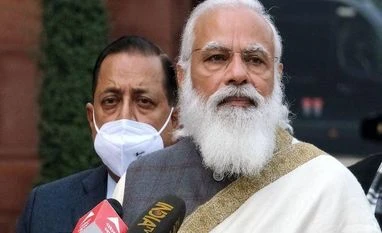
PM Narendra Modi
Modi’s greatest strength as an economic manager had been his commitment to fiscal responsibility
Mihir Sharma | Bloomberg
4 min read Last Updated : Feb 04 2021 | 7:34 AM IST
India’s economy has suffered more than most from the pandemic and so have its people. The country has lost more than a year’s worth of growth and perhaps a decade’s progress in its efforts to reduce poverty. The economic contraction — the first in India since the 1970s — has put pressure on its government like so many others to respond.
 
Until this week, that response had been relatively restrained. Prime Minister Narendra Modi’s government seemed to recognize that there was only so much it could do to address the economic contraction, especially while the pandemic is still raging. By its actions, the government implied that any welfare-promoting and growth-enhancing measures had to stand on a solid macro-economic foundation.

The federal budget for the next financial year, which starts in April, has poked a hole in this optimistic narrative. Not only has the fiscal deficit for the current year exploded to 9.5 per cent of GDP — two percentage points higher than the consensus estimate, but still defensible for a pandemic year — next year’s deficit is now forecast to reach almost 7 per cent. The government has effectively abandoned its long-term commitment to bring the deficit down to close to 3 per cent of GDP, pitching instead for a gentle descent to 4.5 per cent — six years from now.

Once the pandemic retreats, India might end up with a debt-to-GDP ratio north of 90 per cent, compared to the low seventies at present. It would be saddled with a permanently elevated fiscal deficit and a financial system bogged down by unknown levels of bad debt. Consumer price inflation has topped the Reserve Bank of India’s target zone of 2 per cent-6 per cent since the Covid-19 lockdown began last year. These are, I am afraid, numbers more associated with Latin American stagnation than your typical Asian tiger.

The government is obviously hoping that increased spending will help India grow out of this predicament. Unfortunately, actual growth before the pandemic was already just 4 per cent a year. Fitch Ratings thinks India’s potential growth is at best 5.1 per cent. That won’t be enough to deal with the macro-economic predicament India’s in.

The only way India can pull itself out of this jam is if private investment pours into the country, financing projects that push up the country’s potential growth rate. Yet the government, already monopolising domestic financial savings, seems to want to go to war with the global markets as well.

In his pre-budget survey of the economy, the government’s seniormost economist spent an entire chapter attacking the ratings agencies — a pre-emptive salvo against a possible sovereign downgrade. Print money without fear, he urged, saying that doing so would “not necessarily lead to inflation and a debasement of the currency” if the extra money is invested in the right projects.

To paraphrase “Tropic Thunder,” never go full MMT. Unlike the US or China, countries in India’s position — which have neither a reserve currency nor strong growth momentum — can’t grow while exploding their debt. They can’t afford to ignore ratings agencies because of their supposed bias or cock a snook at the bond markets and just run the currency presses instead. They need to grow in order to reduce their debt. That’s a very different dynamic.

India isn’t so attractive that it can expect vast sums of investment to arrive even if the macro-economic numbers look bad and the sovereign rating is junk. We don’t have a history of deflation, we aren’t hitting the zero lower bound — quite the opposite, we have an economy prone to sustained high inflation.

And, finally, if there’s a country somewhere with a government bureaucracy efficient enough to build really productive assets using sustained deficits, that country definitely isn’t India. This is still a developing economy, which especially in bad times should tread carefully rather than throw caution to the winds. 

Modi’s greatest strength as an economic manager had been his commitment to fiscal responsibility. Some of that was visible in this year’s budget as well — which, for example, boasted a welcome return to transparency about how much the government is borrowing, ending a tradition of fudging that has persisted since the last financial crisis.

Yet, with this new willingness to binge on debt, Modi now faces the prospect of leaving India’s macro-economy far less secure than when he inherited it. That would be a dire legacy indeed.

One subscription. Two world-class reads.

Already subscribed? Log in

Subscribe to read the full story →
*Subscribe to Business Standard digital and get complimentary access to The New York Times

Smart Quarterly

₹900

3 Months

₹300/Month

SAVE 25%

Smart Essential

₹2,700

1 Year

₹225/Month

SAVE 46%
*Complimentary New York Times access for the 2nd year will be given after 12 months

Super Saver

₹3,900

2 Years

₹162/Month

Subscribe

Renews automatically, cancel anytime

Here’s what’s included in our digital subscription plans

Exclusive premium stories online

  • Over 30 premium stories daily, handpicked by our editors

Complimentary Access to The New York Times

  • News, Games, Cooking, Audio, Wirecutter & The Athletic

Business Standard Epaper

  • Digital replica of our daily newspaper — with options to read, save, and share

Curated Newsletters

  • Insights on markets, finance, politics, tech, and more delivered to your inbox

Market Analysis & Investment Insights

  • In-depth market analysis & insights with access to The Smart Investor

Archives

  • Repository of articles and publications dating back to 1997

Ad-free Reading

  • Uninterrupted reading experience with no advertisements

Seamless Access Across All Devices

  • Access Business Standard across devices — mobile, tablet, or PC, via web or app

Topics :CoronavirusIndian EconomyNarendra ModiIndia GDPIndia Economic growth

Next Story



