Real question for the RBI: When to raise the rates and by what extent

Barring external shocks of which this government has been a persistent victim since 2019, things should pan out well by April 2024
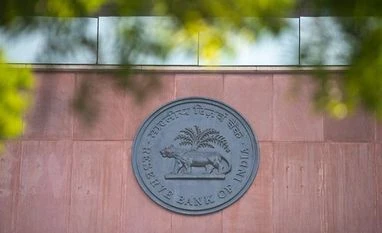
RBI, Reserve Bank of India
Photo: Shutterstock
T C A Srinivasa-Raghavan New Delhi
4 min read Last Updated : May 04 2022 | 8:29 PM IST
Recently, something written by Bloomberg-Quint’s Ira Dugal, who is one of the best financial journalists India has currently, reminded me of Rudiger Dornbusch who was arguably one of the best macroeconomists of the 1970-2000 period. He died in 2002. 

I had the opportunity to interview him in 1992 or 1993 when he was passing through Delhi. Dornbusch, for those who don’t know his work, was the one who came up with the theory of overshooting in the forex markets. 

Basically, he said, while some parts of an economy adjust almost instantaneously to changes in some exogenous variable, most parts don’t. This results in volatility in those parts that adjust at once to compensate for the parts that take time to adjust. Hence the volatility in exchange rates. 

Ms Dugal wrote “The RBI…said that at present liquidity is well in excess. It said that beyond a point, fiscal multipliers of government spending diminish and that the downside of wider deficits and higher government debt, by way of higher term premia and interest rates, is detrimental to growth.”

You may well ask what this has to do with Dornbusch’s overshooting theory which sought to explain the behaviour of forex markets. To understand that we have to go back to September 1995. 

At the time S S Tarapore, the late deputy governor of the Reserve Bank of India was one of the most effective central bankers India has seen. He never forgave the finance ministry for letting down the RBI in the Economic Survey of 1996. In it, the government blamed the RBI for the sharp increase in rates in the last quarter of 1995. General elections were due in May 1996. 

Something similar happened in 2008. In July that year, when he raised interest rates, only Reddy was blamed when the truth was that he had been asked to do so by the government, indeed the prime minister himself. General elections were due in May 2009. 

The issue here, however, not whether the decision to raise rates was right or wrong. That depends on current and expected inflation. The real issue is whether the RBI got the timing and the extent right. 

In 1995, the timing was right but the extent wrong meaning it was too much too suddenly. In 2008, the extent was right but the timing was too late. 

This is what had led Prodipto Ghosh, an economist who used to be in the PMO in 2002 to say that while everyone knew what to do, no one really knew when or how much. 

So, back to Dornbusch and his theory of overshooting as one market compensates for imbalance in another. When I met him India was undergoing severe spending cuts and trying to fix the price signals in the money markets. I asked Dornbusch if governments could overshoot in fiscal matters, just as they had undershot leading to the current crisis. He said yes, it happens all the time, just look at Latin America which is only now emerging from ten years of GDP contraction. 

So, how does the RBI avoid under-or overshooting on interest rates? Duvvvuri Subbarao in 2011 just didn’t correct enough for the huge fiscal expansion in the previous few years. His successors over-corrected leading to a sharp slowdown. Of course, as always, there were other reasons too. 

Can we afford a repeat of September 1995 which led to a six-year investment drought? Or the 2011-13 one which led to double digit inflation or the 2013-18 phase when we over-corrected?

The RBI and the government have two things in their favour. First, the general election is two years away and second, the fiscal gap is quite small. 

Barring external shocks of which this government has been a persistent victim since 2019, things should pan out well by April 2024. 

One subscription. Two world-class reads.

Already subscribed? Log in

Subscribe to read the full story →
*Subscribe to Business Standard digital and get complimentary access to The New York Times

Smart Quarterly

₹900

3 Months

₹300/Month

SAVE 25%

Smart Essential

₹2,700

1 Year

₹225/Month

SAVE 46%
*Complimentary New York Times access for the 2nd year will be given after 12 months

Super Saver

₹3,900

2 Years

₹162/Month

Subscribe

Renews automatically, cancel anytime

Here’s what’s included in our digital subscription plans

Exclusive premium stories online

  • Over 30 premium stories daily, handpicked by our editors

Complimentary Access to The New York Times

  • News, Games, Cooking, Audio, Wirecutter & The Athletic

Business Standard Epaper

  • Digital replica of our daily newspaper — with options to read, save, and share

Curated Newsletters

  • Insights on markets, finance, politics, tech, and more delivered to your inbox

Market Analysis & Investment Insights

  • In-depth market analysis & insights with access to The Smart Investor

Archives

  • Repository of articles and publications dating back to 1997

Ad-free Reading

  • Uninterrupted reading experience with no advertisements

Seamless Access Across All Devices

  • Access Business Standard across devices — mobile, tablet, or PC, via web or app

More From This Section

Disclaimer: These are personal views of the writer. They do not necessarily reflect the opinion of www.business-standard.com or the Business Standard newspaper

Topics :RBIInterest RatesIndian Economy

Next Story



